
Designing socks for the EU market goes far beyond aesthetics. Today’s buyers, especially in regions like Germany, France, and Scandinavia, demand more than just comfort—they want verified sustainability. From organic cotton to chemical-free dyeing, compliance with eco-certifications like OEKO-TEX® Standard 100 and GOTS (Global Organic Textile Standard) is no longer optional—it’s essential.
To design socks that meet EU eco-standards, manufacturers must carefully choose raw materials, maintain strict chemical controls, implement traceable production processes, and align with third-party auditing systems such as OEKO-TEX and GOTS.
In this guide, I’ll walk you through the actual processes we follow at GlobalSock—located in Keqiao, China’s textile capital—to ensure that our sock designs align with these internationally recognized eco-certifications.
What Materials Are Required for GOTS and OEKO-TEX Socks?
Designing for EU eco-certifications starts at the source—the yarn. In socks, the material composition directly affects eligibility for GOTS and OEKO-TEX certifications. Buyers like Ron, based in the U.S., often want socks made from sustainable blends like organic cotton, bamboo, or Tencel™, but verifying compliance is key.
To meet GOTS and OEKO-TEX standards, sock designs must start with pre-certified, traceable raw materials like organic cotton (GOTS) and tested yarns for harmful substances (OEKO-TEX).
What Types of Yarns Pass GOTS and OEKO-TEX Criteria?
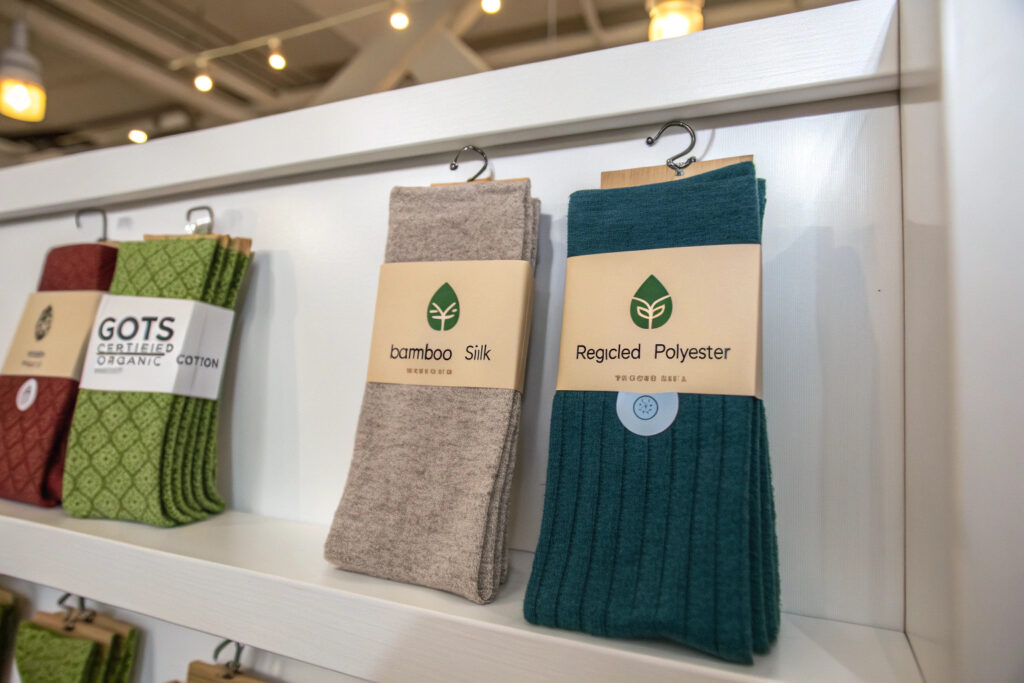
To satisfy GOTS, the yarn must be derived from organically grown fibers—usually cotton or bamboo—without genetic modification or synthetic pesticides. For OEKO-TEX Standard 100, any yarn must be tested and proven free from substances harmful to human health like formaldehyde or heavy metals.
| Material Type | GOTS-Compliant | OEKO-TEX Certified |
|---|---|---|
| Organic Cotton | ✅ | ✅ |
| Bamboo Viscose | ⚠ (if closed-loop process) | ✅ |
| Recycled Polyester | ❌ (not GOTS) | ✅ |
| Tencel™ Lyocell | ✅ | ✅ |
You can check official yarn sources from GOTS Public Database or OEKO-TEX Buying Guide.
How Do We Ensure Material Traceability?
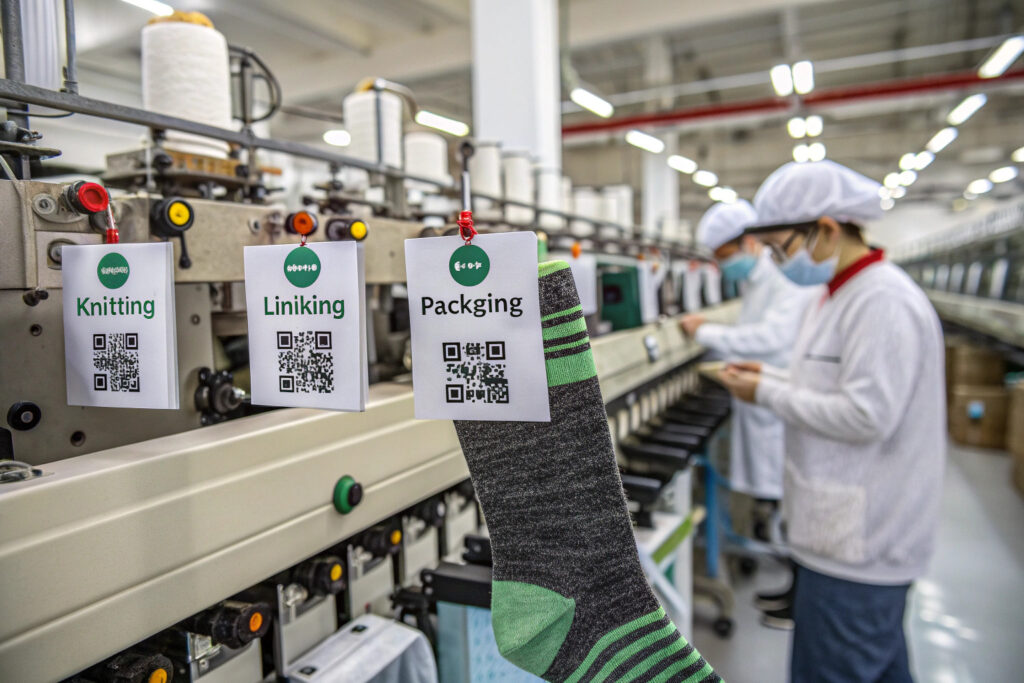
At GlobalSock, we scan QR codes embedded in yarn bales to log origin, farming practices, and chemical-free treatment. This ensures we comply not only with buyer requests but also with European REACH regulations and GOTS chain-of-custody requirements. We also integrate blockchain options for premium clients—providing verifiable proof of origin.
More on traceable textile sourcing can be found at Textile Exchange and Made-By Environmental Benchmark.
How to Handle Dyeing and Chemical Restrictions?
For sock production, dyeing is one of the riskiest phases in terms of chemical safety. EU eco-certifications demand compliance with strict limits on formaldehyde, AZO dyes, phthalates, and heavy metals. This applies to both yarn dyeing and post-dye finishing.
To meet EU chemical safety standards, dyeing processes must use OEKO-TEX-compliant dyes and water treatment systems that ensure minimal environmental harm.

What Dyes Are Acceptable Under OEKO-TEX?
OEKO-TEX Standard 100 maintains an evolving list of REACH-compliant chemical inputs. This means no allergenic, carcinogenic, or bioaccumulative chemicals. At GlobalSock, we use Huntsman AVITERA SE dyes which are specifically engineered for low-impact processing and are fully OEKO-TEX certified.
We recommend referencing the ZDHC MRSL list and the Huntsman website for trusted chemical inputs.
How Can We Prevent Dye Bleed and Color Migration?
Poor dye setting not only affects appearance but also risks certification failure. To control that, we run colorfastness tests (rubbing, perspiration, washing) in our CNAS-accredited lab. This ensures socks retain vibrancy while staying safe.
Brands that want premium assurance often request Eco Passport by OEKO-TEX testing, which evaluates not just final product but each dye and auxiliary chemical.
What Manufacturing Processes Are Required to Stay Compliant?
Certifications go beyond yarn and dye—they also cover the entire production process. That includes how socks are knitted, stitched, steamed, and packaged. At GlobalSock, our factory lines are mapped and monitored for traceability and hygiene, and all chemicals used in finishing are bluesign® approved.
To remain compliant with EU standards, manufacturers must control not only raw materials but also every phase of the production workflow, including water usage, worker safety, and energy efficiency.
What Role Do QR Code Systems Play in EU Compliance?
Modern eco-certifications favor digital traceability. We implement QR-based batch tracking to log shrinkage, dye bath, worker shifts, and test results. Each production order has its own eco-profile, making EU auditing faster and more transparent.
See how digital traceability works on TrusTrace and OEKO-TEX Label Check.
How Do We Optimize for Low Carbon Footprint?
Our green initiative includes wastewater recycling, LED-powered facilities, and carbon emission reports per batch. Many of our European clients now ask for LCA (Life Cycle Analysis) results alongside product quotes, which we readily provide thanks to our integrated monitoring systems.
We’ve adopted methods outlined by Higg Index and Carbon Trust.
How to Apply and Pass the Certification Audits?
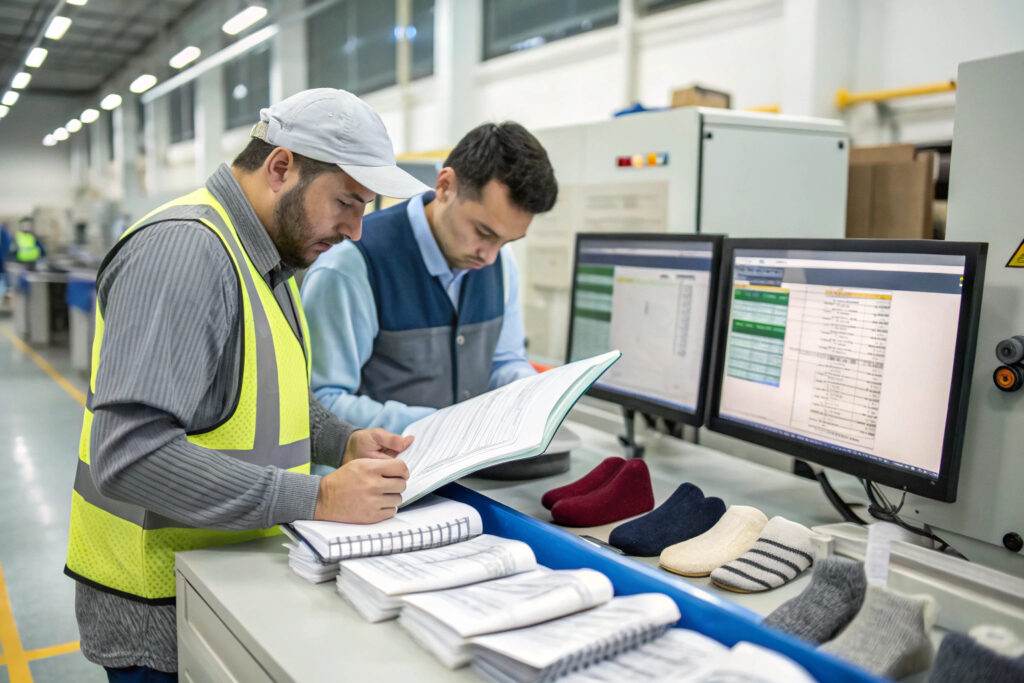
Getting certified is not a one-click action. It’s a multi-step process involving factory assessments, product testing, chemical management, and document submissions. We maintain close collaboration with third-party labs such as Intertek, SGS, and TÜV Rheinland.
To pass EU eco-certification audits, companies must prepare documented evidence of traceability, safety tests, and compliance protocols for every production batch.
What Is the Process for GOTS Certification?
GOTS audits include both product-based and facility-based inspections. We submit:
- Organic transaction certificates
- Dye and chemical approval lists
- Environmental management protocols
- Worker welfare policies
You can begin the process via GOTS Application Portal.
How to Maintain OEKO-TEX Certification Annually?
OEKO-TEX must be renewed each year with fresh lab tests and documentation. Our lab submits:
- Toxicology test results
- Batch inspection records
- New chemical inputs since last audit
Visit OEKO-TEX Certification Steps for step-by-step guidance.
Conclusion
Socks that meet GOTS or OEKO-TEX standards are no longer a luxury—they’re a necessity for brands serious about entering the European market. As sustainability expectations rise, we must not only design with intention but manufacture with transparency. At GlobalSock, we’ve invested in every level of eco-compliance, from yarn traceability and clean dyeing to blockchain tracking and factory audits. That’s why our products consistently pass certifications and win the trust of buyers worldwide.
If you’re looking for a reliable, EU-compliant sock manufacturer with expertise in full-cycle certification and seamless global logistics, reach out to our Business Director Elaine at elaine@fumaoclothing.com. Let’s build your next eco-forward sock collection—starting today.