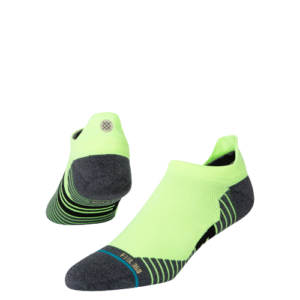
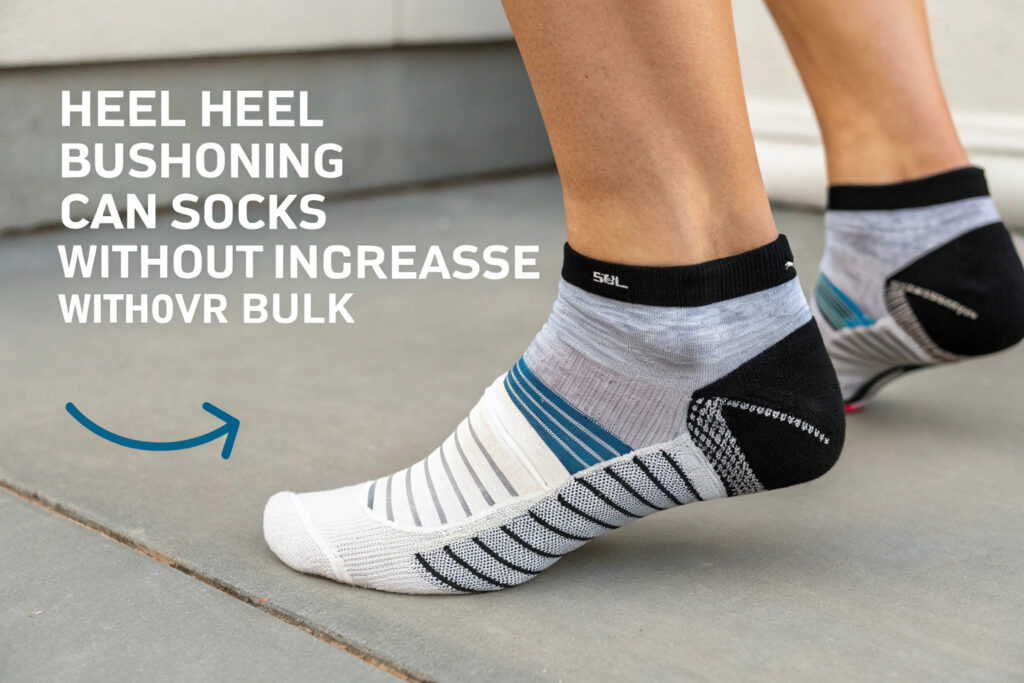
As a runner and a socks manufacturer for over a decade, I’ve felt the frustration of bulky heel cushions. They promise comfort but often lead to blisters and a poor fit inside the shoe. This common pain point is why many runners abandon otherwise good socks. The problem isn’t the cushioning itself, but how it’s engineered and integrated into the sock’s design.
The solution lies in advanced textile engineering and strategic design. By using high-density, low-profile padding materials and seamless construction techniques, it’s entirely possible to achieve superior heel cushioning that absorbs impact without the unwanted bulk. This enhances comfort and performance, allowing for a better shoe fit.
This article will guide you through the precise methods and materials we use at GlobalSock to create running socks that offer plush heel comfort without the bulk. You’ll learn about innovative fabrics and construction secrets that top brands demand.
What Materials Are Best for Thin Yet Cushioned Heels?
The quest for a non-bulk cushion starts with the material. Not all fibers are created equal. Traditional cotton is a poor choice as it retains moisture and loses shape. The key is in advanced synthetic and natural blends that offer high-density padding in a thin profile.
The best materials for thin yet cushioned heels are modern merino wool, specialized nylon blends, and innovative recycled fabrics. These materials provide excellent shock absorption per unit of thickness. For instance, Merino Wool is renowned for its natural cushioning and moisture-wicking properties without adding volume. Similarly, high-tenacity Nylon/Spandex blends can be engineered into dense, protective zones that are remarkably thin and durable. Our in-house CNAS-certified lab constantly tests these materials to ensure they meet the highest standards of performance and comfort for our global clients.
How Does Merino Wool Provide Natural, Low-Profile Cushioning?
Merino wool fibers are naturally springy and elastic. This inherent property allows them to create a dense, cushioned feel under the heel without requiring a thick layer of material. Unlike synthetic paddings that can be flat and hard, merino wool fibers compress and rebound with each step, providing dynamic shock absorption. Furthermore, merino wool is a temperature-regulating material, keeping the foot comfortable in various conditions. Its natural moisture-wicking ability also prevents the damp, heavy feeling that can add perceived bulk. For runners seeking a natural fiber option, socks made with high-quality Merino Wool are an outstanding choice for seamless comfort.
Why Are Nylon/Spandex Blends Crucial for Durable, Slim Heels?
Nylon/Spandex blends are the workhorses of performance sock durability. Nylon provides exceptional tensile strength and abrasion resistance, which is crucial for the high-impact heel area. This means the cushioning won’t break down or pill after multiple washes and runs. The Spandex (or elastane) component offers superior elasticity, allowing the sock to hug the heel contour tightly without bunching or slipping. This secure fit eliminates the need for excess material to keep the sock in place. By using advanced knitting techniques, we can integrate these Nylon/Spandex blends into specific zones of the sock, placing reinforcement and cushioning exactly where it’s needed most, and nowhere else.
What Construction Techniques Reduce Bulk in the Heel?
Choosing the right material is only half the battle. How you construct the sock is equally critical. Traditional sock manufacturing often relies on adding extra layers of fabric, which directly contributes to bulk. Modern techniques are far more sophisticated.
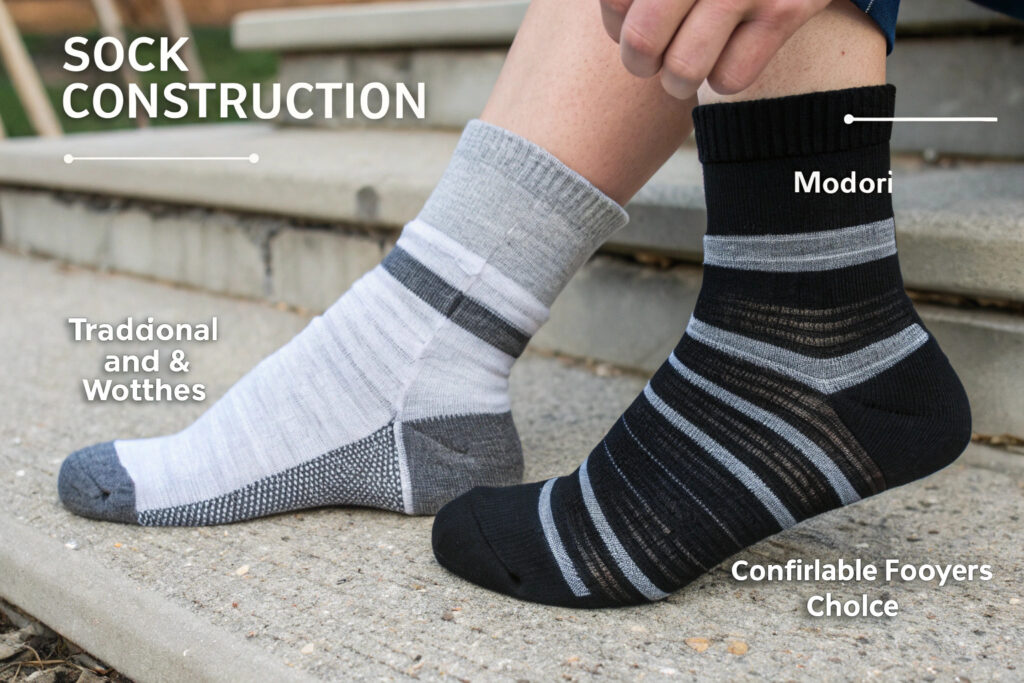
Advanced construction techniques like seamless toe closures and precision anatomical knitting are key to reducing heel bulk. These methods allow for the strategic placement of yarns, creating padding only in high-impact zones while keeping the rest of the sock thin and breathable. Anatomical left/right foot design ensures the cushioning sits perfectly on the heel’s contour, preventing material from gathering and creating pressure points. This targeted approach, often controlled by computerized knitting machines, is what separates standard socks from performance-grade gear that feels like a second skin.
How Does Anatomical Knitting Eliminate Excess Material?
Anatomical knitting, also known as 3D knitting, constructs the sock to mirror the exact shape of a human foot. Instead of a simple tube, the sock has a defined heel pocket. This means the cushioning yarns are concentrated precisely on the heel bone and the bottom of the foot, with no unnecessary material on the sides or top. This process eliminates loose fabric that can fold, wrinkle, and create uncomfortable bulk inside your shoe. It’s akin to a custom-made glove for your foot. This precise fit, a result of sophisticated Digital Sock Design processes, enhances stability and comfort, allowing the cushioning to work exactly as intended without compromise.
Can Seamless Toe Construction Impact Heel Comfort?
While the toe seam is far from the heel, its impact on overall foot comfort is significant. A bulky, raised toe seam can cause the entire foot to slide forward slightly inside the shoe, cramping the toes and causing the heel area to rub improperly. This misalignment can make even a perfectly cushioned heel feel uncomfortable. A seamless toe closure, or a flat-linked toe, creates a smooth interior that allows the foot to sit naturally. This ensures the heel cushioning remains correctly positioned against the heel, maximizing its effectiveness. Adopting this Seamless Toe technology is a holistic approach to sock design that benefits the entire foot, from toe to heel.
How to Ensure Cushioning Lasts Without Adding Weight?
A thin, cushioned heel is useless if it flattens out after the first wash. Durability is paramount. The challenge is to create a cushioning system that maintains its resilience and protective properties over time without relying on heavy, dense materials.
Ensuring lasting cushioning without weight involves a combination of high-tenacity yarns, specialized knitting stitches, and rigorous testing. The focus is on the integrity of the fiber structure itself. Using materials with high recovery rates, like certain Spandex blends and resilient polyester, ensures the cushioning bounces back after each compression. Furthermore, techniques like linking the cushioning layer directly to the sock’s base structure, rather than having it as a loose add-on, prevent it from breaking down or separating over time. Our quality control includes testing for pilling, abrasion resistance, and colorfastness to guarantee the socks perform wash after wash.
What Role Does Yarn Twist and Density Play in Longevity?
The way yarns are twisted and knitted directly affects their durability. A high-twist yarn is stronger and more resistant to abrasion than a low-twist one. In cushioning, we use multiple plies of high-twist yarns knitted together in a dense, compact stitch. This creates a robust matrix of fibers that can withstand repeated impact and friction. The density of the knit locks the fibers in place, preventing them from migrating and forming pills. This is a fundamental principle in Textile Engineering that ensures the thin cushioning layer retains its thickness and shock-absorbing properties throughout the sock’s lifespan, making it a Durable & Long-Lasting product.
How Does Moisture Management Preserve Cushioning?
Moisture is a primary enemy of cushioning. When socks retain sweat, the fibers become waterlogged, heavy, and less elastic. This not only adds perceived bulk but also reduces the cushioning’s ability to rebound. Advanced Moisture-Wicking fabrics are essential. These materials, often with capillary action or hydrophobic treatments, pull sweat away from the skin to the sock’s outer surface where it can evaporate. By keeping the heel area dry, the cushioning fibers remain light, springy, and effective. This is a critical feature in Athletic Socks / Sports Socks, as it maintains consistent performance and comfort from the first mile to the last.
Are There Eco-Friendly Options for Advanced Heel Cushioning?
Today’s runners are increasingly conscious of their environmental footprint. The good news is that sustainability and high performance are no longer mutually exclusive. We can now create effective, low-bulk cushioning using eco-conscious materials.
Yes, several high-performance eco-friendly materials provide excellent heel cushioning without bulk. Recycled polyester (rPET), derived from plastic bottles, can be engineered into fine, resilient fibers that offer impressive shock absorption. Similarly, Tencel™ Lyocell, made from sustainably sourced wood pulp, is known for its incredible softness and smoothness, which creates a comfortable, dense feel with very little material. Bamboo silk (BAMSILK) is another popular option, offering a plush, lightweight cushion. Our commitment includes a significant green investment in these materials, aligning with global EU eco-certifications and meeting the demand for Eco-Friendly / Sustainable products.

How Does Recycled Polyester Perform as a Cushioning Material?
Recycled Polyester is a game-changer for eco-friendly performance. The fibers are strong and durable, with excellent moisture-wicking capabilities. When used for cushioning, they can be textured or spun to create a lofty, airy structure that traps air for insulation and shock absorption, yet compresses down to a very thin profile under pressure. This makes rPET an ideal component in Compression Socks and athletic models where a close fit is crucial. By transforming post-consumer waste into high-performance cushioning, we not only reduce bulk but also environmental impact, a core part of our Sustainability Commitment.
What Makes Tencel™ and Bamboo Blends Effective?
Tencel™ Lyocell fibers are exceptionally smooth and have a high moisture absorption capacity. This creates a cushion that feels luxuriously soft and dry against the skin. The fibers’ natural density allows for a thin but effective protective layer. Bamboo-derived viscose, especially in BAMSILK blends, has a round, smooth cross-section that gives it a silky hand-feel and natural breathability. When blended with a small amount of Spandex, these materials form a cushioned heel that is Anti-Slip, breathable, and perfectly contoured. These Natural Fibers are at the heart of our mission to provide innovative solutions without compromising on comfort or the planet’s health.
Conclusion
Achieving plush heel cushioning without the detrimental bulk is a sophisticated blend of material science, precise construction, and a commitment to durability and sustainability. It’s not about using less material, but about using smarter materials and smarter techniques. From high-density merino wool and resilient nylon blends to innovative eco-friendly fibers, the options are vast and effective. The right sock should feel like a natural extension of your foot, providing protection and comfort that you can forget about until your run is over.
Ready to experience the difference of bulk-free, high-cushion running socks in your own product line? Partner with us, GlobalSock, to co-create value and design performance-driven hosiery. For a direct conversation about your sourcing needs, please contact our Business Director, Elaine, at elaine@fumaoclothing.com. Let’s bring your vision to life.