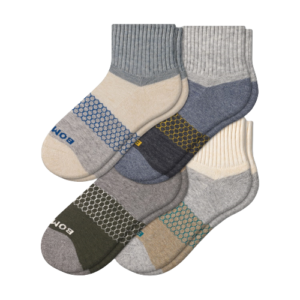
Many buyers love the idea of anti-bacterial socks because they offer hygiene, comfort, and longer wear time without bad odors. Yet most of the industry still relies heavily on chemical treatments, which can fade after a few washes and harm the environment. If you want a product that not only protects your customers’ feet but also builds your brand’s eco-friendly reputation, then natural materials are your best option.
The key to developing antibacterial socks with natural materials is understanding which fibers have inherent antibacterial properties, how to blend them for comfort and performance, and how to control quality from sourcing to final production. By focusing on natural fibers like bamboo, merino wool, and hemp, you can deliver socks that fight odor without compromising on sustainability.
In this guide, I will share the step-by-step process we use at GlobalSock—from selecting the right fiber to ensuring the socks meet international safety standards—so you can create a competitive, eco-friendly product for your market.
Best Natural Fibers for Antibacterial Socks
Natural fibers are the foundation of long-lasting antibacterial performance. Unlike chemical coatings, the antibacterial properties in certain natural fibers come from their inherent structure or natural compounds.
Which natural fibers have the best antibacterial properties?
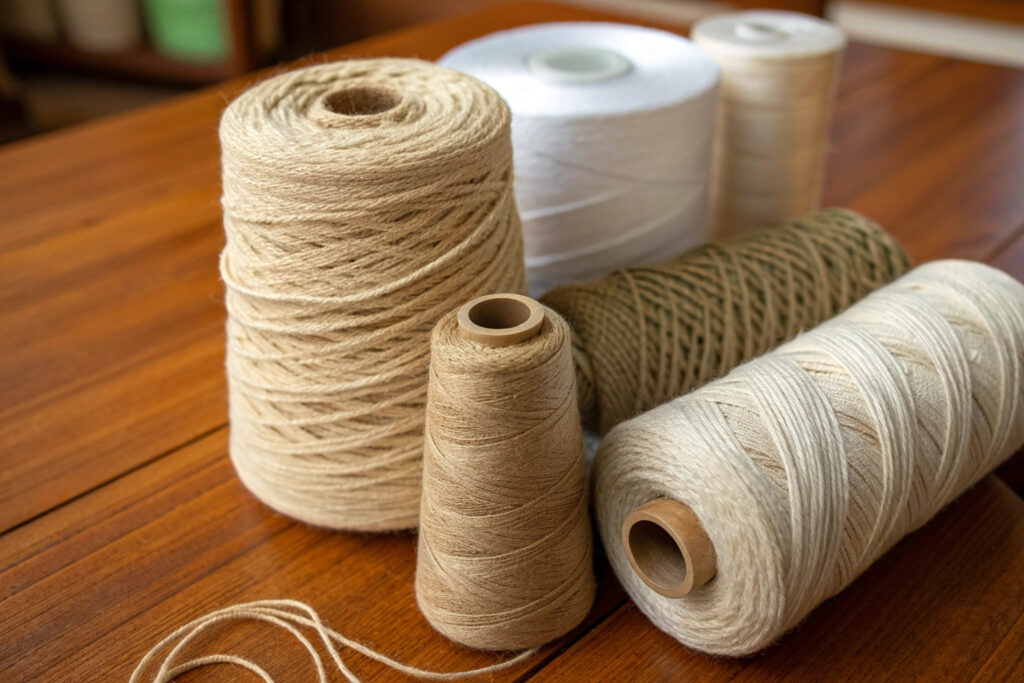
Bamboo fiber contains a bio-agent called “bamboo kun” that naturally resists bacteria growth. This property remains effective even after multiple washes, making it an excellent choice for socks that stay fresh. Bamboo textiles are also soft, moisture-wicking, and breathable, which improves comfort.
Merino wool has a natural lanolin coating and a crimped structure that wicks moisture away from skin, limiting bacterial growth. It also regulates temperature, keeping feet dry in both hot and cold conditions. Another strong contender is hemp fiber, which has natural antifungal and antibacterial benefits while being one of the most sustainable crops in the world.
By blending these fibers with small amounts of elastic materials like spandex, we ensure socks retain shape and stretch while maintaining their natural antibacterial performance.
How do fiber blends affect antibacterial performance?
The antibacterial efficiency depends on the ratio of natural fiber to synthetic support fibers. A blend with at least 70% bamboo, merino wool, or hemp ensures a noticeable antibacterial effect while still providing strength. For example, our high-performance bamboo sport socks use a 75% bamboo / 20% nylon / 5% spandex formula, which balances softness, durability, and elasticity. You can also enhance performance by combining different natural fibers, like bamboo for moisture control and hemp for odor resistance.
Eco-Friendly Dyeing and Finishing Processes
Dyeing and finishing can make or break the environmental promise of antibacterial socks. Many natural fibers lose performance if exposed to harsh chemicals, so the finishing stage must be handled carefully.
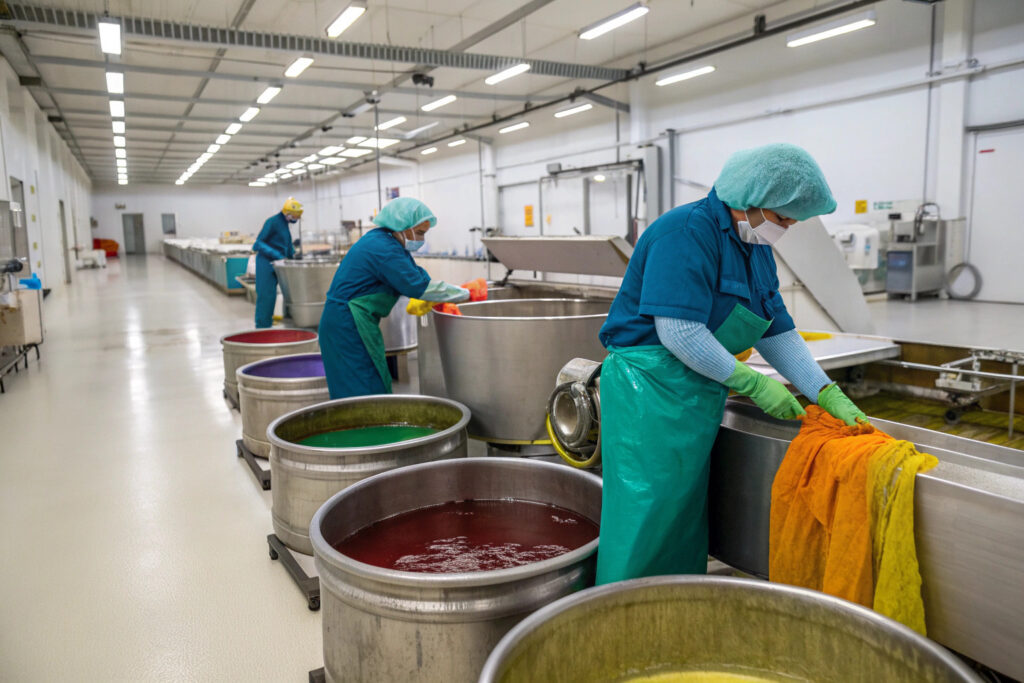
How to keep antibacterial properties during dyeing?
The safest approach is using low-temperature, plant-based dyes. For bamboo and hemp, we use GOTS-certified organic dyes that avoid heavy metals and toxic mordants. This prevents damage to the fiber structure while preserving antibacterial qualities. Merino wool requires gentle acid dyes to keep its lanolin intact.
We also recommend avoiding bleaching, as it can strip natural fibers of their protective agents. Instead, opt for enzymatic scouring to clean and prepare the yarn for dyeing.
What finishing techniques improve performance and comfort?
For finishing, use softening treatments derived from plant oils instead of synthetic silicones. This keeps socks feeling comfortable while remaining eco-friendly. Heat-setting at the right temperature also helps maintain elasticity and fit without compromising fiber health. Some brands add aloe vera or tea tree oil finishing for extra antibacterial boost, but this should be tested to ensure wash durability.
Performance Testing and Quality Control
Testing is critical for selling antibacterial socks to major retail markets. Without certified performance data, buyers cannot confidently market your product.
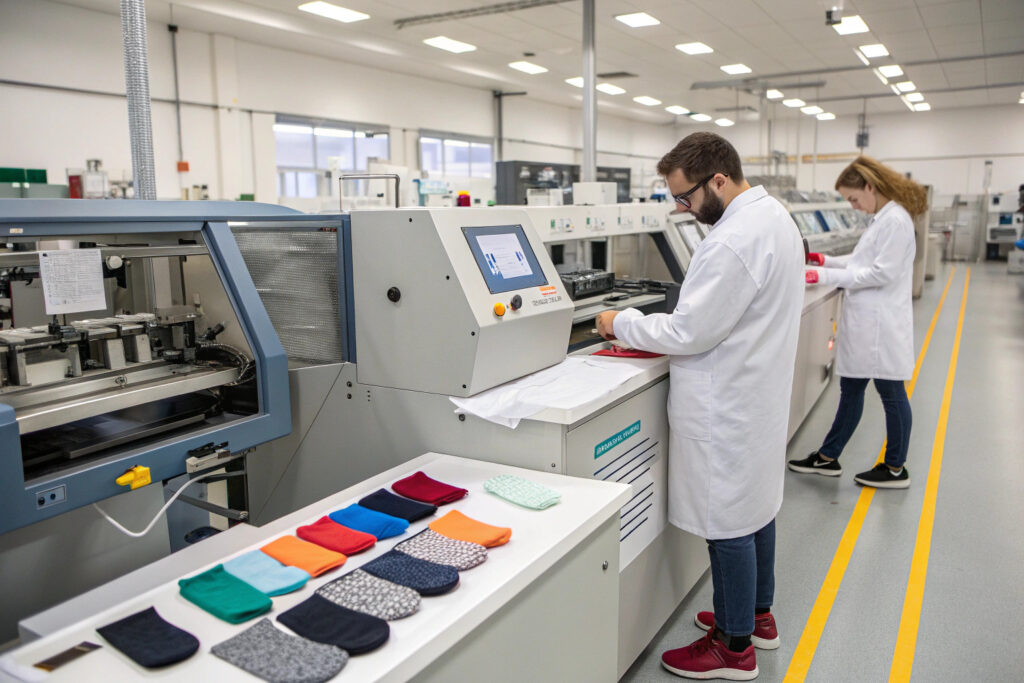
How to test antibacterial effectiveness?
We follow AATCC 100 and ISO 20743 testing standards, which measure the reduction of bacterial colonies after contact with the sock fabric. This is done in a certified lab, such as SGS or Intertek. A reduction rate above 90% is considered excellent. We provide these reports to our clients to strengthen their product claims.
You should also run wash durability tests to prove that antibacterial properties remain effective after at least 30 wash cycles. This ensures long-term value for the customer.
What other quality checks are essential?
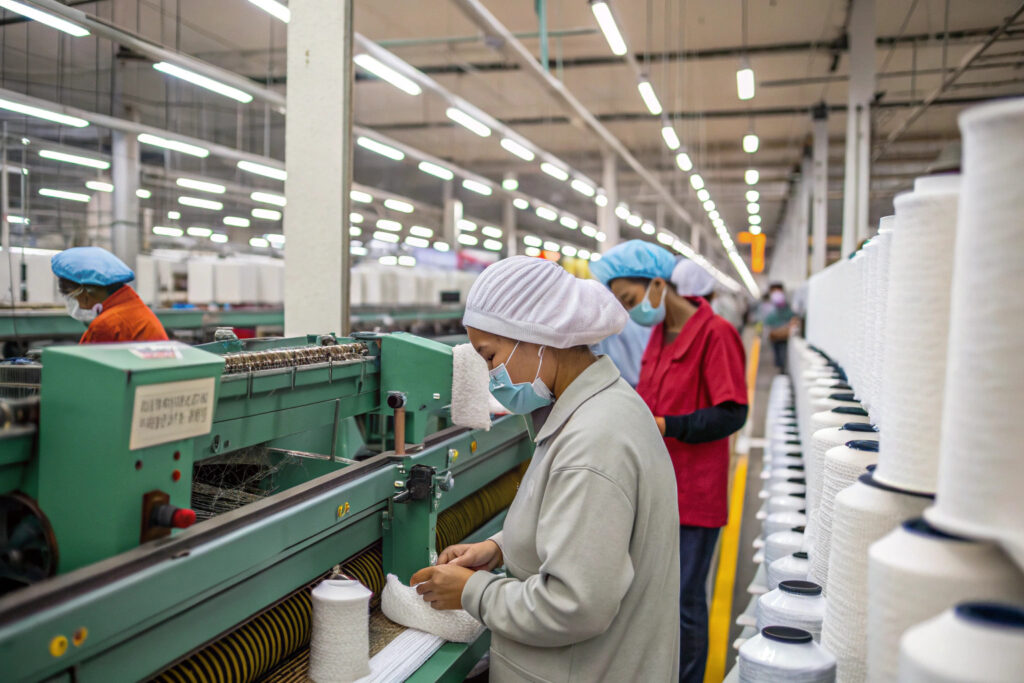
Besides antibacterial testing, we check moisture-wicking, abrasion resistance, and shrinkage rates. For example, our in-house CNAS-accredited lab measures colorfastness to perspiration and dimensional stability after washing. These tests guarantee the socks meet the performance expectations of high-end retail chains and sportswear brands.
Marketing and Positioning Your Natural Antibacterial Socks
Even the best product will fail if it’s not positioned correctly in the market. The story you tell about your socks can be as important as the performance itself.

How to tell the eco-friendly story to customers?
Consumers want proof, not just promises. Share your certifications like OEKO-TEX Standard 100 and GOTS on your packaging. Use social media to show behind-the-scenes production footage, from bamboo harvesting to final product testing. This builds trust and shows your environmental commitment.
Highlight the functional benefits clearly: odor control, moisture-wicking, and comfort. Use short, powerful claims like “Fresh Feet, Naturally” to grab attention.
What channels work best for reaching eco-conscious buyers?
Online marketplaces like Alibaba are good for bulk buyers, but direct-to-consumer sales through branded websites can create higher margins. Collaborating with sustainable fashion influencers on Instagram or TikTok also works well. Trade shows like the Outdoor Retailer Show in the US are ideal for meeting wholesale buyers looking for eco-friendly performance socks.
Conclusion
Natural materials like bamboo, merino wool, and hemp offer a proven path to creating antibacterial socks that are both high-performance and eco-friendly. By carefully selecting fibers, using sustainable dyeing methods, and testing performance, you can deliver products that stand out in a crowded market. With the right marketing strategy, these socks can win loyal customers who value both comfort and sustainability.
If you are ready to create your own antibacterial sock collection with professional development, testing, and global shipping support, contact our Business Director Elaine at elaine@fumaoclothing.com and let Shanghai Fumao bring your product vision to life.