As a sock manufacturer and exporter, I see many clients struggle with the logistics of sustainable shipping. The pressure to reduce carbon footprints is real. It affects your brand image and bottom line. You need solutions that are both eco-friendly and cost-effective.
Implementing carbon-neutral shipping for sock exports involves a comprehensive strategy that includes selecting green logistics partners, optimizing packaging, utilizing carbon offset programs, and leveraging data-driven route optimization. This approach not only reduces environmental impact but also aligns with the growing consumer demand for sustainable products and can potentially lower long-term shipping costs through increased efficiency.
Many sock brands want to go green but get stuck on the practical steps. The process seems complex. But it is achievable with the right partner. Let me guide you through the key strategies we use at GlobalSock to make our exports carbon-neutral. You can do this too.
What is Carbon-Neutral Shipping and Why Does It Matter?
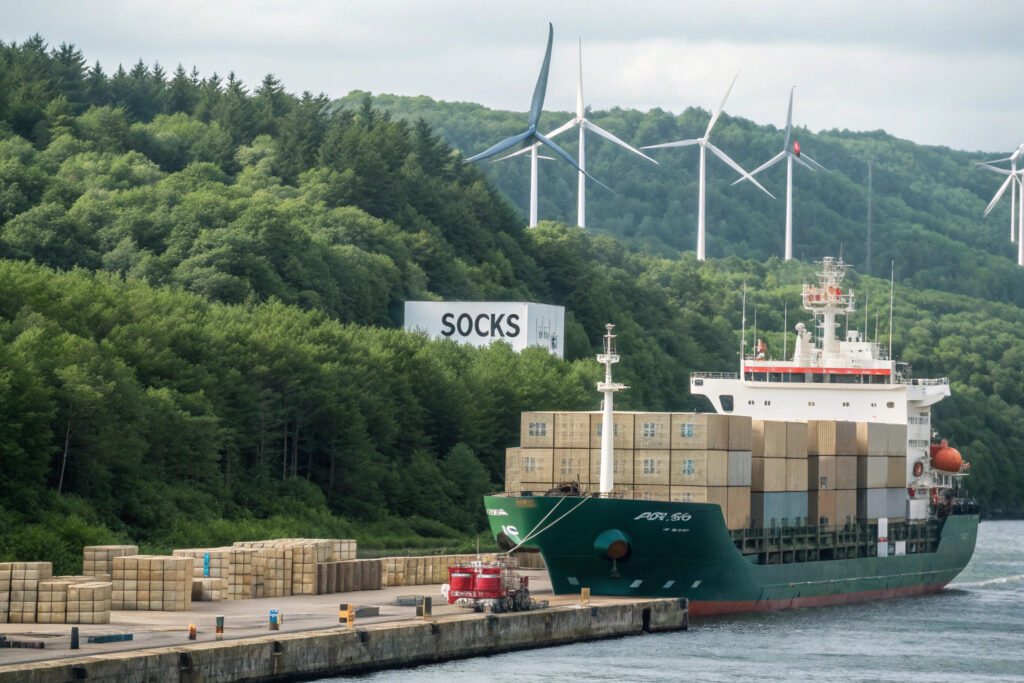
You hear the term "carbon-neutral" often. But what does it mean for shipping socks from China to the US? Simply put, it means balancing the carbon dioxide emissions from transportation by removing an equivalent amount from the atmosphere. This is crucial for our industry’s future.
Carbon-neutral shipping is a state where the net carbon emissions from the logistics process are zero. This is achieved by calculating the emissions generated from transporting goods and then investing in projects that reduce or capture an equivalent amount of CO2 elsewhere, such as reforestation or renewable energy initiatives. For sock exporters, this matters because it directly addresses the environmental cost of global trade, turning a necessary business function into a positive brand statement.
The fashion and textile industry is a significant contributor to global carbon emissions. As a key player in the socks supply chain, we have a responsibility to lead the change. Adopting carbon-neutral shipping is no longer just a trend; it’s a core expectation from environmentally conscious consumers and business partners in Europe and North America.
How Do Carbon Emissions from Shipping Affect Your Business?
The impact is more than just environmental. High carbon emissions can lead to increased costs due to potential carbon taxes and regulations. Your clients, especially in the EU and US, are increasingly making purchasing decisions based on a company’s sustainability profile. A poor environmental record can lose you major contracts.
Furthermore, inefficient shipping routes and outdated logistics directly contribute to higher emissions and slower delivery times. This affects your promise of fast production and high yield. By focusing on reducing emissions, you often simultaneously improve your supply chain’s efficiency and reliability. Partnering with a manufacturer that understands this, like our team at GlobalSock, is key. We ensure our agile supply chain is built for speed and sustainability.
What Are the Core Benefits of Going Carbon-Neutral?
The benefits are clear and compelling. First, it significantly enhances your brand value. You can market your socks as sustainably delivered, which is a powerful differentiator. Second, it future-proofs your business against tightening environmental regulations, such as the Carbon Border Adjustment Mechanism (CBAM) in the EU.
Third, it can lead to economic advantages. While there might be an initial investment, optimizing for carbon neutrality often reveals inefficiencies in your logistics. This can lead to long-term cost savings. Our clients find that our commitment to green logistics, including our use of overseas warehousing under the "Silk Road Keqiao" initiative, provides them with a stable, resilient, and marketable export model.
How to Choose a Green Logistics Partner for Sock Exports?
Finding the right partner is the first practical step. You cannot achieve carbon-neutral shipping alone. You need a logistics provider that offers transparent, verifiable green options. Your choice here will define your success.
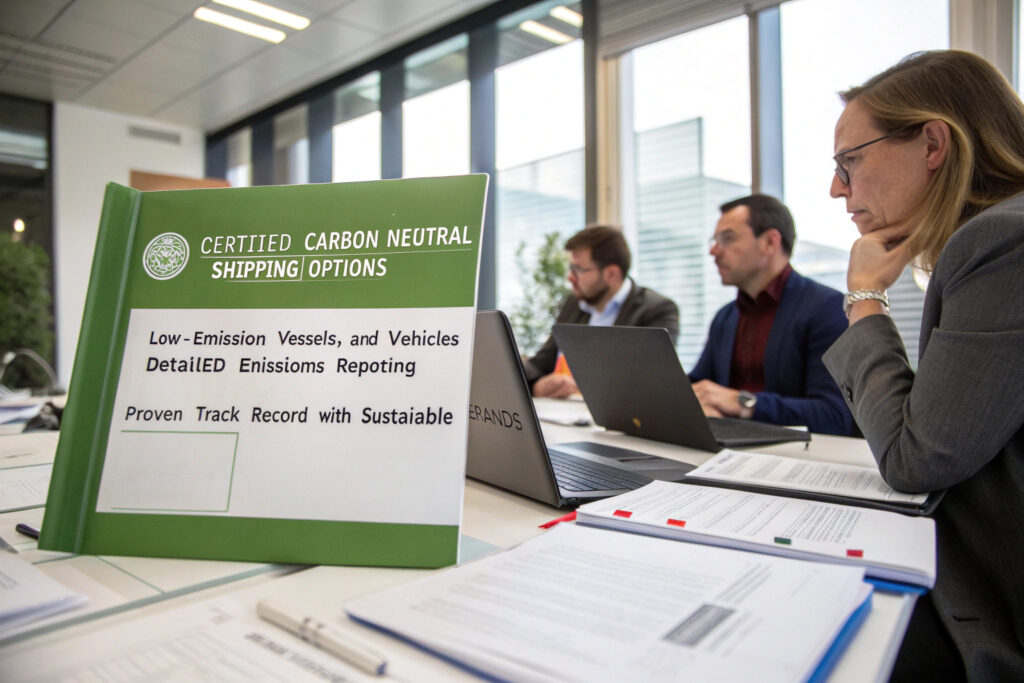
To choose a green logistics partner for sock exports, prioritize companies that offer certified carbon-neutral shipping options, utilize low-emission vessels and vehicles, provide detailed emissions reporting, and have a proven track record with other sustainable brands. Look for partners who are actively investing in cleaner technologies and offset projects, rather than just offering offsets as an afterthought.
At GlobalSock, we have spent years vetting and building relationships with logistics providers who share our sustainability vision. We don’t just pick the cheapest option. We select partners who can provide data on their carbon footprint and have clear reduction targets. This allows us to offer our clients a seamless, eco-conscious shipping experience directly from our hub in Keqiao.
What Certifications Should You Look For?
Certifications are your proof. They separate genuine efforts from greenwashing. Key certifications to look for in a logistics partner include the ISO 14064 standard for greenhouse gas accounting and verification. Also, look for providers whose offset projects are validated by standards like the Verified Carbon Standard (VCS) or the Gold Standard.
For the socks and textiles industry, a partner familiar with EU eco-certifications and regulations is a huge advantage. This ensures that not only your product, like our Recycled polyester or Organic Cotton Socks, but also its journey to the customer, meets the highest environmental benchmarks. We make sure our partners’ certifications align with our own CNAS-accredited lab standards for a fully verified chain of custody.
How Can Data and Technology Optimize Shipping Routes?
Technology is the engine of green logistics. Advanced data analytics and AI can optimize shipping routes to reduce fuel consumption and avoid delays. This means identifying the most direct routes, considering weather patterns, and consolidating shipments to maximize container space.
We leverage this in our supply chain. Our partnerships enable us to use AI-driven analysis not just for trend forecasting in sock design, but also for logistics planning. By optimizing routes from our multimodal hubs in Keqiao, we minimize transit times and emissions. This directly addresses pain points like inefficient pricing and sailing schedule uncertainty, ensuring your socks arrive on time with a smaller carbon footprint.
What Are the Best Sustainable Packaging Options for Socks?
Your socks’ eco-friendly journey starts with the package. The right packaging reduces waste, weight, and environmental impact. It’s the first thing your customer sees and a powerful touchpoint for your brand’s values.
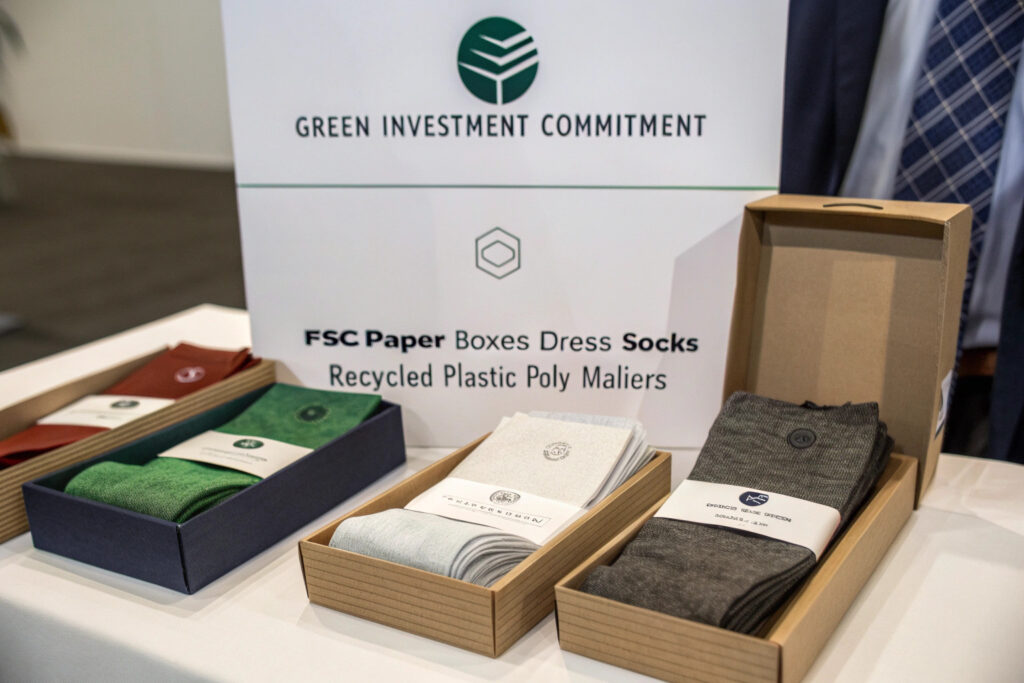
The best sustainable packaging options for socks include using recycled and biodegradable materials like post-consumer waste (PCW) cardboard or paper, minimalist designs that eliminate excess space, and plant-based compostable poly mailers. These options significantly reduce the carbon footprint associated with raw material extraction, production, and waste management, while also protecting the product during transit.
We have moved beyond the oversized box. For our clients, we offer a range of packaging solutions that align with their sustainability goals. From using FSC-certified paper for dress socks to minimalist, branded recycled plastic poly mailers for casual socks, we ensure the unboxing experience is premium and planet-friendly. This is part of our ¥550M green investment commitment.
How Does Lightweight Packaging Reduce Carbon Footprint?
The logic is simple: less weight means less fuel burned during transport. By redesigning packaging to be lighter and more compact, you can fit more units per shipment. This reduces the number of trips required and the total emissions per pair of socks.
For example, switching from a rigid box to a tailored, lightweight mailer for our Ankle Socks and No-Show Socks can cut packaging weight by over 50%. When you’re shipping containers across the ocean, this saving compounds dramatically. It’s a direct operational change that lowers shipping costs for you and reduces the environmental burden, creating a win-win situation.
What Eco-Friendly Materials Are Available?
The material science behind packaging has evolved rapidly. Today, we have several high-performance, eco-friendly options. These include post-consumer recycled (PCR) cardboard and paper, which give existing materials a new life. We also use bioplastics derived from corn starch or seaweed, which are compostable under the right conditions.
For a premium product like our Merino Wool Socks or Silk Socks, we might use molded pulp from bamboo or bagasse (sugarcane waste). These materials are not only sustainable but also provide excellent cushioning. By choosing these materials, we help our clients avoid the tariff costs and security concerns associated with non-compliant packaging in sensitive markets.
How to Measure and Offset Your Shipping Emissions?
You cannot manage what you cannot measure. Accurate calculation of emissions is the foundation of any carbon-neutral claim. After measurement, you can invest in credible offsets to balance your footprint.
To measure and offset shipping emissions, you must first use a standardized calculator (like the GLEC Framework) to quantify the CO2e (Carbon Dioxide Equivalent) generated from your sock shipment’s journey. Once calculated, you can purchase carbon credits from verified offset projects, such as wind farms, solar energy installations, or forest conservation programs, that are certified to reduce or remove an equivalent amount of emissions.
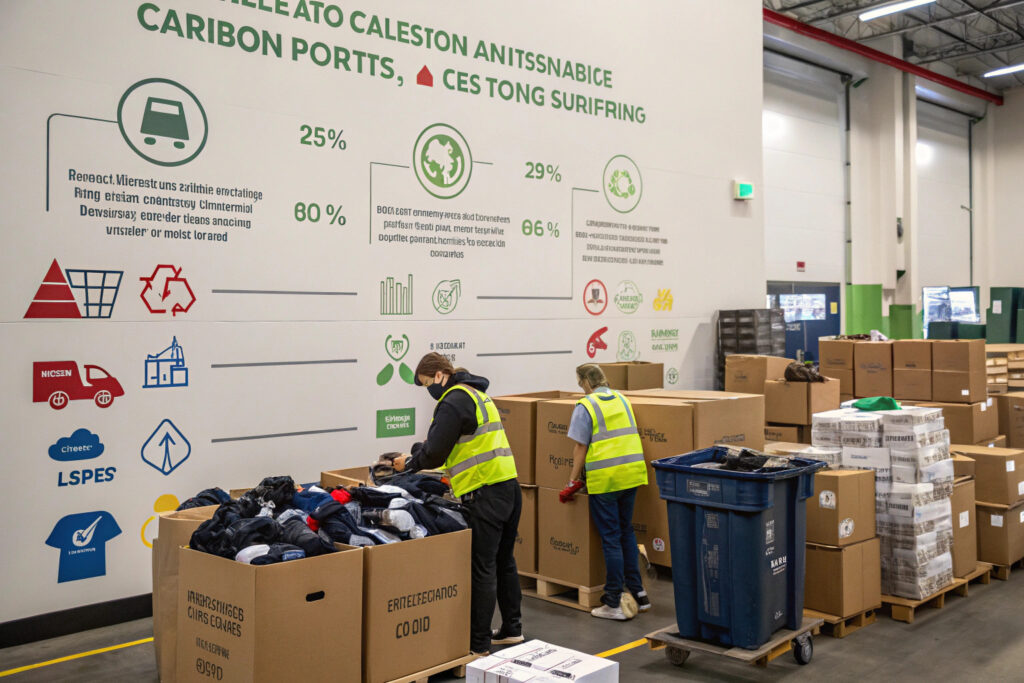
We integrate this process directly into our service. For every order, we can provide a emissions report based on the weight, destination, and transport mode. We then give our clients the option to offset this footprint through our partnerships with Gold Standard verified projects. This turnkey solution makes it easy for brands like yours to achieve carbon-neutral status without the administrative headache.
What Tools Can Accurately Calculate Carbon Footprint?
Reliable calculation is non-negotiable. The most respected tool is the Global Logistics Emissions Council (GLEC) Framework. It provides a standardized method for calculating logistics emissions across different transport modes (sea, air, land). Many logistics software platforms now integrate GLEC-compliant calculators.
In our CNAS-certified lab, we are used to working with precise data. We apply the same rigor to our logistics. We use advanced QR code tracking not just for composition and quality data, but also to provide transparency in the supply chain. This data feeds into our footprint calculations, giving you a clear and auditable record of your shipment’s environmental impact from our door to yours.
How to Select High-Quality Carbon Offset Projects?
Not all carbon offsets are created equal. High-quality projects are additional (they wouldn’t happen without the offset funding), permanent, and verified by third parties like Verra or the Gold Standard. Avoid older projects with questionable long-term benefits.
We guide our clients towards projects that also have co-benefits, such as supporting biodiversity or community development. For instance, investing in a wind power project in China not only offsets emissions from shipping our Bamboo Socks to the US but also contributes to the local green energy transition. This holistic approach ensures your investment in offsets creates maximum positive impact, strengthening your brand’s overall sustainability story.
Conclusion
Transitioning to carbon-neutral sock exports is a multi-faceted but entirely achievable goal. It requires a strategic approach involving green partners, smart packaging, and verified offsetting. This journey not only safeguards the environment but also builds a stronger, more resilient, and more desirable brand in a competitive global market. The steps outlined here provide a clear roadmap to turn this ambition into a operational reality.
If you are ready to partner with a socks manufacturer that has the expertise, supply chain, and commitment to make your exports both high-quality and carbon-neutral, we should talk. At GlobalSock, we co-create value with our clients by integrating sustainability from design to delivery. For a direct conversation about how we can help you produce your own sock orders with a lower carbon footprint, please contact our Business Director Elaine at her email: elaine@fumaoclothing.com. Let’s build a greener future for footwear, together.