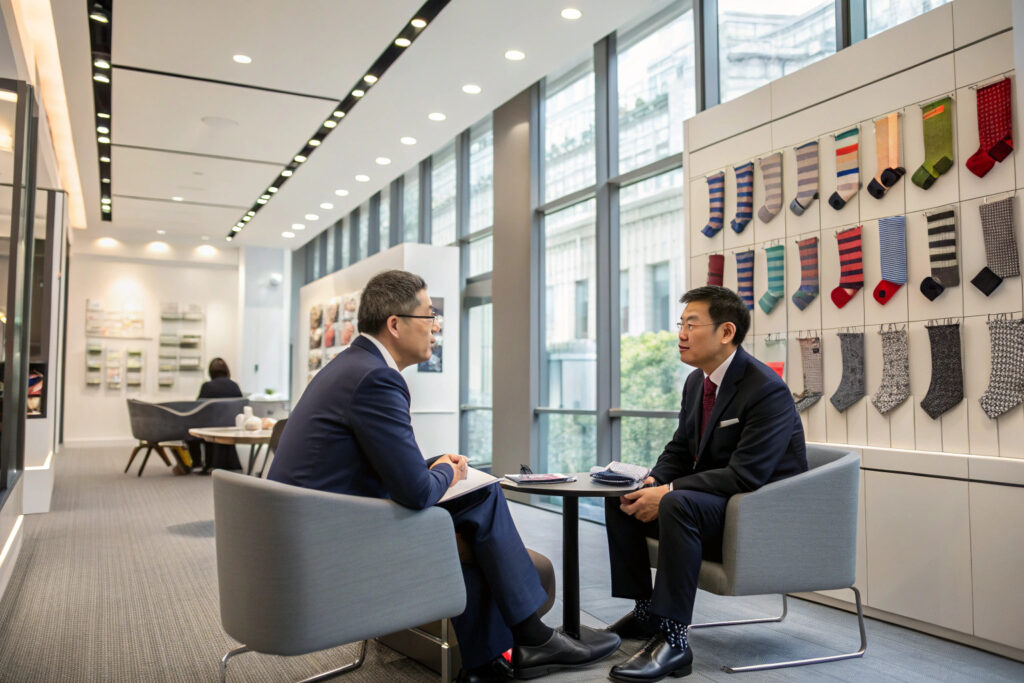
Launching a sock brand is exciting—but nothing challenges new founders more than negotiating bulk prices without sacrificing quality. For startups, it’s a fine balance between getting favorable rates and building long-term supplier trust. Whether you’re a fashion startup, an Amazon seller, or a Shopify brand, understanding how to approach Chinese sock manufacturers strategically can determine your profit margin and scalability.
Startups can secure better sock prices by preparing data, understanding MOQ flexibility, focusing on long-term potential, and leveraging supplier pain points. Building trust, not just bargaining, is what unlocks sustainable margins.
When I started GlobalSock, I learned that negotiation isn’t a battle—it’s a bridge. You’re not just buying socks; you’re establishing a partnership. With the right tactics, even small brands can negotiate like the big players and benefit from China’s textile manufacturing powerhouse.
What MOQ Should Startups Aim For When Negotiating?
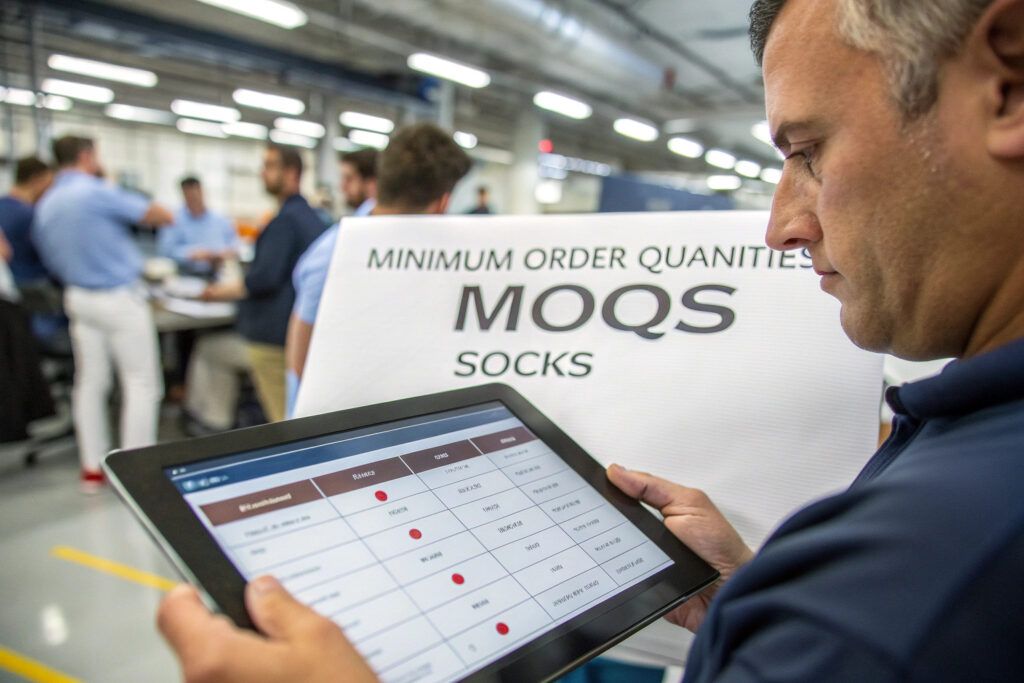
Minimum Order Quantity (MOQ) can make or break a startup's budget. Too high, and you’re stuck with inventory. Too low, and you might face premium pricing or rejection. Let’s break it down.
Most Chinese sock manufacturers offer scalable MOQ tiers, often starting from 500 to 1,000 pairs per style. The more you order, the more room you have to negotiate per-unit pricing and value-added services.
How Do MOQ Tiers Affect Price Negotiation?
MOQ is your leverage. Manufacturers often use tiered pricing:
| Quantity Range | Unit Price (USD) |
|---|---|
| 500–999 pairs | $1.20 |
| 1,000–4,999 | $0.95 |
| 5,000+ | $0.75 |
Request a detailed price break early in discussions. Some suppliers allow mixed styles under the same MOQ umbrella, especially if you’re buying multiple SKUs within a single production run.
Can Startups Negotiate Lower MOQs?
Yes. Many manufacturers—especially in Keqiao or Yiwu—are open to smaller runs if:
- You offer long-term potential.
- You’re testing 3–5 styles in one go.
- You accept limited customization (like using existing yarns or colors).
Frame your request as a pilot program and emphasize reorders.
How Do You Use Volume Forecasts to Get Better Pricing?
If you’re just starting out, suppliers may assume you’ll disappear after one order. That’s where forecasting helps.
By showing projected purchase volumes over 6–12 months, you can convince manufacturers to lower prices early to win your loyalty.

What Should a Volume Forecast Include?
Use a simple slide or spreadsheet to show:
- Month-by-month sock demand estimates
- Seasonal spikes (e.g., holiday gifting)
- Style breakdown (e.g., 40% crew, 30% ankle, 30% compression)
- Growth assumptions based on market research or platform sales
This builds credibility and encourages the supplier to view you as a growing partner rather than a one-off buyer.
How Can You Make Forecasts More Convincing?
Reference existing data if you're already selling:
- Shopify/Shopline sales
- Amazon FBA velocity
- Google Trends interest by region
If you're pre-launch, refer to email waitlists, Kickstarter preorders or influencer partnerships as indicators of real intent.
What Factory Cost Drivers Should You Understand?
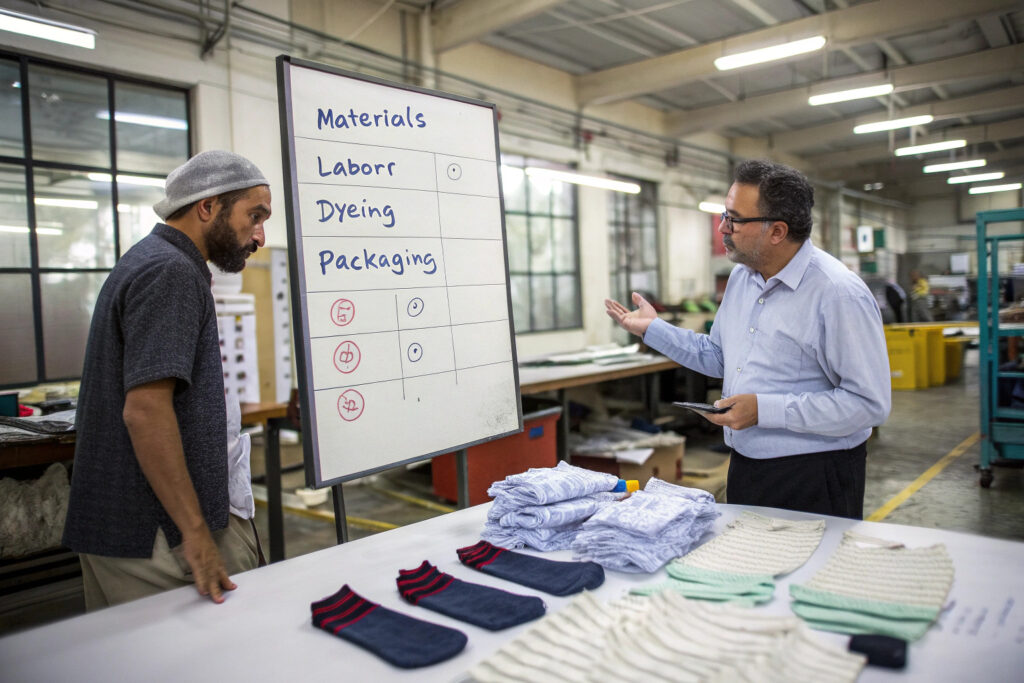
Too often, startup buyers haggle without understanding what drives prices. This approach damages trust. Instead, ask about cost components.
Knowing what contributes to your sock’s price—like yarn type, stitch count, packaging—helps you negotiate smartly and respectfully.
What Are the Key Cost Components of Socks?
Here’s a simple breakdown of what manufacturers calculate into your price:
| Component | Description |
|---|---|
| Yarn Cost | Material type: cotton, bamboo, wool, etc. |
| Knitting Complexity | Patterns, jacquard, compression zones |
| Dyeing & Finishing | MOQ limits and eco-cert dye processes |
| Packaging | Hang tags, OPP bags, labels |
| Labor | Skilled labor and factory overhead |
| Logistics | Domestic transport to port, container share |
When you understand these, you can suggest smart tradeoffs like bulk packaging or using stock yarn to reduce costs.
Can You Adjust Specs to Fit Budget?
Absolutely. If the target price is $0.80 but your spec costs $1.05, ask your factory:
- Can we use 168N instead of 200N needle count?
- Is there a cheaper heel reinforcement yarn?
- Can we bulk-pack 10 pairs per polybag instead of individual?
This turns negotiation into collaboration.
How Do You Build Trust for Long-Term Discounts?
Your first order is just the beginning. Suppliers often reserve the best rates and service for loyal clients.
By building a strong relationship through transparency, clear communication, and realistic expectations, startups can unlock long-term pricing advantages.

What Role Does Communication Play?
Consistent updates, quick replies, and organized file sharing (e.g., tech packs, AI artwork) signal reliability. Use platforms like:
- WeChat or DingTalk for instant chats
- Shared Google Docs for version control
- Alibaba or independent contracts for accountability
These habits reduce misunderstandings and project delays.
Should You Offer Long-Term Commitment Early?
If you're confident in your business plan, yes. Propose a framework:
- Trial order: 1,000 pairs
- If quality & timeline are met: 3,000 more in 60 days
- Pricing locked if reorder hits MOQ within timeframe
This gives suppliers security and often unlocks perks like free packaging or lower deposit terms.
Conclusion
Negotiating bulk sock pricing isn’t just about numbers—it’s about trust, clarity, and strategic thinking. From understanding MOQ structures to presenting long-term forecasts, every step builds your credibility and strengthens your bargaining power. At GlobalSock, we've helped dozens of startups scale from their first 1,000 pairs to ongoing 50,000+ pair orders. The key is to start conversations the right way.
If you’re ready to develop your sock collection with a reliable, fast, and quality-driven factory in China, we’d love to be your partner. You can contact our Business Director Elaine at elaine@fumaoclothing.com to discuss your project today.