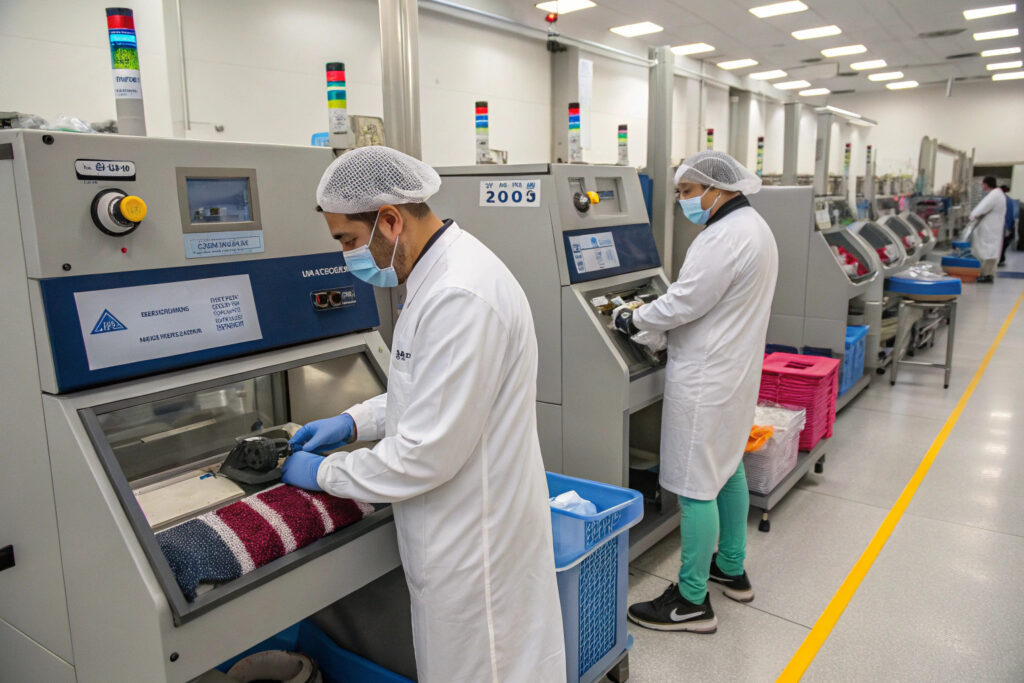
When a U.S. buyer receives a bulk order of socks from China, one of the most frustrating things that can happen is complaints about holes or pilling after just a few wears. Poor durability not only kills your rep but leads to customer returns and lost sales. Ron, I’ve seen clients cancel entire reorders over this one issue.
If you want your socks to survive wear, friction, and washing—abrasion resistance is non-negotiable. This single fabric trait can predict how long your socks will last, especially in high-stress areas like the heel and toe.
Yet, many buyers still don’t understand how abrasion resistance is measured, what the global standards are, or how they should evaluate test reports from Chinese sock suppliers. This guide aims to fix that.
What Is Abrasion Resistance in Socks?
Abrasion resistance is the sock’s ability to withstand surface rubbing or friction without breaking down. Whether it’s the foot rubbing against the shoe, or the sock rubbing against itself, this constant friction causes fibers to fray, pills to form, and eventually holes to appear.
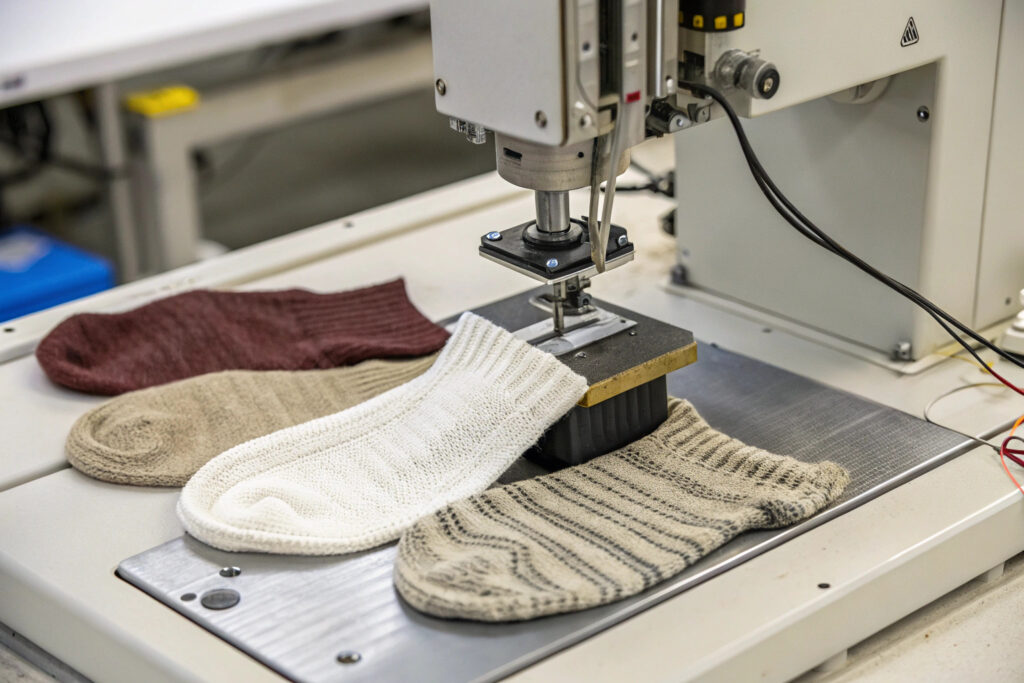
Abrasion resistance is tested using standard textile methods like Martindale or Taber abrasion tests, both designed to simulate real-life wear.
Why Is This Important for Sock Buyers?
In socks, abrasion damage usually begins in the toe, heel, and sole zones. These high-friction areas are vulnerable during walking, running, and even washing cycles. If these zones wear out too quickly, socks lose their function and comfort.
For retail brands and online sellers, poor durability means:
- Lower customer satisfaction scores
- High return rates
- Loss of brand trust
According to a report by Fibre2Fashion, over 65% of fabric wear failures start with abrasion issues, especially in hosiery and sports socks.
What Causes Abrasion Failure in Socks?
- Low tensile strength yarns like unblended cotton
- Poor knit density or inconsistent gauge
- Weak reinforcement in heel & toe
- Over-softening during finishing treatments
That's why at GlobalSock, we integrate abrasion testing early in development—even during sampling.
What Are the Key Sock Abrasion Test Standards?
Each market or buyer may refer to a different abrasion testing standard, but a few dominate globally. Understanding them will help you interpret your supplier's lab reports with more confidence.
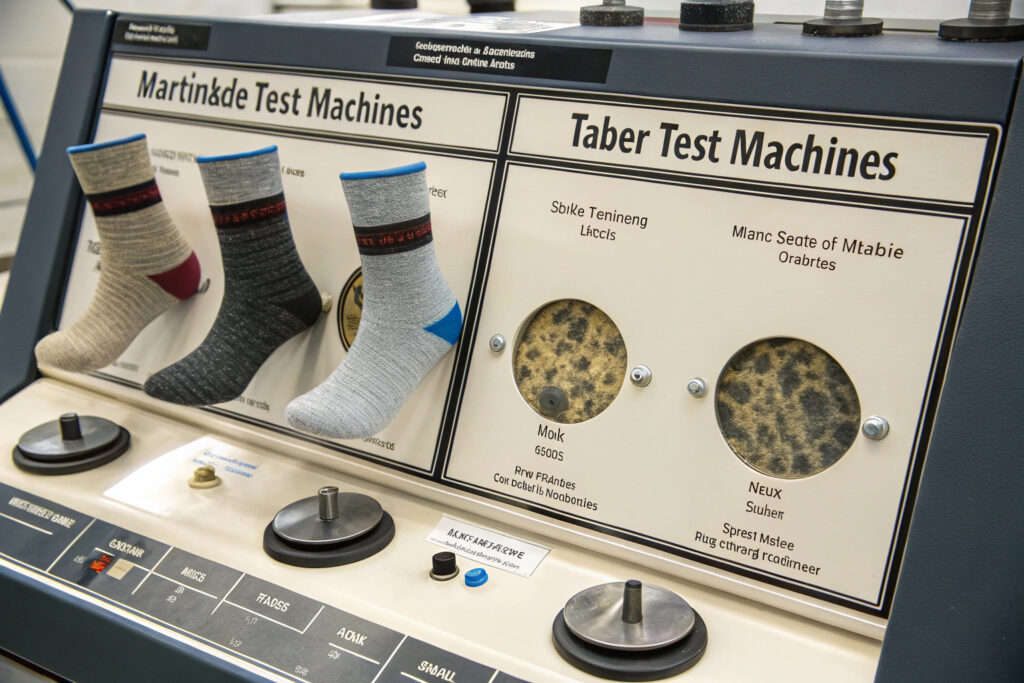
The two most common test protocols used in socks are Martindale and Taber abrasion tests, each with different rub mechanics.
What Is the Martindale Abrasion Test?
This is the most widely accepted standard for hosiery and apparel in Europe. It uses a rotating circular motion to simulate fabric-to-surface friction.
- Test Standard: ISO 12947 or ASTM D4966
- Result Unit: Number of rubs until breakdown
- Pass Benchmark:
- Basic socks: 5,000–10,000 cycles
- High-performance: 20,000+ cycles
Find the ISO 12947 full document here to understand material setup and measurement protocols.
What Is the Taber Abrasion Test?
Used more in North America and for industrial fabrics. It’s more aggressive than Martindale and uses a rotating disk with abrasive wheels.
- Test Standard: ASTM D3884
- Result Unit: Mass loss (mg) or cycles until hole
- Pass Benchmark: Lower mass loss = higher durability
You can refer to the ASTM D3884 summary for performance categories.
How Do Fabric Types Influence Abrasion Resistance?
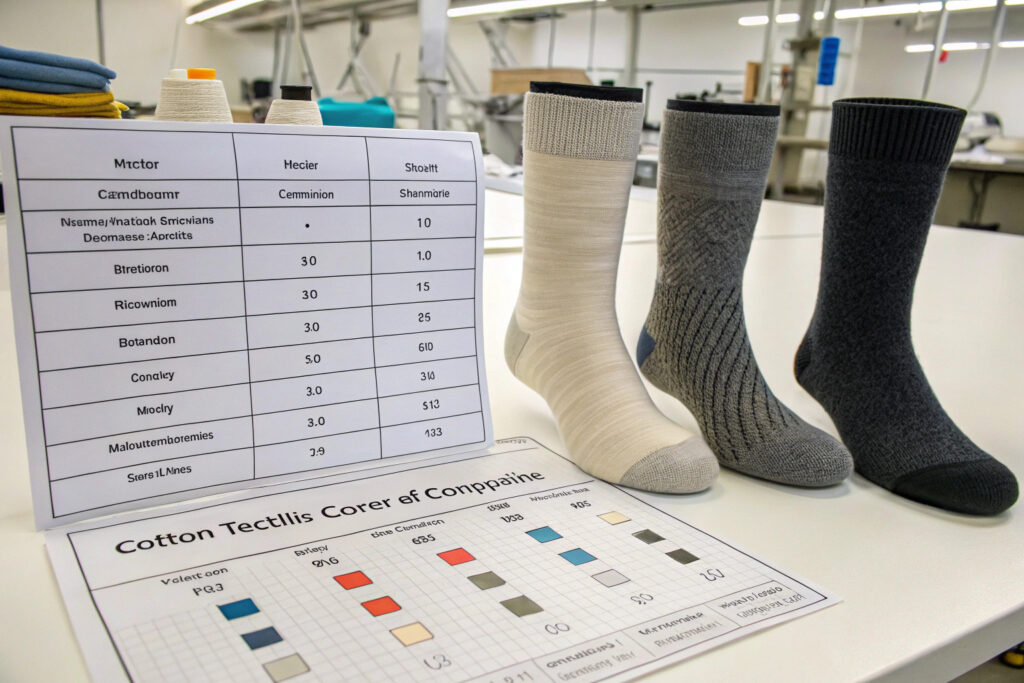
Some fibers naturally perform better against abrasion. Others need reinforcement or blending to meet durability targets. Here’s how different fibers behave:
Yarn type, spinning technique, and blend composition all impact abrasion resistance.
Which Sock Fibers Last the Longest?
| Material Type | Abrasion Resistance | Notes |
|---|---|---|
| Nylon/Spandex | ★★★★★ | Excellent in compression and athletic socks |
| Bamboo/Viscose | ★★☆☆☆ | Soft but weak under repeated rub |
| Organic Cotton | ★★★☆☆ | Needs reinforcement in high-wear zones |
| Merino Wool | ★★★★☆ | Natural resilience + odor control |
| Polyester (Recycled) | ★★★★☆ | Good balance, eco-friendly alternative |
Source: Based on lab benchmarking from SGS Textiles
How Do Knitting Techniques Affect Durability?
- Higher Gauge: Denser knits = better resistance
- Reinforced Zones: Additional nylon or polyester yarns at stress points
- Loop Pile: Common in terry socks, adds cushion and wear tolerance
At GlobalSock, we use 168N–200N knitting machines and employ high-friction yarn reinforcements in all our sports and thermal collections.
How to Read and Verify Abrasion Test Reports?
If a Chinese supplier hands you a test report, how do you know it’s real? More importantly, how do you understand what it means for your product?
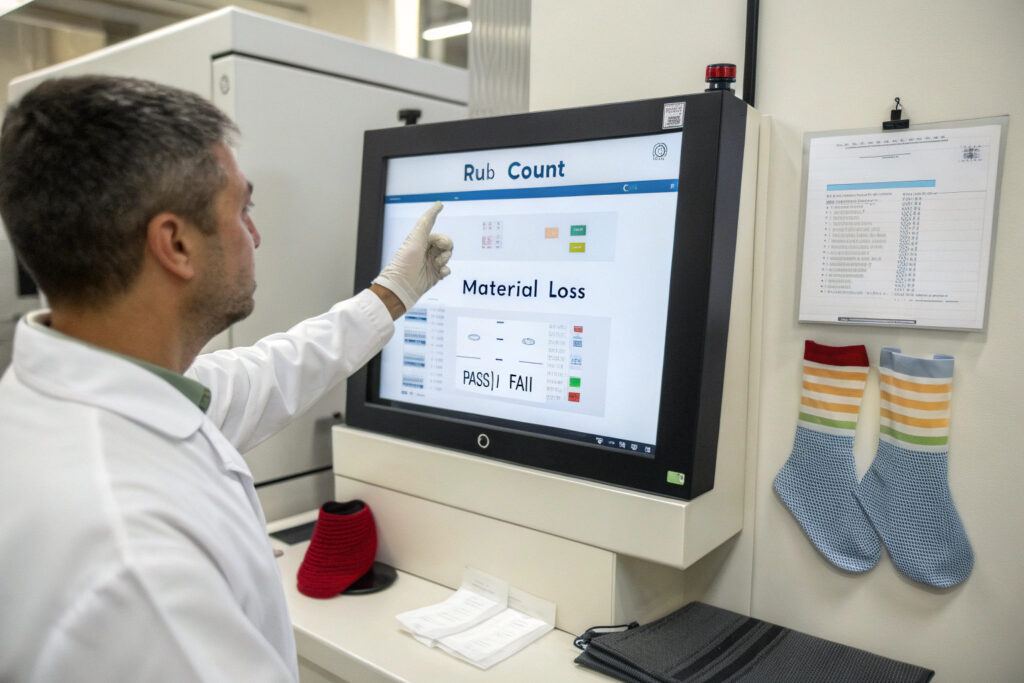
Legit reports will specify method used, machine type, fabric breakdown point, and cycle count. Always look for CNAS or equivalent accreditation.
What to Look for in a Sock Abrasion Report?
- Test Method Reference – e.g., ISO 12947-2
- Cycles Counted – Actual number of rubs or rotations
- Breakdown Description – Fabric change, hole, fuzzing
- Test Sample Location – Heel, toe, sole
- Material Composition – Verified yarn info
Reports from Intertek or SGS typically follow this format and may include fabric photos before/after testing.
How to Validate a Chinese Supplier’s Claims?
- Ask for CNAS-accredited third-party test reports
- Cross-check test method version (e.g., ISO 12947:2020 vs older)
- Request pre- and post-abrasion photos
- Confirm testing done on final production sample, not just lab-developed swatch
At GlobalSock, we offer QR-coded digital reports linking to our CNAS lab database so your sourcing team can audit test data in real time.
How to Improve Sock Durability in Your Next Order?
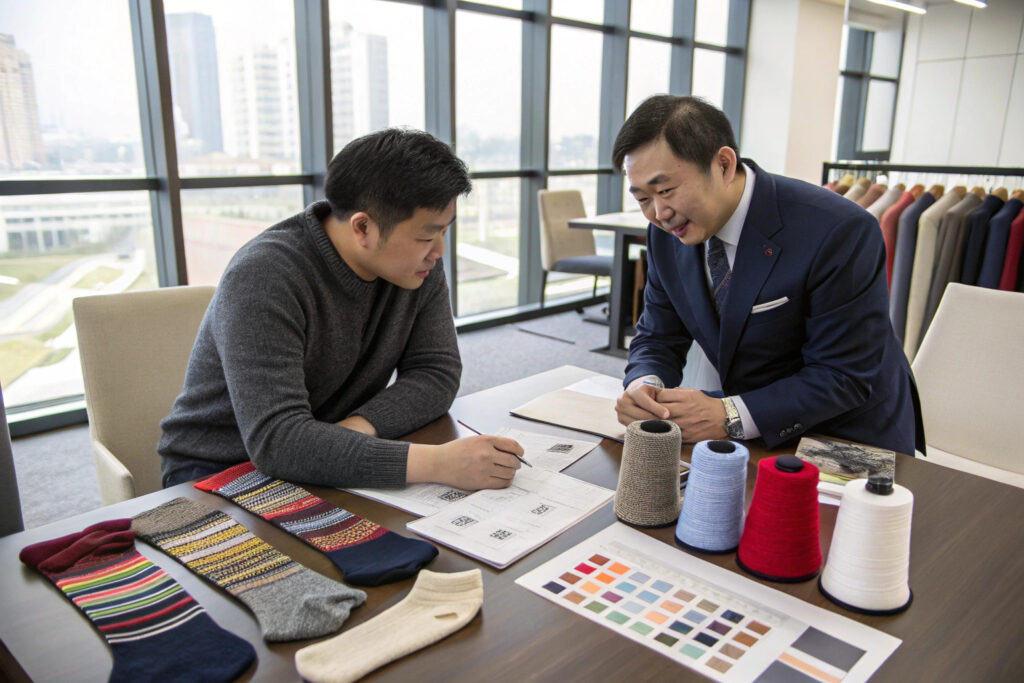
Even if you're not a materials expert, you can influence abrasion resistance at the sourcing stage by asking the right questions and clarifying specs.
Durability doesn’t happen by luck—it’s engineered through smarter sourcing and supplier alignment.
What Should You Ask Your Sock Supplier?
- What is your standard abrasion test score for this sock type?
- Do you reinforce heel/toe zones in this model?
- What yarn blend do you use for athletic vs. casual socks?
- Can you provide past test reports from third-party labs?
You should also review their yarn sourcing partners. Reliable sock mills in Keqiao often partner with suppliers like Hyosung or Toray for quality raw materials.
How Can We Support You at GlobalSock?
- 7-day sample testing with CNAS lab reports
- Over 1,000+ tested yarn blends in stock
- Durable sock programs for Amazon, Walmart, and EU retailers
- Eco-durable collections with recycled polyester, organic cotton
You can even use our virtual testing showroom to simulate abrasion outcomes based on your chosen yarns and usage needs.
Conclusion
Understanding abrasion resistance is key to predicting sock durability, brand reputation, and long-term buyer satisfaction. Whether you’re ordering compression socks or bamboo fashion socks, knowing how to interpret test results can protect your business from quality issues.
If you’re ready to co-develop a high-durability sock line that meets U.S. performance expectations and passes abrasion standards, let’s talk. Reach out to our Business Director Elaine at elaine@fumaoclothing.com and explore how Shanghai Fumao can be your trusted manufacturing partner for quality-tested sock production.