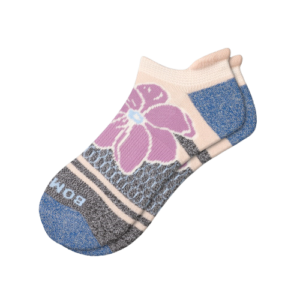

When hospitals and senior care facilities look for reliable non-slip socks, it’s about more than just cozy footwear. Falls are the leading cause of injury among older adults, and proper grip on indoor surfaces can make all the difference. The stakes are high—choosing the right partner to supply these socks isn’t just about price, it’s about safety, certification, and trust.
GlobalSock, with over a decade of experience and CNAS-certified testing, designs hospital-grade non-slip socks that combine safety, comfort, and certified quality.
We understand that elderly patients and hospital patients need more than warm toes. They need confidence when walking down hallways. They need moisture-wicking, antibacterial socks with secure grip and seamless comfort. And they need all of that to arrive on time, in budget, and with no customs delay.
What Features Make Non-Slip Socks Hospital-Safe?
Falls in hospitals aren’t just common—they’re costly. Most healthcare administrators now demand socks that meet strict safety guidelines.
Hospital-safe non-slip socks require certified grip soles, reinforced seams, breathable antimicrobial yarns, and must maintain shape after industrial laundering.
Why Are Grip Soles Critical for Patient Safety?
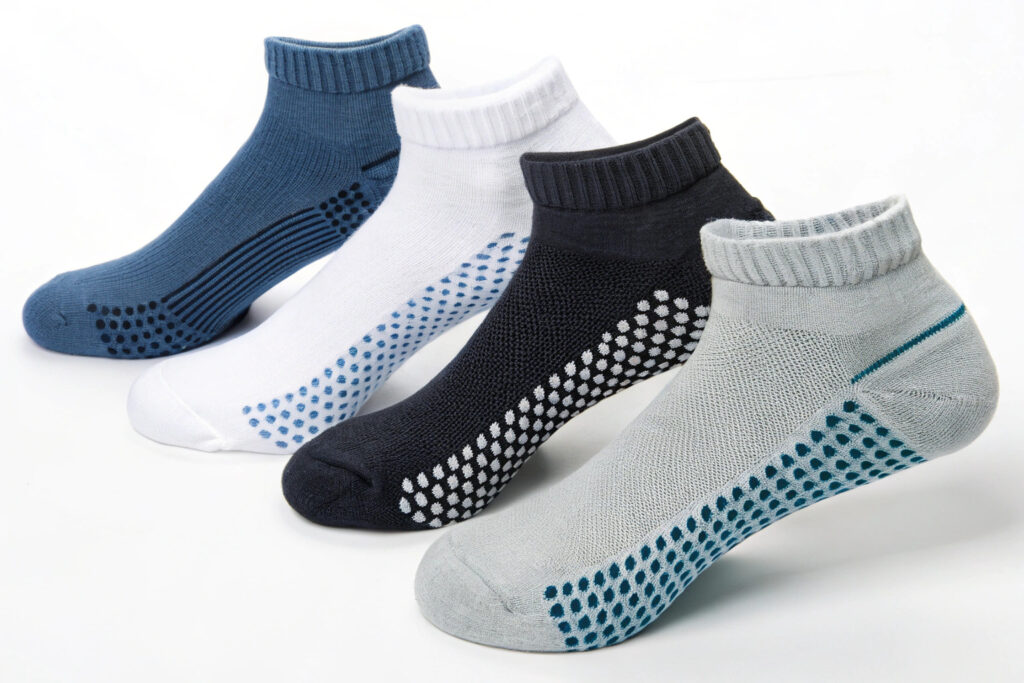
Non-slip grip is the first layer of protection. But not all grips are equal. Medical-grade socks must pass ASTM slip resistance testing, especially when used on polished floors. Our socks use silicon-based or PVC pattern grips that perform well even after multiple washes. These patterns aren’t just aesthetics—they’re engineered layouts that distribute traction evenly.
We offer a variety of grip styles: full sole, heel-to-toe, or forefoot-only for patients undergoing foot treatments. All options are rigorously tested at our CNAS-certified lab for consistent coefficient of friction (COF).
How Does Fabric Composition Impact Patient Comfort?
Hospital patients often wear socks for 24+ hours. That’s why fabric selection can’t be random. We use breathable bamboo viscose and modal blends to reduce sweat and friction. This minimizes odor and discomfort while supporting circulation.
Additionally, our seamless toe technology reduces bunching and pressure at the forefoot—key for patients with diabetic or arthritic conditions. Our products comply with Oeko-Tex Standard 100 Class I for direct skin contact.
What Sock Specifications Are Best for Elderly Use?
Elderly wearers face different risks than post-surgery patients. Their mobility, skin sensitivity, and foot structure require a tailored approach.
The best non-slip socks for elderly use combine soft cushioning, gentle compression, and skin-friendly materials with durable, wash-proof traction.
What Cushioning and Support Features Are Essential?
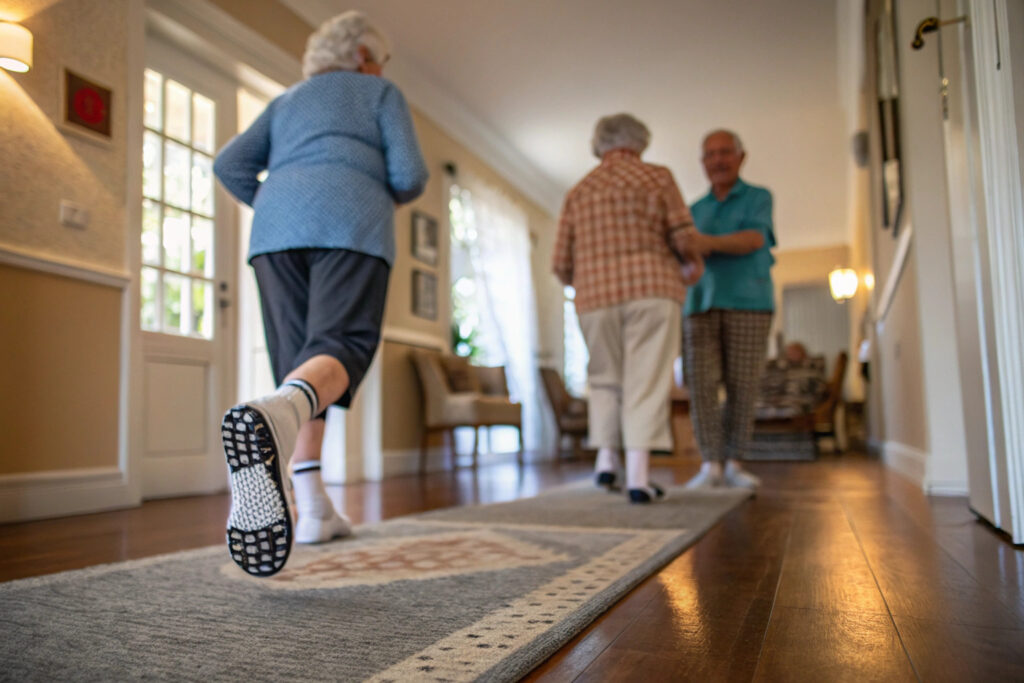
Aging feet lose natural padding. Our socks are engineered with terry loop cushioning in key pressure zones: heel, metatarsals, and Achilles. This cushioning protects from ulcers, especially for diabetics or bed-ridden individuals. A padded arch band helps reduce fatigue during indoor walking.
We also include gentle compression zones (10–15 mmHg) to promote circulation without feeling tight. This is crucial for patients with peripheral vascular conditions or prone to swelling.
Do Elderly Patients Need Special Sizes or Open-Toe Styles?
Yes. We offer wide-calf and open-toe versions specifically for residents with edema, bunions, or post-operative dressing. These socks are easy to put on, even with limited mobility, thanks to our low-friction interior and flexible cuff design.
We also offer dual-size options (M/L, L/XL) to reduce inventory complexity for care facilities while ensuring a proper fit. This minimizes return rates and ensures continuous usage among long-term patients.
How Should Non-Slip Socks Be Packaged for Hospitals?
Logistics is a key pain point for institutional buyers. They don’t just want socks—they want ready-to-use, trackable, and hygienic packaging.
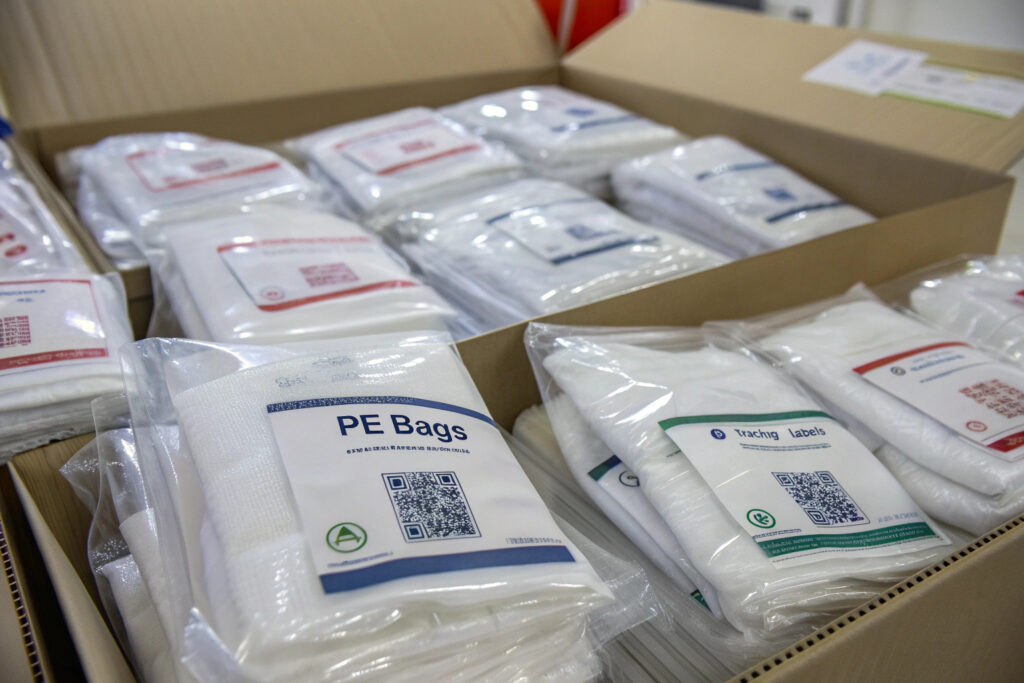
Hospitals prefer socks individually wrapped in sterile PE bags with scannable QR codes for patient safety, batch tracking, and inventory control.
Why Is QR Code Tracking Gaining Popularity?
QR codes allow hospitals to scan and trace socks by batch, composition, and inspection date. Our packaging includes real-time scannable links to safety certificates, OEKO-TEX reports, and COF test results.
For bulk buyers, this creates total transparency during audits or recalls. It also improves restocking efficiency. Many US procurement systems now request pre-labeled units to simplify integration into ERP systems like SAP Ariba.
Which Packaging Types Work Best for Long-Term Care?
We recommend low-lint, recyclable PE bags for single-use protection, then group 10–20 pairs into outer cartons with foam inserts. These cartons are pre-printed with multilingual handling labels and barcodes.
For private label clients, we also offer retail-ready boxes with tamper-evident seals and POS hangtags for pharmacy distribution. All packaging complies with REACH and Prop 65 requirements for material safety.
What Certifications and Testing Ensure Quality and Compliance?
Certifications aren’t just marketing—they’re gatekeepers to market entry, especially in the US and EU. Distributors and hospitals demand proof.
Our socks are tested in CNAS-accredited labs for slip resistance, antibacterial efficiency, colorfastness, formaldehyde levels, and shrinkage consistency.

What International Standards Should Hospital Socks Meet?
For the US, compliance with FDA general hospital textile guidelines is a must. In Europe, we provide CE declaration and meet EN ISO 20347 for occupational footwear performance.
In addition, our lab issues full reports on:
- COF (Coefficient of Friction)
- Colorfastness to washing
- Resistance to chlorine bleach
- Formaldehyde-free declaration
- Bacterial reduction rate (%)
How Can Buyers Verify Sock Quality Before Shipment?
Before bulk production, we offer sample testing under simulated hospital conditions. We also allow video-based inspections and third-party lab verification. Most importantly, our clients can access test results by scanning the QR codes printed on each sock’s inner label.
We encourage overseas buyers to also request a pre-shipment inspection or SGS audit to validate everything from sizing to print accuracy and packaging.
Conclusion
Hospital and elderly care socks are more than just accessories—they’re tools of protection and healing. From grip strength and compression to packaging and documentation, every detail matters. As medical standards tighten, so do buyer expectations. Partnering with a compliant, innovative, and responsive manufacturer makes all the difference.
At Shanghai Fumao, we’re ready to support your next sock project with speed, scale, and uncompromised quality. Whether you’re sourcing for a hospital chain or launching your own private label for senior care, our Business Director Elaine is available to help—reach her directly at elaine@fumaoclothing.com to discuss your needs and start sampling today.