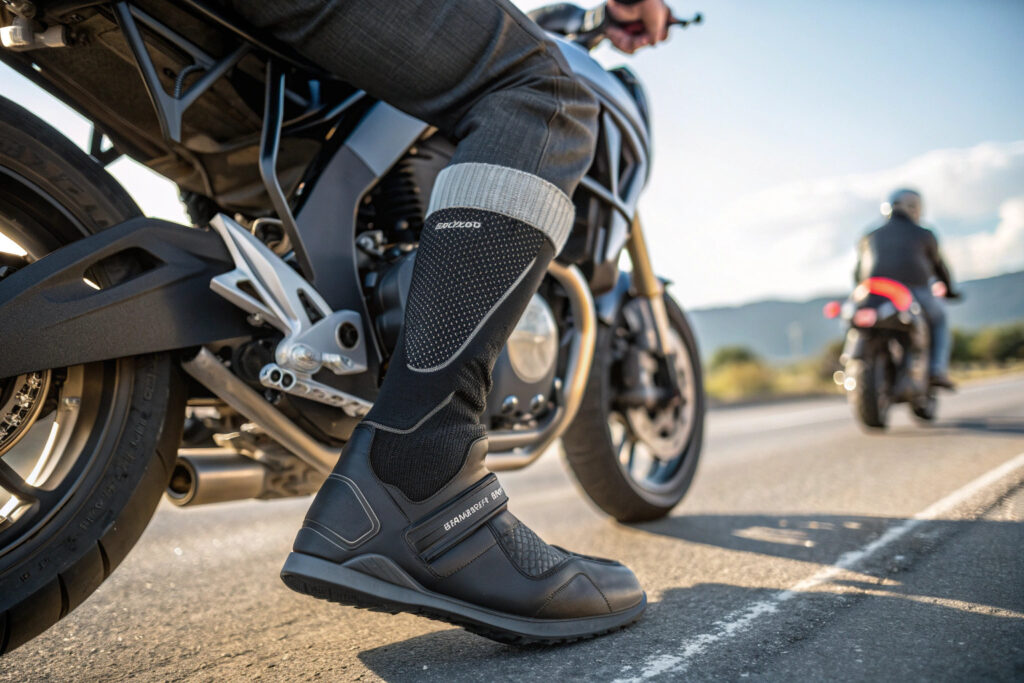
As a motorcycle enthusiast and a socks manufacturer for over a decade, I’ve seen riders invest heavily in jackets and helmets, only to overlook a critical piece of gear: their socks. It’s a common pain point. You’re cruising down the open road, and the last thing you want is a seam digging into your ankle or your socks slipping down inside your boots. This isn’t just about comfort; it’s about safety and performance. So, what truly makes a sock suitable for the unique demands of motorcycle riding?
The best socks for motorcycle riding are specifically engineered for abrasion resistance, secure fit, and ankle protection, going far beyond the capabilities of standard cotton socks. They act as a vital, yet often unseen, layer of defense and comfort between your skin and your riding boots. Key features include reinforced zones at high-wear areas like the ankle and heel, moisture-wicking fabrics to keep feet dry, and a non-slip design that stays in place during long rides. Understanding these features is the first step to making an informed decision that enhances your riding experience.
Let’s gear up and dive into the specific features that set high-performance motorcycle socks apart from your everyday pair. We’ll explore the materials, the construction, and the smart design elements that provide both protection and comfort on every journey.
What features should motorcycle socks have?
When you’re on your bike, your socks are your first line of defense inside your boot. They need to do more than just cover your feet. The right features can prevent blisters, manage sweat, and even provide an extra layer of protection in case of an accident. Many riders don’t realize that their everyday socks might be compromising their comfort and safety.
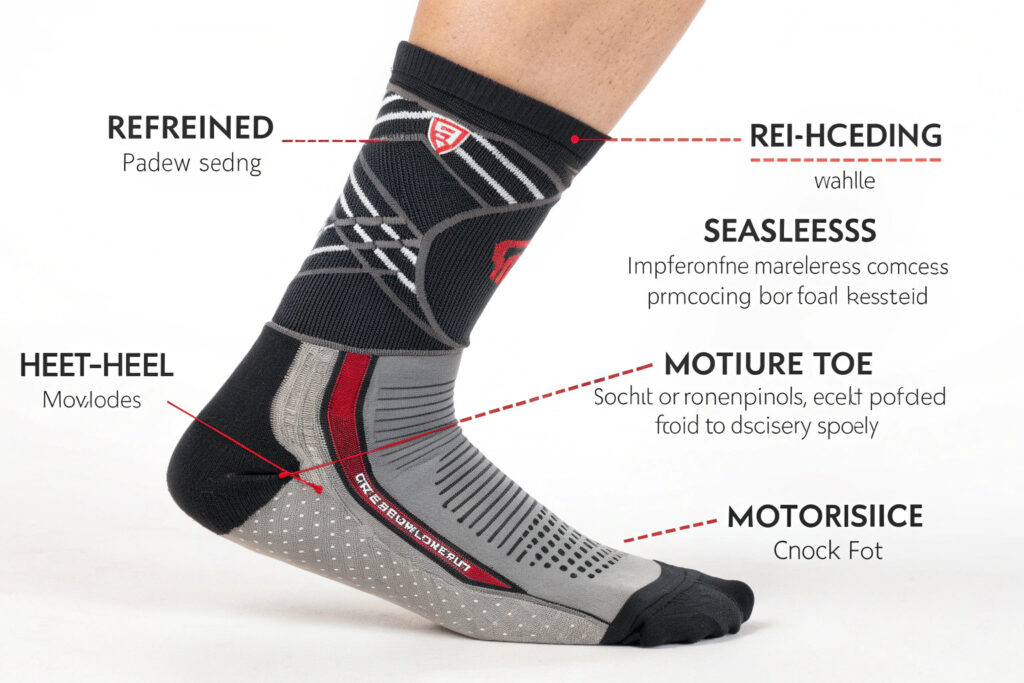
Motorcycle socks must have abrasion-resistant materials, seamless construction, moisture-wicking properties, and a secure, non-slip fit. These core features work together to protect your skin from friction, keep your feet dry and temperature-regulated, and ensure the sock stays perfectly positioned without bunching up. Ignoring any of these aspects can lead to distractions and discomfort, pulling your focus away from the road.
The technology in these socks is a direct response to the physical demands of riding. Let’s break down why these specific features are non-negotiable for any serious rider.
Why is abrasion resistance crucial for riding socks?
Abrasion resistance is arguably the most critical safety feature of a motorcycle sock. In the event of a slide, your regular socks will disintegrate instantly upon contact with the road surface or even the interior of a damaged boot. This leaves your skin exposed to severe friction burns and injuries. Specialty riding socks incorporate high-tenacity fibers like nylon and advanced blends that are engineered to withstand scraping forces far better than basic cotton. This reinforced fabric can be the difference between a minor scare and a serious road rash on your ankles and shins.
Furthermore, abrasion resistance isn’t just for crash scenarios. The constant micro-movements of your feet against the boot interior during normal riding create friction. Over hours on the bike, this friction can cause hot spots and blisters. A durable, smooth interior fabric, often found in quality athletic socks, minimizes this everyday wear and tear on your skin, ensuring you finish your ride as comfortably as you started it.
How does moisture-wicking technology enhance a ride?
Moisture-wicking is a game-changer for riding comfort. When your feet sweat, moisture gets trapped inside your boots. This leads to damp, cold feet in winter and a slippery, blister-prone environment in summer. Moisture-wicking fabrics, such as those made from Merino wool or advanced synthetics, actively pull sweat away from your skin to the outer layer of the sock where it can evaporate. This process of temperature regulation keeps your feet drier and at a more consistent temperature, preventing the discomfort of sweaty feet and the danger of losing tactile feel on the foot controls.
How to choose motorcycle socks for ankle protection?
Your ankles are particularly vulnerable on a motorcycle. They contain delicate bones and are in constant contact with your boots. Choosing socks with dedicated ankle protection is a smart move for both comfort and safety. This goes beyond just adding a thick layer of fabric; it’s about strategic reinforcement and intelligent design.
To choose motorcycle socks for ankle protection, look for models with integrated padding or reinforced panels specifically over the ankle bones and the Achilles tendon. This padding should be dense enough to absorb impact and resist abrasion but flexible enough not to restrict movement or cause pressure points. The primary goal is to create a protective buffer zone between your ankle and the hard parts of your riding boot.
It’s not just about the padding itself, but how it’s integrated into the sock’s overall architecture. A poorly designed padded sock can be bulkier and less comfortable.
What type of padding is best for ankle protection?
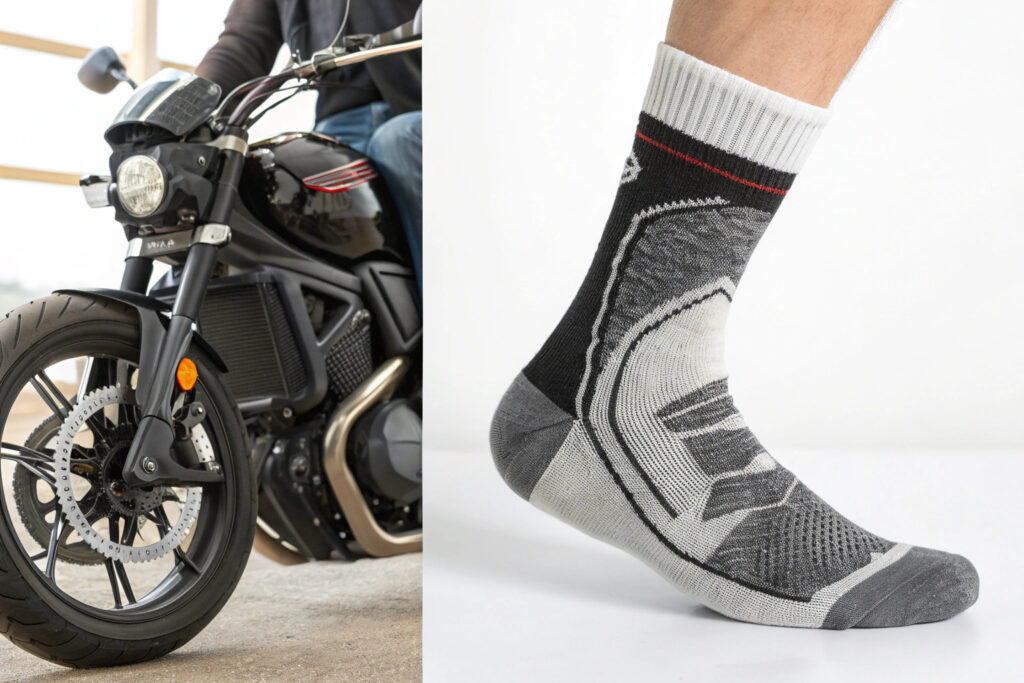
The best padding for ankle protection is low-profile yet resilient. Look for socks that use gel inserts, terry cushioning, or memory foam panels in key areas. These materials are excellent at absorbing shock and dissipating pressure from boot contact and vibration. Unlike bulky, all-over padding that can make your boots feel tight, targeted padding protects without adding unnecessary volume. This strategic placement ensures you get the protection where you need it most—on the medial and lateral malleolus (the ankle bones)—while maintaining a precise fit within your boot.
It’s also important that this padding retains its protective properties and doesn’t break down after repeated washing. High-quality socks use padding that is integrated directly into the knit structure, making it a durable part of the sock rather than just an added layer that can shift or degrade. This level of quality control in manufacturing is what separates a premium product from a basic one.
Why is a secure fit vital for ankle safety?
A secure fit is the foundation of all ankle protection features. If a sock slips down or twists around your foot, its protective padding becomes misaligned and useless. A proper secure fit is achieved through advanced knitting techniques that create arch support and a contoured heel pocket. This keeps the sock anchored in the correct position, ensuring the reinforced ankle panels are always covering the intended areas. Additionally, a non-slip top band is crucial to prevent the sock from sliding down into your boot during long rides.
A bunched-up sock is more than an annoyance; it can create pressure points that cut off circulation or lead to blisters. By ensuring a seamless toe and a sock that stays in place, you eliminate internal friction and allow all the sock’s engineered features, from moisture-wicking to padding, to function as designed. This is a core principle of our agile R&D process, where we test fits on various foot shapes to achieve universal comfort and performance.
What materials are used in protective motorcycle socks?
The magic of a high-performance motorcycle sock lies in its material composition. It’s rarely a single fiber but a sophisticated blend of materials, each chosen for a specific property. The right blend creates a sock that is durable, comfortable, protective, and easy to care for—all at the same time.
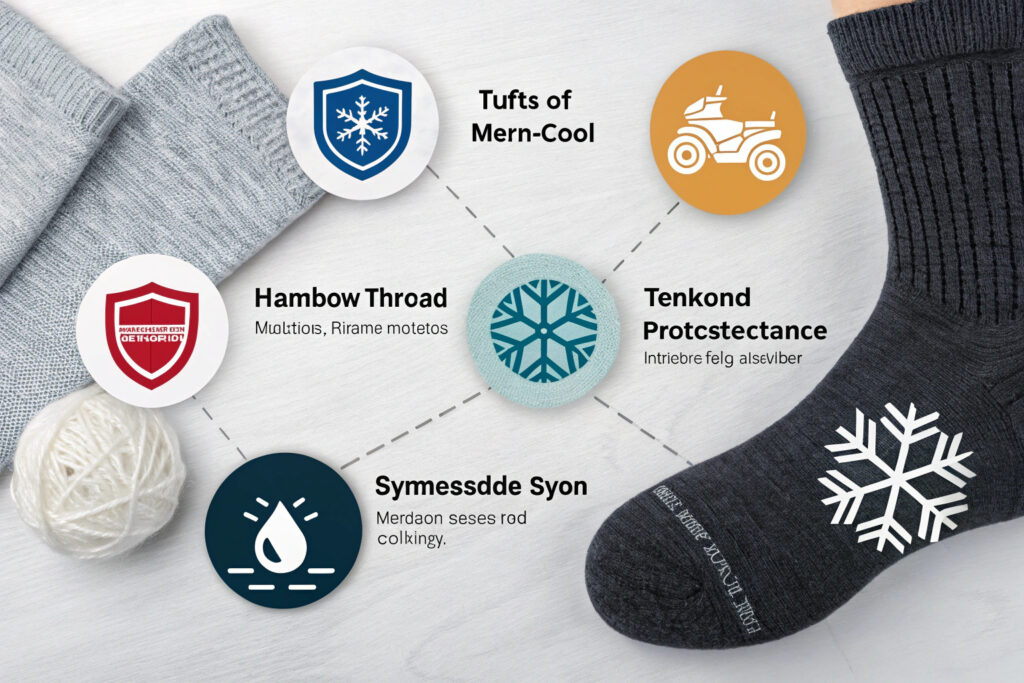
Protective motorcycle socks primarily use advanced synthetic materials like Nylon and Spandex for durability and stretch, often blended with natural fibers like Merino Wool or Bamboo for comfort and temperature regulation. This hybrid approach leverages the strengths of each material. For example, Nylon/Spandex blend socks provide the essential abrasion resistance and elastic recovery, while Merino wool offers natural odor control and breathability.
Understanding these materials helps you make a smarter purchase and know what to look for on the product label. It’s the difference between buying a piece of technical gear and just a piece of clothing.
Why are synthetic blends preferred over cotton?
Synthetic blends are overwhelmingly preferred over cotton for motorcycle socks because cotton is a poor performance fabric. Cotton absorbs moisture and holds it against your skin, leading to damp, cold feet and a high risk of blisters. It also lacks durability, wearing out quickly and providing zero abrasion & pill resistant qualities. In contrast, synthetic fibers like nylon and polyester are inherently strong and can be engineered into moisture-wicking fabrics that keep the skin dry. The addition of a small percentage of Spandex (also known as Lycra) gives the sock its essential stretch and secure fit, ensuring it hugs the foot and ankle without constriction.
This doesn’t mean natural fibers have no place. It means they are used strategically. Modern bamboo socks, for instance, are popular because bamboo viscose is a semi-synthetic fiber that is incredibly soft, breathable, and has natural antibacterial properties, making it an excellent component in a blend for comfort and odor-control.
How do natural fibers like Merino wool benefit riders?
Natural fibers like Merino wool offer unique benefits that synthetics struggle to match alone. Merino wool is a superstar in the world of performance socks because it excels at temperature regulation. It keeps your feet warm in cold weather and surprisingly cool in hot weather by efficiently managing moisture vapor. Its natural crimp creates tiny air pockets that insulate the foot. Furthermore, Merino wool possesses inherent antibacterial & odor-control properties due to lanolin, allowing you to wear the socks for multiple days on a touring trip without unpleasant smells. This makes it an ideal material for long-distance riders who need consistent performance and comfort.
Are there specialized socks for different riding styles?
Just as there are different styles of motorcycles, there are different styles of riding, and each has its own unique demands on your gear. The perfect sock for a multi-day tour across the country may not be the best choice for a short, aggressive track day. Recognizing this allows you to fine-tune your kit for maximum performance and comfort.
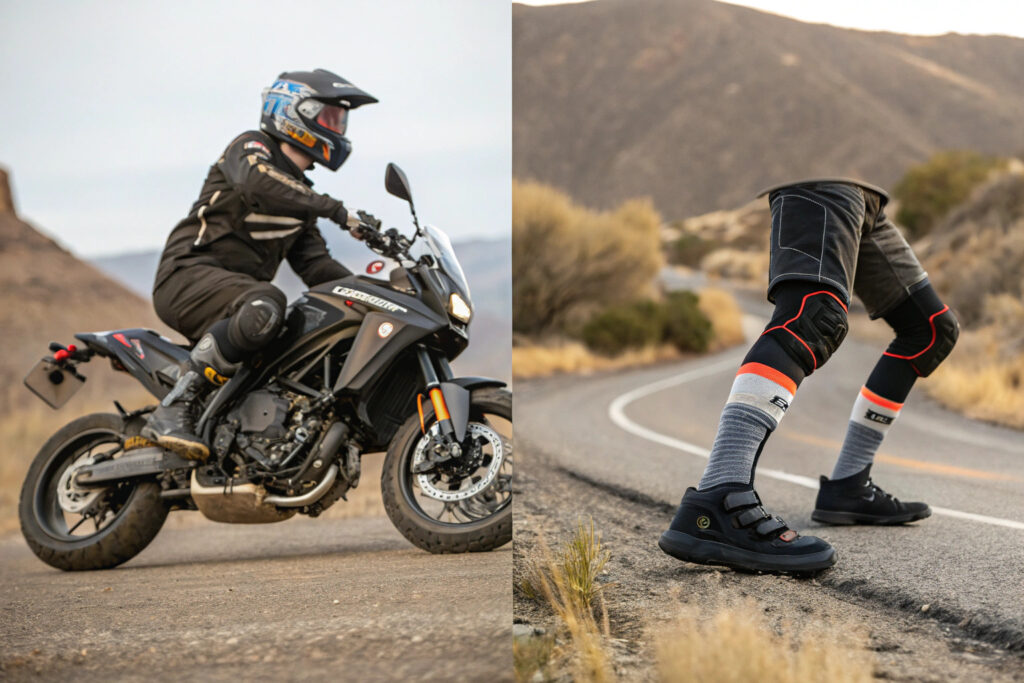
Yes, specialized socks are designed for different riding styles, with key variations in height, cushioning, and temperature management. For instance, adventure touring riders might prioritize a tall, warmly cushioned sock, while a sportbike rider might prefer a shorter, more technical sock with targeted ankle protection. The duration of your ride and the climate you’re riding in are also major factors in selecting the right specialized sock.
Matching your sock to your riding discipline ensures every feature is working for you, not against you.
What socks are best for long-distance touring?
For long-distance touring, the best socks are typically crew socks or knee-high socks that provide extensive coverage and prevent boot chafing on the calf. They feature all-around cushioning for comfort during long hours in the saddle and are made from temperature-regulating materials like Merino wool or advanced blends to handle varying weather conditions. Key features also include robust arch support to reduce foot fatigue and reinforced heels and toes for enhanced durability. The priority is all-day, every-day comfort and reliability, making moisture management and blister prevention paramount.
How do sport riding socks differ from casual ones?
Sport riding socks differ from casual ones in almost every aspect. While a casual sock might be a simple cotton sock, a sport riding sock is a piece of technical equipment. They are engineered with extreme abrasion resistance in mind, often using high-density synthetic blends. The fit is far more precise and secure, with strong arch support and a non-slip design to prevent any movement inside a tight-fitting racing boot. Padding is often more strategic, focusing on the ankle bones and shin for protection in a tucked riding position, and they prioritize moisture-wicking and quick-drying properties to handle high physical exertion. There is no comparison; the sport sock is built for performance and protection.
Conclusion
Choosing the right motorcycle sock is a critical decision that directly impacts your safety, comfort, and focus on the road. It’s not an accessory but an integral part of your riding gear. By prioritizing features like abrasion resistance, strategic ankle protection, moisture-wicking materials, and a secure fit, you invest in a smoother, safer, and more enjoyable riding experience. Remember, the best socks are the ones you don’t notice—because they are doing their job perfectly.
If you are looking to develop or private-label your own line of high-performance motorcycle socks with these advanced features, our team at GlobalSock has the expertise and supply chain to make it happen. We specialize in creating technical socks for discerning brands worldwide. For a consultation on your specific needs, please reach out to our Business Director Elaine at: elaine@fumaoclothing.com.