
Rugby is a tough sport. Players run hard, tackle hard, and push their bodies to the limit. Every piece of gear matters, especially socks. The wrong socks can lead to blisters, discomfort, and even injury. So, what should you look for in a rugby sock? It’s not just about the color or the logo.
The best rugby socks are engineered for high-impact performance, focusing on critical areas like strategic padding to absorb shocks and superior ankle support to stabilize the joint during intense lateral movements. They must also manage moisture, resist abrasion, and stay in place for the entire match. Choosing the right pair is a key part of your game-day preparation.
Let’s break down the essential features that make a rugby sock truly great for players at every level.
What features define top-tier rugby socks?
When the game is on the line, your socks are your first line of defense. Top-tier rugby socks are defined by a combination of protective and performance features that work together. They go beyond basic cotton to offer specialized support and durability where rugby players need it most. Ignoring these features can mean the difference between a powerful scrum and a painful blister.
The key features are advanced cushioning, locked-in ankle support, and moisture-wicking fabrics. These elements protect your feet from impact, keep your joints stable during cuts and tackles, and pull sweat away to prevent slippage and irritation. A great rugby sock acts like a second skin that is both tough and comfortable.

Why is targeted padding non-negotiable?
Targeted padding is not a luxury; it’s a necessity. Rugby involves constant impact from running, jumping, and tackling. Without proper cushioning, the shock from these actions travels directly to your feet and joints. This can lead to soreness and fatigue much faster. Strategic padding absorbs this shock, protecting vulnerable areas.
The most critical areas for padding are the heel, toe, and instep. These zones experience the most friction and impact. Reinforced heel and toe areas prevent premature wear and tear, while instep padding provides comfort where the laces of your boot press down. This focused cushioning, often using materials like merino wool for its natural resilience, allows you to play longer and harder with reduced risk of impact-related injuries. Furthermore, understanding compression socks benefits can complement this by improving blood flow and reducing muscle vibration, adding another layer of protection.
How does superior ankle support prevent injuries?
The ankle is one of the most commonly injured joints in rugby. Sudden changes in direction, uneven ground, and tackles can easily lead to rolls or sprains. Superior ankle support in a sock provides compression and stability to the ankle joint, acting as a gentle reminder to the muscles and ligaments to stay aligned.
This support is achieved through engineered elastic bands and a contoured fit that hugs the ankle. It doesn’t restrict movement but provides a secure feel that can enhance proprioception—your body’s awareness of its position. This added stability is crucial for preventing rolls during side-to-side movements. For the highest level of support, some players look for socks that integrate with or are designed alongside rugby-specific ankle braces, creating a unified system of protection. This focus on joint care is part of a broader approach to sports injury prevention, ensuring athletes can perform safely.
Which materials are best for rugby performance?
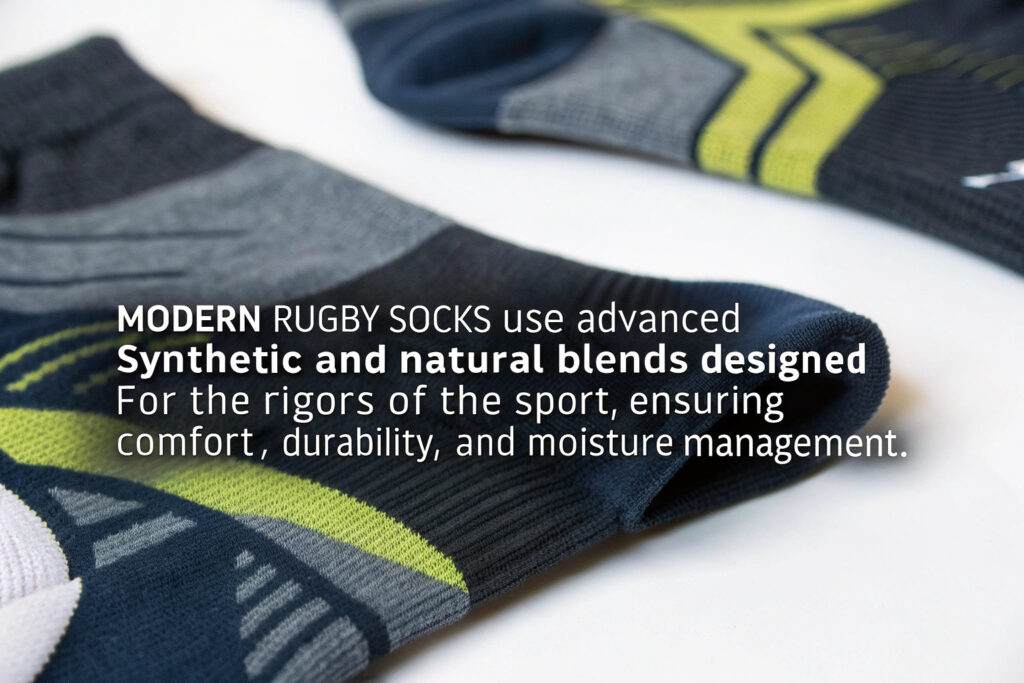
The magic of a high-performance rugby sock happens at the fiber level. The materials used directly impact comfort, durability, and moisture management. Old-fashioned cotton socks are a recipe for disaster as they retain sweat and lose their shape. Modern rugby socks use advanced synthetic and natural blends designed for the rigors of the sport.
The best materials are synthetic blends for moisture control and natural fibers like merino wool for temperature regulation. These fabrics work in harmony to keep your feet dry, reduce blister-causing friction, and maintain their fit from the first whistle to the last. Choosing the right material is as important as choosing the right cut.
Why are moisture-wicking fabrics crucial?
Moisture-wicking fabrics are crucial because dry feet are safe feet. When your feet sweat, moisture gets trapped against your skin. This softens the skin, increasing friction and making you a prime candidate for blisters. Wet socks also become heavy and can bunch up inside your boot, causing discomfort and hotspots.
Materials like nylon, polyester, and bamboo viscose are excellent at pulling moisture away from the skin to the outer surface of the sock where it can evaporate. This moisture-wicking process keeps your feet remarkably drier. This is a core function of athletic socks, and it’s non-negotiable for rugby. By managing sweat effectively, these fabrics help maintain a stable foot environment, drastically reducing the risk of blisters and keeping you comfortable throughout the game.
How do natural fibers enhance comfort?
Natural fibers bring a unique set of benefits that synthetics alone cannot match. Merino wool, for example, is a superstar in the performance world. It is naturally antibacterial and odor-control, meaning your socks stay fresher for longer, even during intense training sessions. Unlike traditional wool, merino is fine and soft, preventing any itchiness.
Furthermore, merino wool and bamboo are excellent at temperature regulation. They keep your feet warm in cold conditions and cool in warm conditions by trapping air within their fibers. This breathable nature prevents overheating and excessive sweating. For players with sensitive skin, these hypoallergenic materials are gentle and non-irritating. The combination of comfort, natural odor resistance, and smart temperature management makes blends featuring merino wool or bamboo some of the most comfortable options for long, demanding matches.
How to ensure a perfect fit for rugby socks?
A rugby sock can have all the best features, but if it doesn’t fit perfectly, it’s useless. A poor-fitting sock will slide down, wrinkle, or create pressure points, leading to distractions and blisters. The perfect fit is snug but not restrictive, staying exactly where you put it from kick-off to the final whistle.
Ensuring a perfect fit involves understanding sock sizing, which is often more precise than shoe sizing, and looking for specific design elements that enhance lock-in. A sock that moves with your foot and maintains its integrity is a game-changer. It should feel like an extension of your skin.
What makes a sock stay up during a match?
There’s nothing more annoying than a sock that won’t stay up. This usually happens due to a lack of elasticity in the cuff or the sock being the wrong size. Top-quality rugby socks use a combination of a silicone grip band on the inside of the cuff and strategic spandex content throughout the sock to ensure they stay in place.
The silicone grip gently adheres to your calf without being uncomfortable, preventing the sock from sliding down. This secure fit and non-slip feature is essential. Additionally, the right amount of spandex (usually between 5-15%) allows the sock to stretch and recover its shape, hugging your leg and foot contours. This level of fit and support is a hallmark of professional compression socks, which are designed for maximum stay-put performance and muscle stabilization.
Why is a seamless toe important?
The seam across the toes in traditional socks is a major culprit for blisters. As your foot moves and swells during play, this seam rubs against your skin, creating friction. A seamless toe closure eliminates this problem entirely, providing a smooth, uniform interior that glides over your skin.
This construction, often achieved with advanced tubular knitting, removes the primary source of irritation at the front of the foot. It reduces bunching and creates a more comfortable toe box environment. For any athletic sock, but especially for rugby where every step counts, a seamless toe is a critical design feature that directly contributes to foot health and overall comfort, allowing you to focus entirely on your performance.
What sets professional rugby socks apart?
Professional-grade rugby socks are in a league of their own. They are the result of extensive Research and Development (R&D), using premium materials and construction techniques that mass-market socks simply don’t offer. The difference is felt in every stitch and every fiber, providing a tangible advantage on the field.
What sets them apart is their exceptional durability, advanced technical features, and often, team-specific customization. They are built to withstand the extreme conditions of professional play and are designed with direct input from athletes who understand the demands of the sport.
How does reinforced construction increase durability?
Rugby is brutal on footwear. The constant abrasion from boots and turf can quickly wear out a standard sock. Professional socks combat this with reinforced construction in high-wear areas. This means adding extra layers of material or using tougher, abrasion-resistant yarns in the heel, toe, and sole.
This reinforcement significantly extends the life of the sock, ensuring it doesn’t develop holes after just a few games. The reinforced heel and toe areas are specifically engineered to handle the stress of pivoting and the friction inside your boot. This commitment to durability is a key aspect of the quality control processes at leading manufacturers, ensuring every pair meets the high standards required for competitive play.
Why do pros prefer custom-designed socks?
Professional teams and players often use custom-designed socks for a perfect blend of performance and identity. These socks are tailored to the exact specifications of the team, ensuring a uniform look and optimal performance for every player. This level of customization is a key service offered by socks manufacturing suppliers.
Customization can include specific team colors and logos integrated into the fabric, varying levels of padding based on player position (e.g., more padding for forwards), and exact sizing for a bespoke fit. This one-stop customization approach allows teams to have gear that is uniquely theirs, boosting team spirit and providing a performance edge that off-the-shelf options cannot match. It’s a partnership between the team and the manufacturer to co-create the perfect sock.
Conclusion
Choosing the best rugby sock is a strategic decision that directly impacts your performance and safety on the field. The ideal pair combines targeted padding for shock absorption, superior ankle support for stability, advanced moisture-wicking materials for dryness, and a perfect, secure fit. By prioritizing these features—from reinforced construction to seamless toes—you invest in your comfort and focus, allowing you to play with confidence.
If you are looking to develop your own line of high-performance rugby socks or need a reliable supplier for bulk orders, our expertise is your advantage. At GlobalSock, we specialize in creating professional-grade socks that meet the highest standards of quality and innovation. Contact our Business Director Elaine today at elaine@fumaoclothing.com to discuss how we can partner to bring your vision to life.