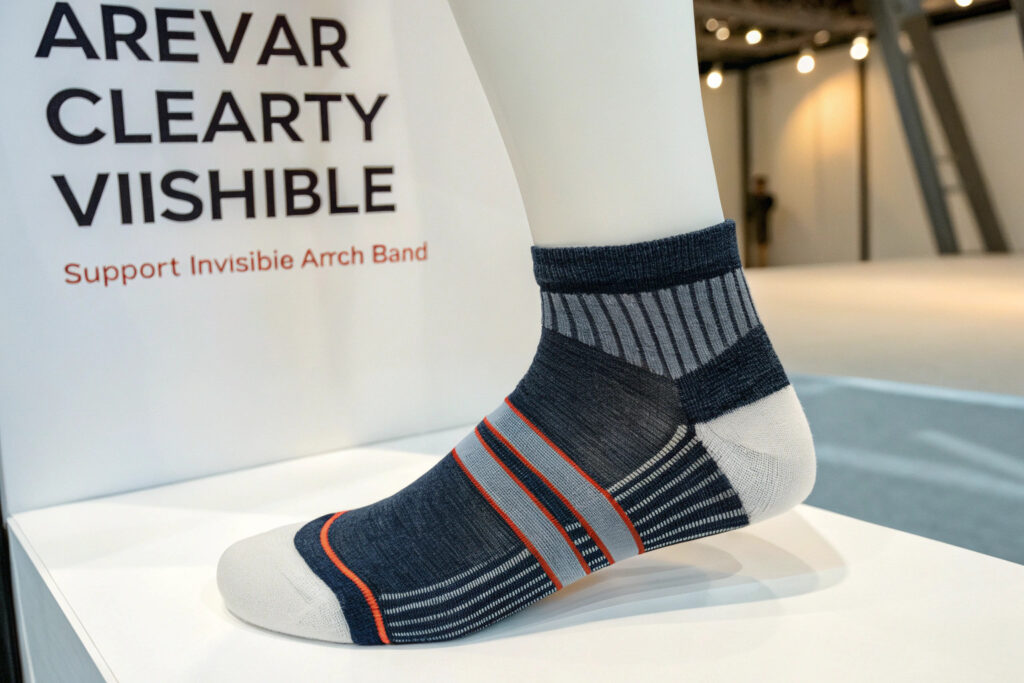
As a leading socks manufacturer, we often hear from clients who struggle with a common design challenge: how to incorporate supportive arch bands into socks without compromising wearer comfort or circulatory health. A poorly designed arch band can turn a performance feature into a liability, causing discomfort and health concerns.
The key to non-restrictive arch support lies in a precise combination of material science, graduated compression engineering, and anatomical design. By using elastic yet breathable fabrics and applying pressure in a gradient rather than a uniform band, manufacturers can provide excellent arch support without impeding blood flow.
In this article, we will dissect the engineering principles behind effective arch bands. We will explore the specific materials that make it possible and the testing protocols that verify both comfort and safety.
What are the best materials for non-restrictive arch bands?
Selecting the right material is the first and most crucial step in creating an arch band that supports without squeezing. The ideal materials possess high elasticity, moisture-wicking properties, and durability.
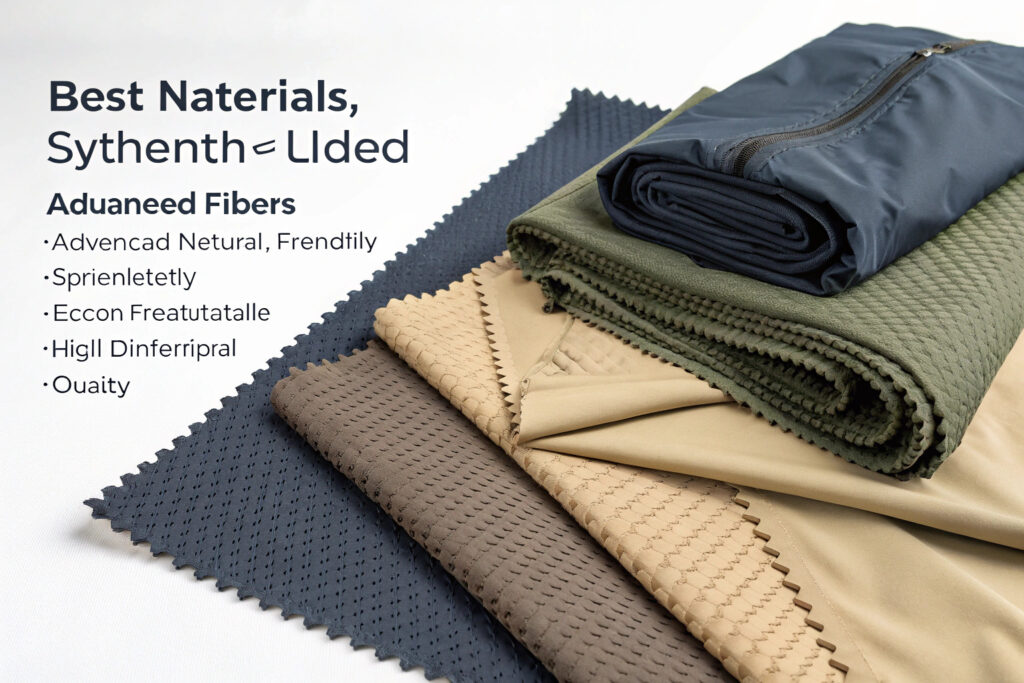
The best materials combine synthetic fibers like Nylon and Spandex with advanced natural or eco-friendly blends. Nylon provides the necessary strength and abrasion resistance, while high-quality Spandex is responsible for the consistent, multi-directional stretch that hugs the arch without creating a tourniquet effect.
Why is Spandex content critical for dynamic support?
The percentage and quality of Spandex are paramount. A band with insufficient Spandex will quickly loosen and fail to provide support. The solution is a fine-gauge, high-tenacity Spandex yarn knitted into the structure. This allows the arch band to stretch dynamically with every foot movement. Our CNAS-certified lab rigorously tests the recovery rate of our Spandex blends to ensure they return to their original shape after thousands of stretch cycles.
How do fabric blends enhance comfort and function?
No single fiber can provide all the desired properties. Combining Spandex with Nylon creates a durable, elastic base. Introducing Bamboo Viscose into the blend adds exceptional softness and natural antibacterial properties. Another excellent blend for performance socks is Merino Wool and Spandex. Merino Wool is naturally temperature-regulating and moisture-wicking.
What design techniques prevent blood flow restriction?
Beyond materials, the physical construction of the arch band determines its safety and efficacy. The goal is to apply graduated, anatomical compression rather than uniform pressure.
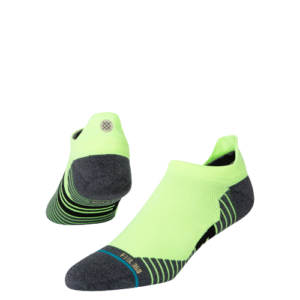
The most effective design technique is the use of variable knitting, which creates a gradient of pressure. The band should be tightest at the apex of the arch and gradually decrease in pressure towards the edges. This "hugging" motion supports the plantar fascia without creating sharp pressure points.
How does graduated compression engineering work?
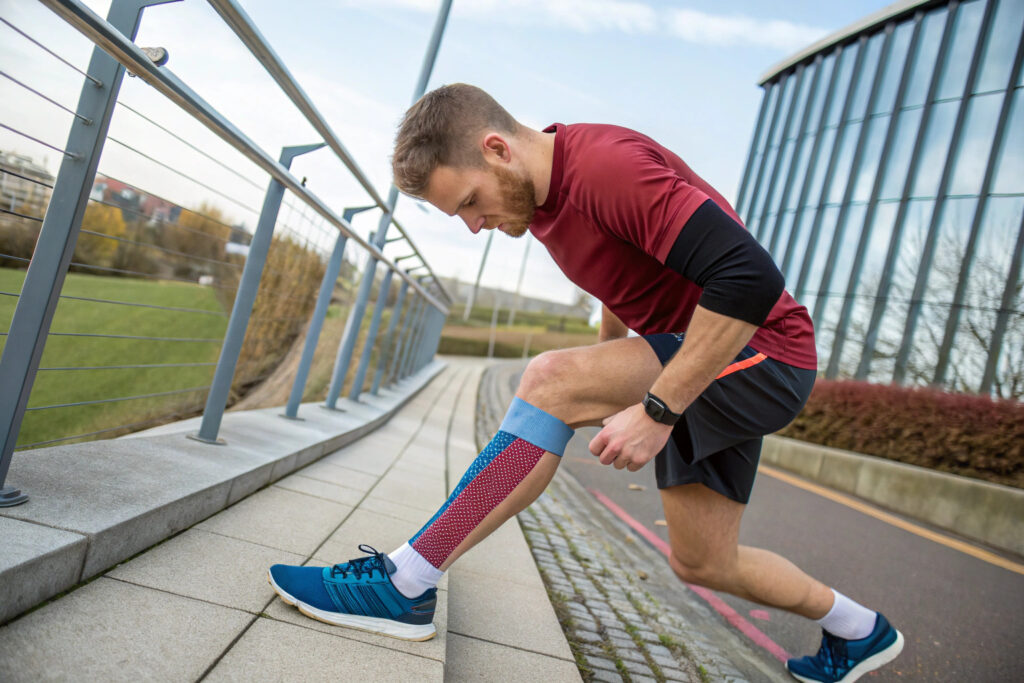
Graduated compression means the highest compression is at the foot’s arch and gradually lessons as it moves up the ankle and calf. This design actively assists venous return. In the context of an arch band, this translates to a knit structure that is denser and more elastic at the center of the arch. Our compression socks are designed with these precise gradients.
What role does seamless construction play?
A poorly finished seam in the arch area is a primary cause of irritation and restricted blood flow. Modern sock manufacturing has moved towards seamless toe construction. By using advanced circular knitting machines, we can knit the entire sock, including the integrated arch band, in one continuous tube. This eliminates the need for a separate, bulky elastic band.
How to test arch bands for comfort and safety?
Designing a great arch band is only half the battle; proving its safety and comfort through rigorous testing is the other. Without structured testing, you risk bringing a problematic product to market.
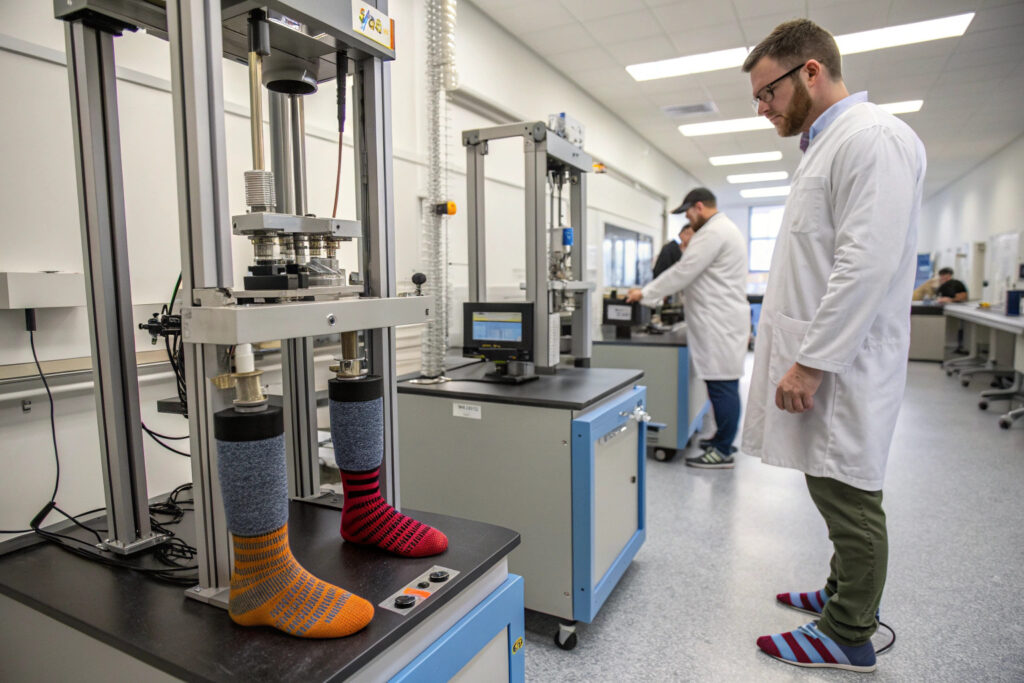
A comprehensive testing regimen involves both laboratory machinery and human trials. In our CNAS-accredited lab, we subject sock prototypes to tests for compression force, elasticity recovery, and air permeability. This data is complemented with feedback from wear-testers.
What laboratory tests verify non-restriction?
Key lab tests include the Compression Force Test, which measures the exact amount of pressure the arch band exerts at different points. Another critical test is the Circulatory Simulation, where a leg model with fluid simulating blood flow is used to ensure no significant flow reduction occurs. We also conduct tests for Oeko-Tex Standard 100 certification.
Why is human fit testing indispensable?
Machines can’t replicate subjective human comfort. We organize structured wear-testing panels with testers representing diverse foot arches. They document any issues like pinching, rolling, or numbness. For athletic socks, testers perform specific activities, after which we use tools like the Brannock Device to check for temporary swelling or redness.
Can arch bands be both supportive and eco-friendly?
Today’s market demands that performance features do not come at an environmental cost. The good news is that the industry has developed sustainable materials perfect for creating high-performance arch bands.
Absolutely. Eco-friendly arch support is becoming a standard offering. We now use high-performance yarns derived from post-consumer plastic bottles, sustainably harvested bamboo, and Tencel™ Lyocell. These materials are engineered to have the same excellent elasticity and durability as conventional counterparts.
What sustainable materials offer good elasticity?
Recycled Polyester (rPET) is a star player. Through polymerization, recycled plastics are transformed into strong, durable fibers that can be blended with Spandex. Another breakthrough is Tencel™ Lyocell, a fiber made from sustainably sourced wood pulp. Tencel™ fibers are exceptionally smooth and strong when wet. These sustainable practices are central to our production.
How does green manufacturing impact performance?
The "green" aspect extends beyond raw materials to the manufacturing process itself. We employ eco-dyeing techniques that use less water and energy. This commitment ensures the entire lifecycle of the sock has a reduced environmental footprint. Crucially, this focus on sustainability doesn’t mean sacrificing performance. A sock with an arch band made from recycled materials will perform identically to one made from virgin materials.
Conclusion
Designing an arch band that provides firm support without restricting blood flow is a sophisticated balance of science, technology, and human-centric design. It requires understanding material properties, precise anatomical engineering, and commitment to testing.
If you are looking to develop your own line of high-performance socks with perfectly engineered arch support, we invite you to partner with us. For a direct conversation about your specific needs, please contact our Business Director Elaine at elaine@fumaoclothing.com.