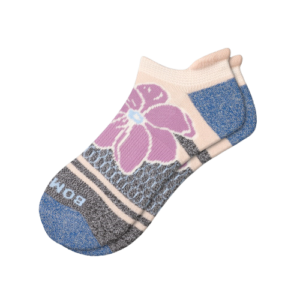

As a leading socks manufacturer, we often hear from clients who are frustrated with their organic cotton socks shrinking after just a few washes. This problem can lead to customer complaints, product returns, and a damaged brand reputation. For a business owner, receiving a batch of shrunken socks is a logistical and financial nightmare.
The good news is that sock shrinkage is not an inevitable part of using organic cotton. It is a production issue that can be completely controlled and prevented. By understanding the science behind cotton fibers and implementing strict quality control measures from fabric sourcing to finishing, manufacturers can deliver high-quality, durable organic cotton socks that maintain their size and shape.
This article will guide you through the essential steps to prevent shrinkage in organic cotton socks. We will explore the root causes and provide practical, actionable solutions that we use in our own CNAS-certified lab and production line. You will learn how to partner with a factory that can guarantee your socks meet the highest dimensional stability standards, ensuring your customers are happy and your brand is protected.
What Causes Organic Cotton Socks to Shrink?
Many buyers invest in organic cotton for its softness and sustainability, only to be disappointed when their products shrink. Understanding the "why" is the first step to finding a solution. The primary culprit is the natural structure of the cotton fiber itself.
Cotton fibers are made of a natural polymer called cellulose. When these fibers are spun into yarn and woven or knitted into fabric, they are under tension. During the manufacturing process, this tension can lock the fibers in a stretched state. When the socks are washed, especially in warm or hot water, water molecules penetrate the fibers. This causes the cellulose to relax and return to its natural, shorter state, a phenomenon known as "relaxation shrinkage." Furthermore, the agitation of washing can cause the fabric’s threads to tighten together, leading to "felting shrinkage."
How Does the Fabric Construction Affect Shrinkage?
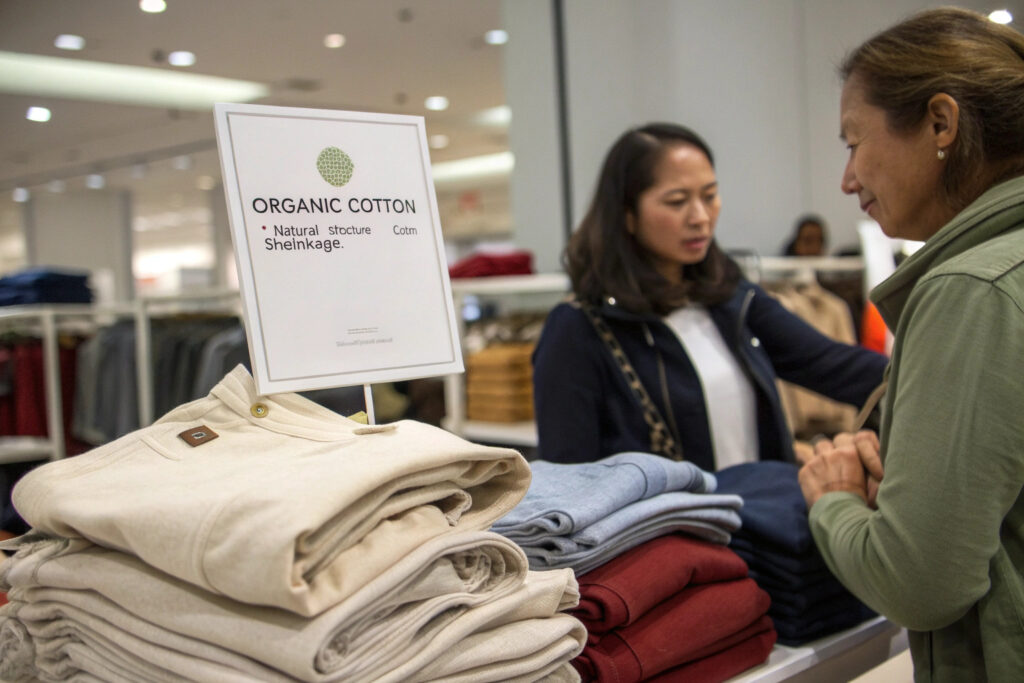
The way socks are knitted plays a significant role in their potential to shrink. A tighter knit may feel more durable initially but can have less give, leading to more pronounced shrinkage as the tension releases. Conversely, specific knitting techniques can build elasticity into the garment. At our facility, we utilize advanced knitting technologies that create a balanced fabric structure. This approach minimizes the initial tension and allows the socks to retain their shape. Partnering with a manufacturer that understands the intricacies of hosiery manufacturing is crucial for controlling this variable from the very beginning.
Can Pre-Shrinking Fabrics Make a Difference?
Absolutely. Pre-shrinking, or sanforization, is one of the most effective methods to combat shrinkage. This process involves mechanically compacting the fabric so that any residual shrinkage is removed before it is cut and sewn into socks. We integrate pre-shrinking as a non-negotiable step in our production for all organic cotton orders. The fabric is treated with a controlled application of moisture, heat, and pressure, forcing it to shrink prematurely. This proactive measure, a key part of our quality control in textile production, ensures that the socks you receive have already undergone their maximum potential shrinkage, guaranteeing dimensional stability for the end-user.
How to Control Shrinkage in the Manufacturing Process?
Preventing shrinkage requires a proactive and controlled manufacturing process. It’s not about fixing the problem after it occurs but designing and producing the socks to be resilient from the start. This involves a multi-stage approach, focusing on fiber preparation, knitting, and finishing.
The key is to manage the tension and treatment of the cotton fibers at every single step. From the moment the raw organic cotton is spun into yarn to the final dyeing and finishing, each process must be calibrated for minimal shrinkage. We achieve this through state-of-the-art machinery and standardized operating procedures that are regularly audited. Our focus is on creating a consistent and repeatable production line that prioritizes product integrity.
Why is Fiber Selection and Yarn Spinning Critical?
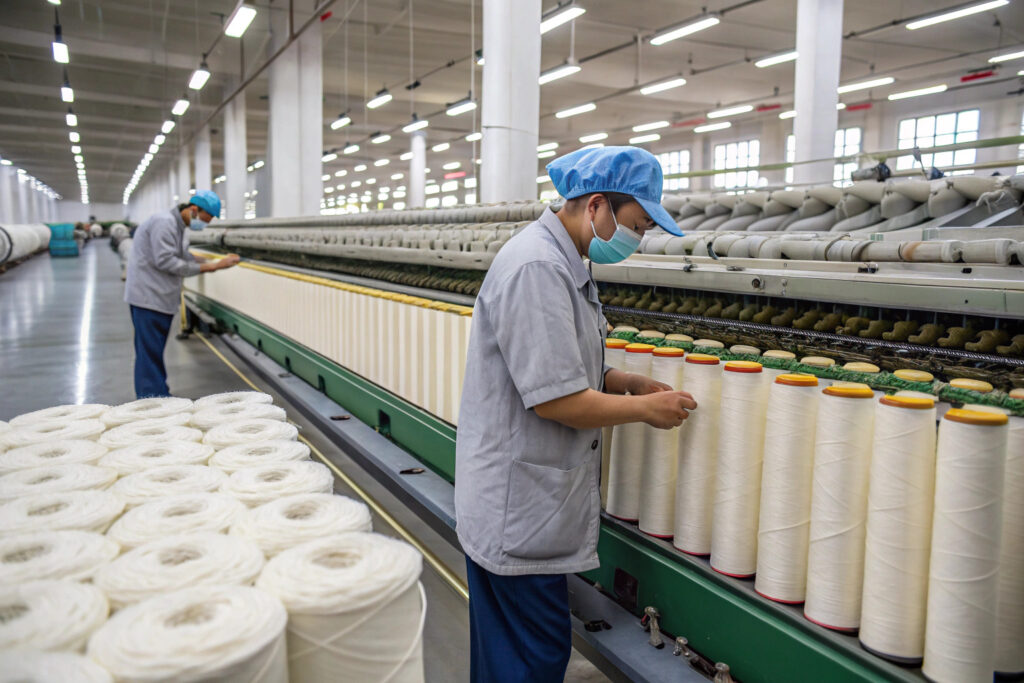
Not all organic cotton is the same. The staple length and the way the fibers are spun into yarn have a direct impact on shrinkage. Longer staple fibers, like those from high-quality sources, create stronger and more stable yarns that are less prone to puckering and shrinking. We prioritize sourcing these superior fibers. During the spinning process, we employ ring-spun techniques for a smoother, tougher yarn with less lint. This careful attention to our sustainable material sourcing lays the foundation for a higher-quality, more durable sock that can withstand repeated washing without compromising fit or comfort.
What Role Does Dyeing and Finishing Play?
The dyeing and finishing stages are where the fabric is subjected to significant water, heat, and chemicals, making them critical control points for shrinkage. We have moved away from traditional open-width dyeing to modern, low-tension jet dyeing machines. These machines gently circulate the fabric in a soft flow of dye, minimizing the mechanical stress that contributes to shrinkage. Furthermore, we apply softeners and finishing agents that enhance the fabric’s hand-feel without compromising its structure. This controlled textile dyeing and finishing process is a cornerstone of our promise to deliver socks with less than 5% residual shrinkage, a standard we rigorously test for in our lab.
What Quality Control Tests Prevent Sock Shrinkage?
Trust is good, but verification is essential. Rigorous quality control testing is the final and most important defense against shipping socks that shrink. At our facility, testing is not an afterthought; it is integrated into every stage of production, from raw material inspection to the final packaged product.
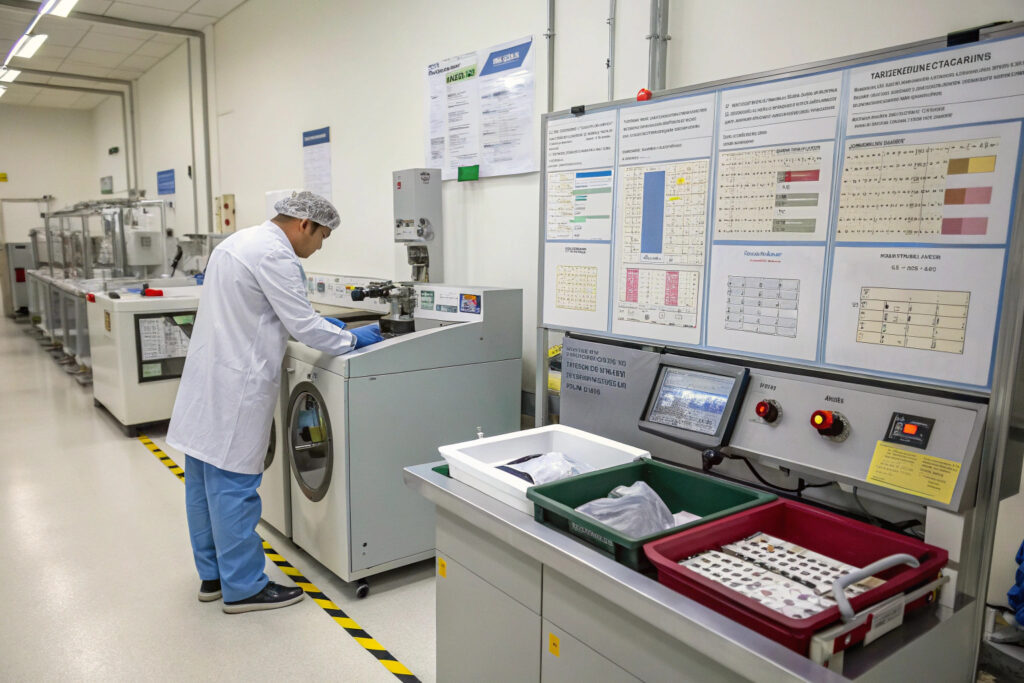
We operate a CNAS-accredited testing lab, which means our methods and results meet international standards. This allows us to provide our clients with reliable, third-party-verifiable data on the performance of their socks. For shrinkage, we specifically employ standardized wash tests that simulate real-world conditions, giving us accurate predictions of how the socks will behave after numerous home launderings.
How is Dimensional Stability Tested?
We adhere to the AATCC 135 standard test method for dimensional stability. This involves marking a precise grid on the sock, washing it under controlled conditions—using a specific water temperature, agitation, and detergent—and then drying it. The change in the grid’s dimensions is then measured to calculate the exact percentage of shrinkage. This data is crucial for our clients, as it provides a scientific guarantee of the product’s performance. This rigorous textile testing and certification process is a key part of our service, especially for clients exporting to markets like the EU and North America where consumer expectations are high.
Why is Real-Time Data Tracking Important?
Advanced quality control goes beyond a single pass/fail test. We implement a QR code-based tracking system for our production batches. This allows us, and our clients, to have real-time access to the test data for each order, including composition, colorfastness, pilling resistance, and, most importantly, shrinkage results. This level of transparency builds trust and ensures accountability. It means that when you order from us, you are not just getting a promise; you are getting a fully documented product with a verifiable history of its quality and compliance, directly addressing the pain points of buyers like Ron who are deeply concerned about consistent quality.
How to Choose a Socks Manufacturer for Low-Shrinkage Products?
Selecting the right manufacturing partner is the most critical decision you will make in your quest for high-quality, low-shrinkage organic cotton socks. The manufacturer’s expertise, equipment, and commitment to quality will directly determine the success of your product in the market.
Look for a partner that demonstrates a deep understanding of textile science and has the infrastructure to prove it. A manufacturer that is transparent about its processes, welcomes audits, and provides comprehensive test reports is a manufacturer that stands behind its work. Your goal should be to find a supplier that acts as an extension of your own quality assurance team.
What Manufacturing Capabilities Should You Look For?
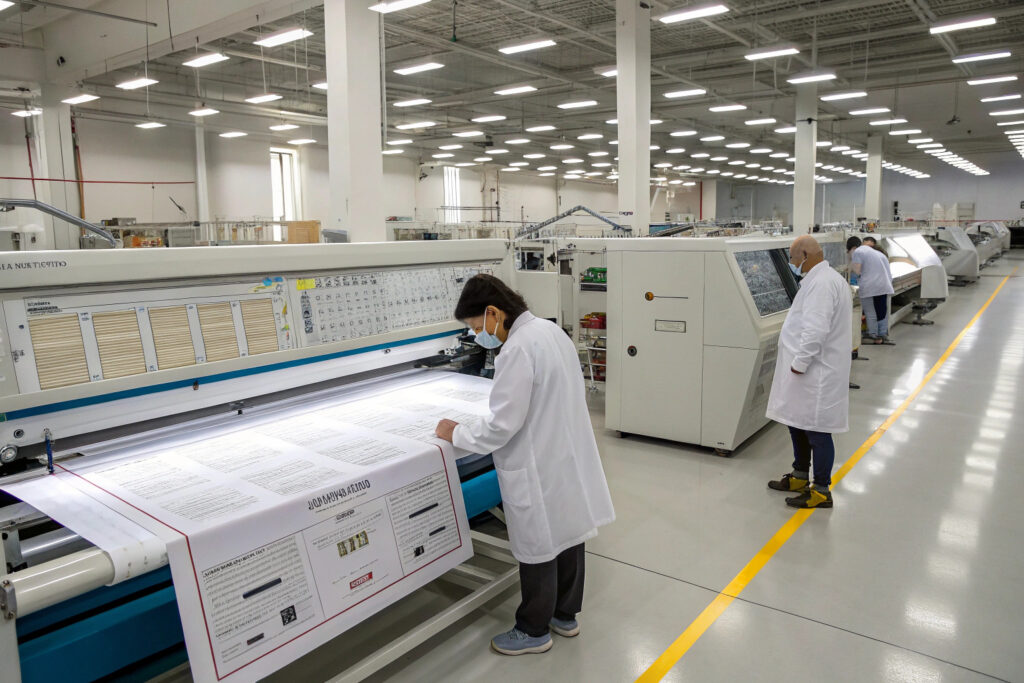
When evaluating a potential supplier, ask direct questions about their production chain. Do they control their dyeing and finishing, or is it outsourced? Do they have a dedicated R&D team focused on fabric innovation? Are their knitting machines modern and capable of producing low-tension fabrics? For instance, our investment in an integrated supply chain, from local dyeing partners to our own finishing and CNAS-certified testing lab, allows us to maintain strict oversight at every stage. This vertical integration is a key advantage for buyers seeking reliability and speed, as it prevents the communication gaps and quality variances that often occur when multiple factories are involved.
Why are Compliance and Logistics Key Factors?
A manufacturer’s ability to navigate international standards and logistics is just as important as their technical skill. For the U.S. market, you need a partner who understands labeling laws, safety standards, and, crucially, how to manage tariffs effectively. Our strategic location in Keqiao, a "Belt and Road" hub, gives us access to efficient multimodal shipping options and overseas warehousing solutions that can mitigate tariff impacts. Furthermore, our long-standing global logistics and financial stability ensure that your order is not only well-made but also arrives on time and in a cost-effective manner, directly addressing the core concerns of international buyers.
Conclusion
Preventing shrinkage in organic cotton socks is a achievable goal, but it requires a scientific approach and a committed manufacturing partner. It’s a comprehensive process that starts with selecting the right long-staple fibers, continues with controlled, low-tension knitting and dyeing, and is validated by rigorous, internationally-standardized testing. By understanding these factors and choosing a manufacturer with the proven expertise and infrastructure to manage them, you can confidently bring a high-quality, durable product to market that will satisfy your customers and protect your brand’s reputation.
If you are looking for a reliable partner to produce your own high-quality, low-shrinkage sock orders, we invite you to contact us. Our team is ready to provide you with the same expertise and dedication to quality that has served our global clientele. For a direct conversation about your production needs, please reach out to our Business Director Elaine at her email: elaine@fumaoclothing.com. Let’s create socks that last.