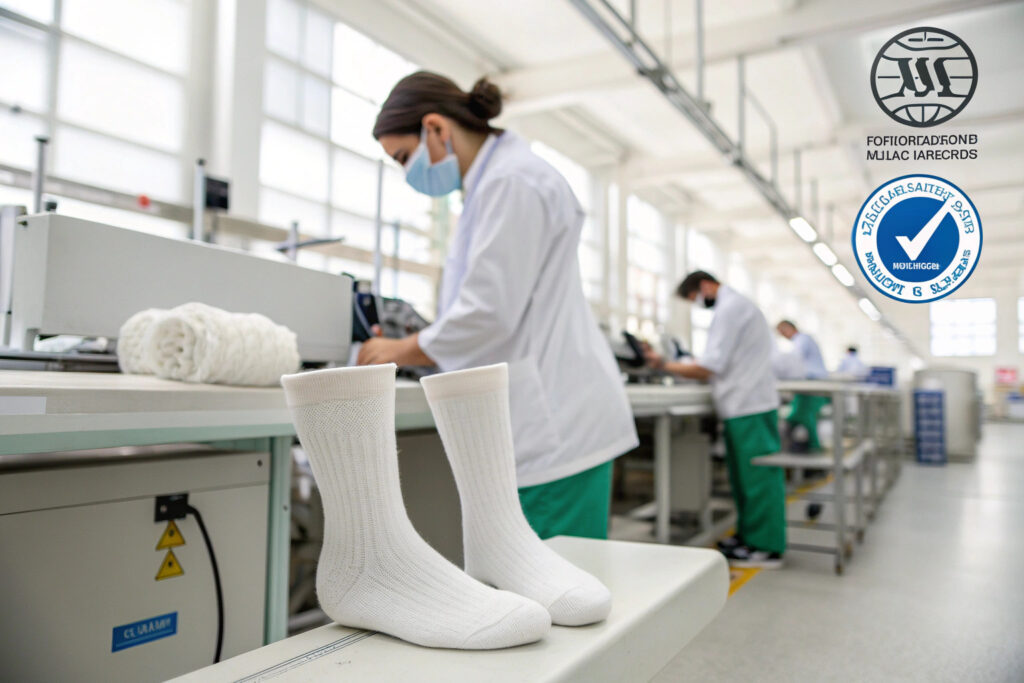
Medical socks are more than just foot coverings—they are essential tools in healthcare, sports recovery, and patient comfort. As a manufacturer, retailer, or distributor, ensuring that your socks meet medical standards is critical for market access and consumer trust. Yet, the path to certification can seem complex, with varying regulations across different countries and product categories.
In short: Medical sock certification involves meeting strict fabric performance, compression accuracy, and safety regulations to align with health industry standards. This means testing against recognized protocols, acquiring documentation from accredited laboratories, and complying with labeling and import requirements for each target market.
If you plan to enter the medical socks market, you need to understand the testing processes, certification bodies, and compliance documentation that will satisfy your buyers and local health authorities. This guide breaks down the steps in a way that aligns with our manufacturing experience at GlobalSock.
Understanding Global Medical Sock Standards
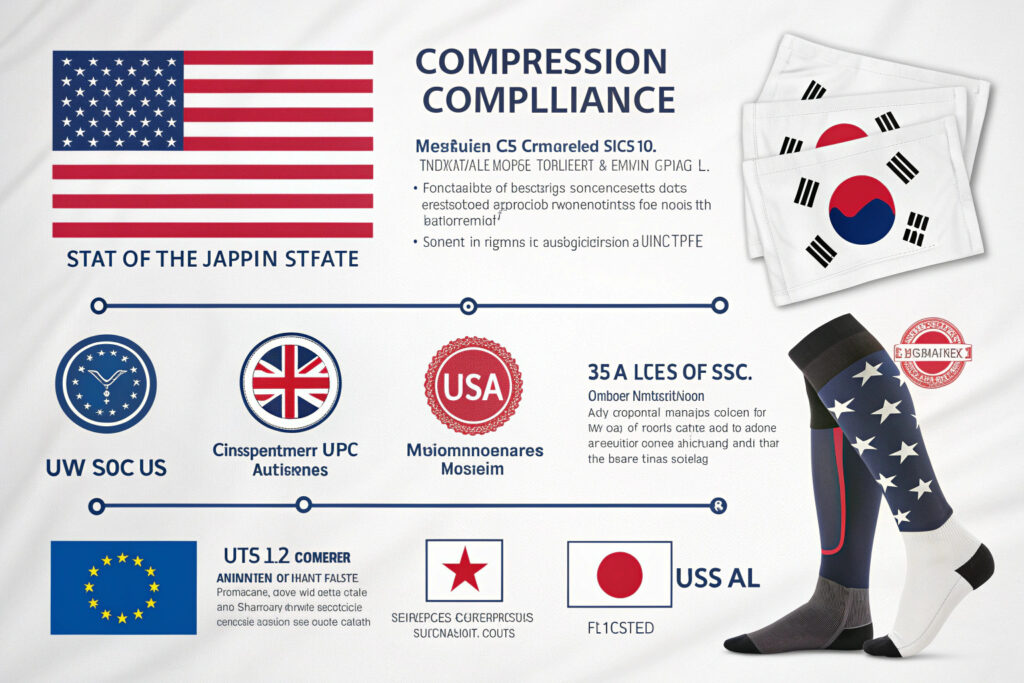
Medical socks are regulated under different frameworks worldwide. From the U.S. FDA requirements to Europe’s CE marking, the certification route depends on your target market. The compression rating, material safety, and performance claims all influence how a product is classified and tested.
In short: Knowing the exact regulatory category your socks fall under will determine the certification path, testing scope, and labeling requirements before market entry.
What Are the Main Medical Sock Categories?
Medical socks are generally classified into:
- Graduated compression socks for circulatory health
- Recovery socks for post-surgery use
- Diabetic socks with non-binding cuffs
- Antibacterial hospital socks
The FDA in the U.S. treats compression socks as Class I or II medical devices, depending on the pressure range. In the EU, products may require CE marking under the Medical Devices Regulation (MDR). Japan follows its own PMDA framework for approval. Understanding these differences avoids costly mistakes and import delays.
How Do International Standards Differ?
While ISO 13485 outlines general requirements for medical device quality management, specific sock-related tests often follow ISO 17025 lab accreditation. For example:
- EN ISO 20697 for compression hosiery
- ASTM D6612 for fabric stretch recovery
- AATCC 100 for antibacterial activity
Using labs accredited under these standards ensures your reports are accepted by international regulators.
Testing Requirements for Medical Sock Certification
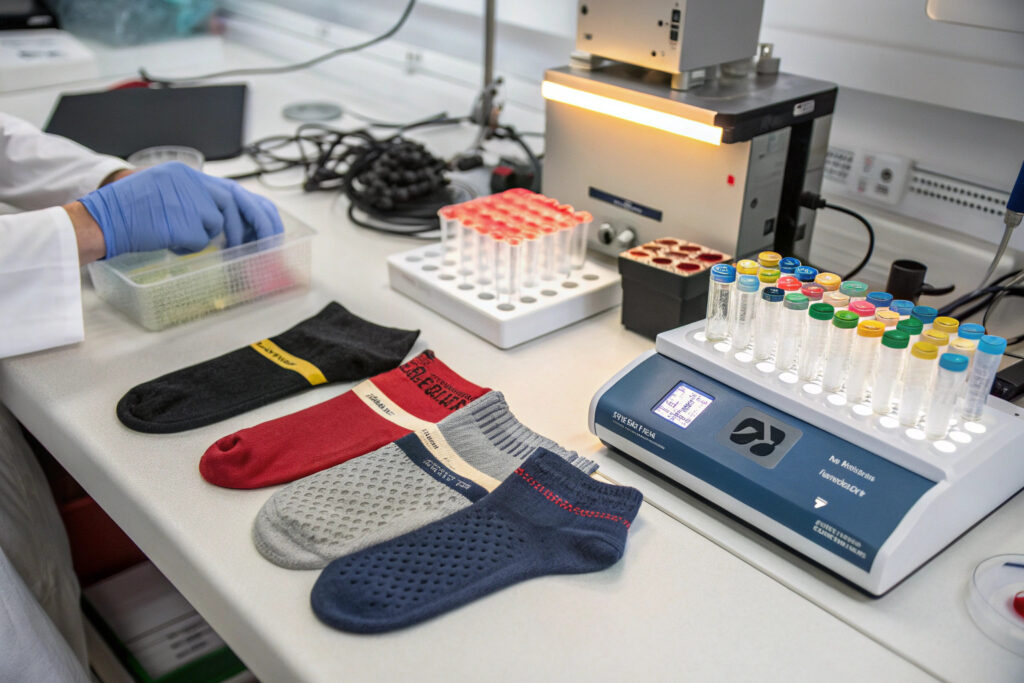
Testing is the foundation of certification. Without proof of performance and safety, no medical sock can legally carry compliance marks or be marketed as a medical product.
In short: Accredited lab tests validate your claims on compression accuracy, safety, and antibacterial function, forming the core of your compliance documentation.
Which Compression Tests Are Needed?
Compression socks must deliver specific pressure ranges at designated points along the leg. Common methods include:
- HATRA testing for hosiery pressure profiling
- ISO 80601-2-72 for performance measurement
- Dynamic wear simulation
Accurate compression mapping ensures you can meet mmHg claims and pass CE conformity assessments.
What Safety Tests Are Required?
Medical socks must be skin-safe and free from harmful substances. Key tests include:
- OEKO-TEX® Standard 100 for chemical safety
- Cytotoxicity tests under ISO 10993-5
- Bioburden tests for sterile products
Working with a CNAS or ILAC accredited lab improves acceptance by global health agencies.
Documentation and Labeling Compliance
Even with perfect test results, non-compliant documentation or packaging can lead to product seizure or rejection at customs.
In short: Proper labeling and paperwork ensure your certified medical socks can legally be sold and shipped into your target market.
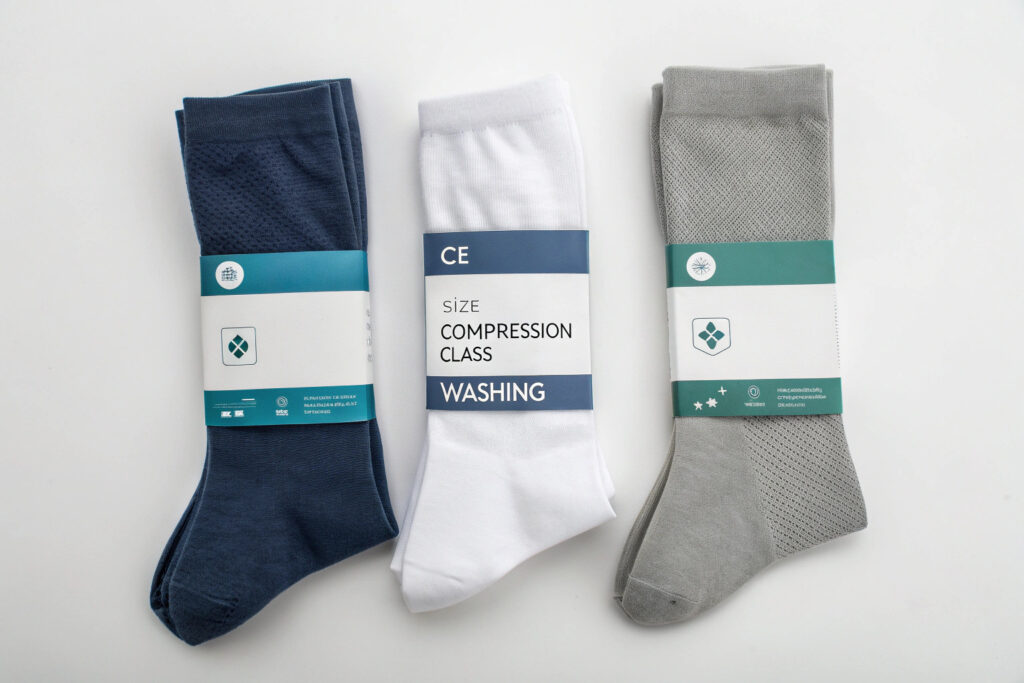
What Information Must Be on the Label?
For medical socks, labels should include:
- Manufacturer name and address
- Compression class and range (mmHg)
- Material composition
- Care instructions
- Regulatory marks (CE, FDA registration number)
These details must follow country-specific rules and appear clearly on both packaging and the product where possible.
Which Documents Are Needed for Customs?
Typically required documents include:
- Test reports from accredited labs
- Declaration of Conformity
- Product specifications and technical files
- Importer registration proof
Having these on hand speeds up customs clearance and reduces demurrage charges.
Choosing the Right Certification Partner
Certification is complex, but choosing the right partner—whether a testing lab, notified body, or consultant—can make the process faster and smoother.
In short: Work with experts who know both your product type and your target market regulations to minimize errors and costs.

How to Select an Accredited Lab?
Look for:
- ISO 17025 accreditation
- Experience in textile compression testing
- Global recognition by regulatory authorities
Labs with prior experience in your market’s rules reduce the risk of test report rejection.
What Should You Expect from a Notified Body?
For CE marking, a notified body reviews your technical file, verifies test data, and issues a conformity certificate. They also:
- Advise on labeling changes
- Conduct periodic audits
- Support with market surveillance responses
Partnering with an experienced notified body prevents compliance delays.
Conclusion
Medical sock certification is not just a legal step—it’s a market gateway and a brand credibility booster. From understanding standards to completing lab tests, preparing correct documentation, and partnering with the right compliance experts, every stage requires precision and planning.
If you want to certify your medical socks and enter the U.S., EU, or Asia-Pacific markets with confidence, we at Shanghai Fumao can handle the process from product development to certification and delivery. Contact our Business Director Elaine at elaine@fumaoclothing.com to discuss your project and explore how we can streamline your compliance journey.