As a socks manufacturer rooted in Keqiao, China, I’ve seen a growing global demand for eco-friendly and unique hosiery. Many of our clients, from boutique brands to large retailers like Walmart, are increasingly asking about natural dyeing processes, especially for indigo. This ancient art, which we’ve adapted for modern sock production, offers a sustainable alternative to synthetic dyes and creates stunning, variable shades that consumers love. But how exactly is it done, and what are the differences between the old ways and the new?
Natural indigo dyeing is a process of coloring textiles using pigment derived from the Indigofera plant. It can be done through traditional vat fermentation methods, which are slow and artisanal, or through modern chemical reduction techniques that are faster and more suited for industrial scale. Both methods create that iconic blue color, but they differ significantly in their environmental impact, color fastness, and application in today’s sock manufacturing. For a wholesale socks supplier, understanding this process is key to meeting the demands for sustainable and high-quality products.
Let’s dive into the fascinating world of indigo and explore how this beautiful color makes its way onto your socks.
What is the traditional process of natural indigo dyeing?
The traditional method of indigo dyeing is a slow, organic process that has been practiced for centuries. It relies on fermentation to make the insoluble indigo pigment soluble so it can adhere to fibers. This method is cherished for the depth and richness of color it produces, often with more variation and character than modern techniques. For our clients who value authenticity and heritage in their sock lines, understanding this process is crucial.
Traditional natural indigo dyeing involves creating a living "vat" where the indigo pigment is reduced through fermentation, making it soluble. The socks are then dipped into this vat, and upon exposure to air, the soluble indigo oxidizes and becomes insoluble again, bonding with the fiber and turning blue. This method is time-consuming and requires great skill but results in a unique, deep color with excellent aging qualities.
How is the indigo vat prepared traditionally?
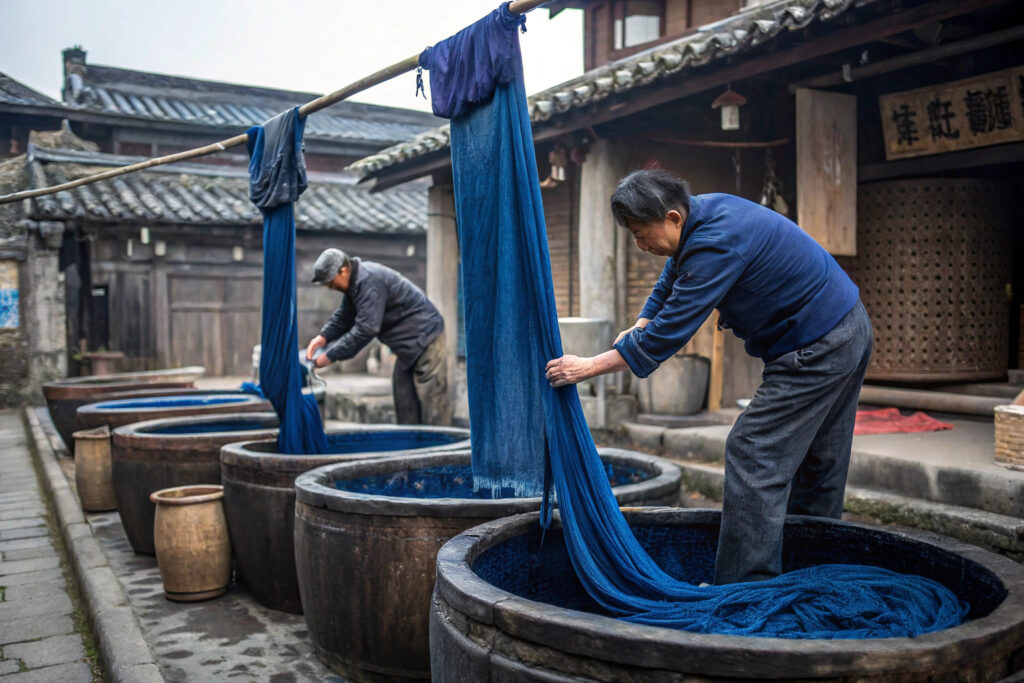
The heart of traditional dyeing is the vat. We start with natural indigo paste or powder derived from Indigofera plants. This is mixed with a reducing agent; historically, this was a fermented substance like wood ash lye or rice bran. The mixture is combined with warm water in a large vat, often made of wood or clay. The vat must be kept at a consistent, warm temperature to encourage the growth of anaerobic bacteria. These bacteria consume the natural sugars and release hydrogen, which reduces the indigo, changing it from its blue, insoluble form to a yellow-green, soluble form known as leuco-indigo. Maintaining this vat is an art—the dyer must regularly "feed" it and monitor its health by smell and color to ensure successful dyeing.
What are the steps for dyeing socks with this method?
Dyeing socks in a traditional vat is a multi-stage, hands-on process. First, the pre-wetted socks are gently submerged into the vat, ensuring they are fully soaked in the reduced dye liquid. They are agitated softly to ensure the dye penetrates every fiber, which is especially important for the complex shapes of socks. After soaking for several minutes, they are carefully pulled out. Initially, the socks appear a yellowish-green color. As they are hung up and exposed to the oxygen in the air, a magical transformation occurs: the leuco-indigo oxidizes and turns blue. This dipping and oxidizing process is repeated multiple times to achieve a darker shade—each dip adds more layers of color. Finally, the socks are thoroughly rinsed in cold water to remove any excess, non-bonded pigment and then air-dried.
How does modern industrial indigo dyeing work for socks?
Modern industrial methods have revolutionized indigo dyeing, making it possible to produce large volumes of consistently colored socks for the global market. While it may lack the romance of the traditional process, it offers the speed, reliability, and scale that a leading wholesale socks supplier like us needs to fulfill orders for thousands of pairs. This method uses chemistry to achieve the same reduction of indigo, but in a controlled and efficient manner.
Modern industrial indigo dyeing for socks uses sodium hydrosulfite as a reducing agent to create the soluble leuco-indigo in a controlled vat. The process is often automated, with socks on a conveyor system being dipped multiple times into the dye bath and oxidized in air between dips. This method ensures color consistency, faster production times, and is better suited for blending with synthetic fibers commonly used in performance socks.

What chemicals are used in the modern vat?
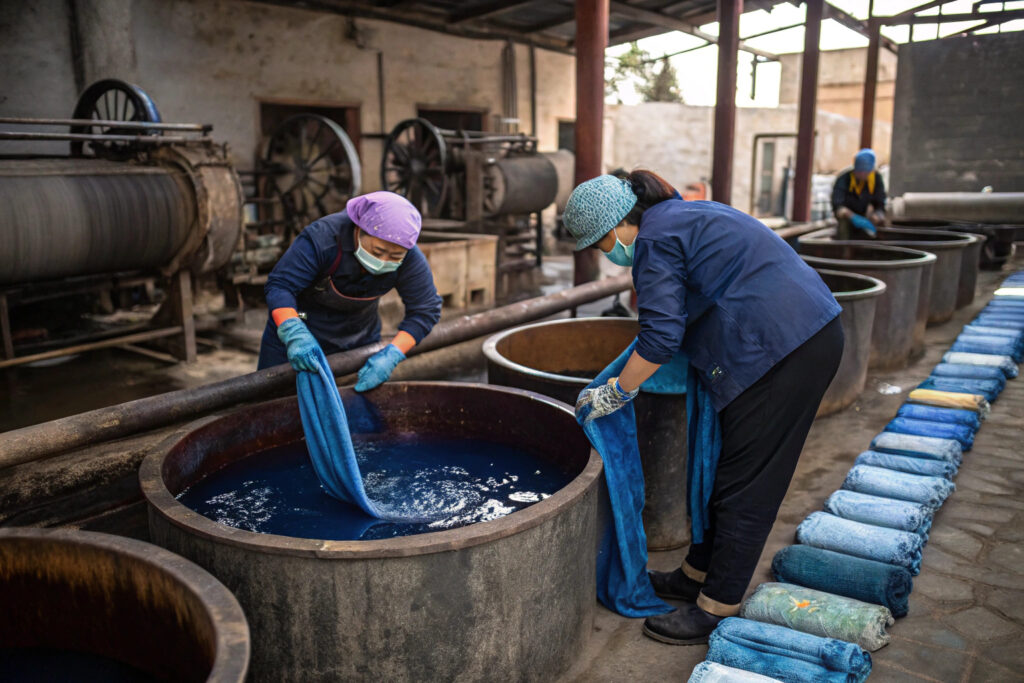
The modern vat replaces organic fermentation with precise chemistry. The key player is sodium hydrosulfite (also known as sodium dithionite), a powerful reducing agent that quickly converts insoluble indigo into its soluble form. To maintain the correct alkalinity for the reaction, sodium hydroxide (caustic soda) is added. The vat is typically made of stainless steel to resist corrosion. While this process is highly efficient, it generates sulfite by-products, which is why at GlobalSock, we invest in advanced wastewater treatment to minimize the environmental impact. This controlled environment allows us to produce everything from standard crew socks to specialized compression socks with reliable color matching across massive production runs.
How is the dyeing process automated for bulk orders?
Automation is key to modern sock production. For a large order of, say, 50,000 pairs of ankle socks, we use an overhead conveyor system. Socks, often mounted on frames, are mechanically dipped into a series of dye baths. The immersion time is precisely controlled. After each dip, the conveyor lifts the socks and transports them through an airing zone where oxidation occurs. This cycle is repeated 4 to 8 times to build up the desired shade depth. Following the final oxidation, the socks move to a series of high-efficiency rinsing and washing chambers to remove any unreduced indigo. Finally, they are dried in a tumble dryer. This entire system, integrated with our agile supply chain, allows us to maintain our promise of quick bulk delivery without compromising on color fastness.
What are the pros and cons of each dyeing method?
Choosing between traditional and modern indigo dyeing isn’t about finding the "best" method, but the right method for a specific product and brand philosophy. At our company, we offer both, guiding our clients through the trade-offs to help them make an informed decision for their sock line. Each approach has distinct advantages and drawbacks that impact the final product’s cost, look, and environmental footprint.
The primary trade-off is between authenticity, environmental friendliness, and uniqueness (traditional) versus efficiency, consistency, and scalability (modern). Traditional dyeing creates unique, vintage-style colors with a lower chemical footprint but is slower and more expensive. Modern dyeing allows for mass production of uniform socks at a lower cost but uses harsher chemicals and lacks the artisanal character.

Why would a brand choose traditional dyeing?
A brand would choose traditional dyeing for its story, its aesthetic, and its sustainability credentials. The colors achieved are complex and deep, with subtle variations that cannot be replicated by machines—this "imperfection" is highly valued in luxury and heritage markets. The process itself uses biologically derived reducing agents, making it more natural and aligning with eco-friendly product lines, such as our socks made from organic cotton or bamboo. However, this comes with challenges. It is incredibly time-consuming, requiring skilled artisans whose expertise commands a higher price. The color yield can be less predictable, and the resulting socks may have slightly lower colorfastness to washing compared to their modern counterparts, although they age beautifully.
What are the advantages of modern dyeing for wholesalers?
For wholesalers and large-scale retailers, the advantages of modern dyeing are overwhelming. Speed and scale are the biggest benefits; we can dye thousands of pairs of socks per day with consistent, uniform results, which is essential for fulfilling orders for major brands. The cost per pair is significantly lower, making it economically viable for the mass market. The process also allows for greater control over the final shade, ensuring that the navy blue of this season’s athletic socks batch matches the last. From a performance standpoint, modern dyes can be formulated to better adhere to synthetic fibers like nylon and spandex, which are critical for the elasticity and durability of sports and compression socks.
How to ensure quality and colorfastness in indigo-dyed socks?
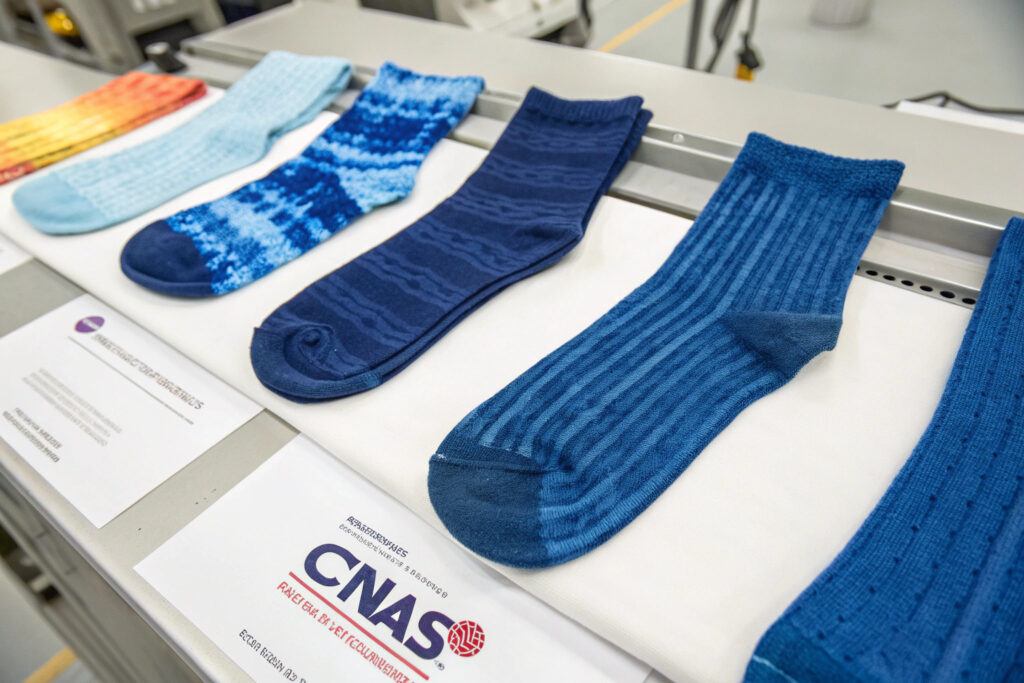
Regardless of the dyeing method, the end goal is the same: to produce high-quality socks with beautiful, lasting color. As a supplier with a CNAS-accredited lab, we implement rigorous testing at every stage to ensure that the indigo-dyed socks we ship worldwide meet the highest standards for durability and customer satisfaction. Colorfastness is particularly important for indigo, known for its tendency to fade in a characteristic way.
Ensuring quality in indigo-dyed socks involves a combination of proper fiber preparation, controlled dyeing processes, and post-dyeing treatments and testing. Key steps include using high-quality scoured cotton, maintaining precise control over the dye vat, employing multiple dips for depth, and conducting standardized tests for wash fastness, rub fastness, and light fastness before the socks are approved for shipment.
What pre-treatment is necessary for the socks?
The journey to a quality dyed sock begins long before it touches the indigo vat. The raw yarn or knitted sock must be thoroughly prepared. This involves a process called scouring, which is a hot wash with alkaline detergents to remove any natural waxes, oils, or knitting lubricants from the fibers. Any impurity left on the fiber will create a barrier, resulting in uneven, patchy dyeing. For natural fibers like the Merino wool we use in our premium lines, this process is especially gentle to avoid felting the wool. A perfectly scoured sock is hydrophilic (water-loving), allowing the dye liquor to penetrate evenly and deeply into every thread, which is the foundation of uniform color and superior colorfastness.
How is colorfastness tested after dyeing?
After dyeing and rinsing, our quality control team takes over. We use standardized testing methods to simulate the wear and tear socks will endure. For wash fastness, samples are laundered multiple times alongside standard adjacent fabrics to see if color bleeds. Rub fastness tests (both dry and wet) use a crockmeter to see if color transfers when rubbed. We also test for light fastness by exposing samples to a controlled light source to check for fading. Socks that pass these tests, which often exceed basic industry standards, are the ones that earn our quality seal. This commitment to end-to-end quality control is why our clients, from startups to giants like H&M, trust us with their orders, knowing the socks will look great wash after wash.
Conclusion
The journey of indigo from plant to sock is a remarkable blend of art and science. Whether through the patient, organic rhythm of the traditional vat or the efficient, precise pulse of modern industry, both methods have their place in bringing this timeless color to life. The choice ultimately depends on your brand’s values, target market, and product requirements. At GlobalSock, we are proud to master both techniques, offering our clients the flexibility and expertise to create the perfect indigo-dyed socks.
We hope this deep dive has been illuminating. If you are inspired to create your own line of high-quality indigo-dyed socks, from classic crew socks to innovative compression wear, we would be honored to partner with you. Our team manages everything from sustainable fabric sourcing to lab dips, bulk production, and global logistics. For a personal consultation on your next sock order, please reach out to our Business Director, Elaine, at elaine@fumaoclothing.com. Let’s co-create something extraordinary.