
When it comes to international sock shipments, packaging isn’t just about aesthetics—it’s a decisive factor that affects cost, brand perception, and delivery success. Many U.S. buyers like Ron, who are sourcing socks from China, face challenges like damaged goods, high freight rates, and customs delays due to suboptimal packaging.
The key to optimizing sock packaging for international shipping lies in balancing protective materials with logistics efficiency, branding, and compliance. From compression socks to bamboo dress socks, every style needs tailored packaging to ensure safe arrival and sustainable cost control.
If you’re shipping thousands of pairs of socks across oceans, you must rethink everything from your inner polybag choices to your outer master cartons. Let’s break down what truly matters in global sock packaging today.
What Packaging Materials Are Best for Sock Exports?
Optimizing packaging starts with the right materials. Choosing eco-friendly, lightweight, and compliant packaging can directly affect your margins and customer loyalty.
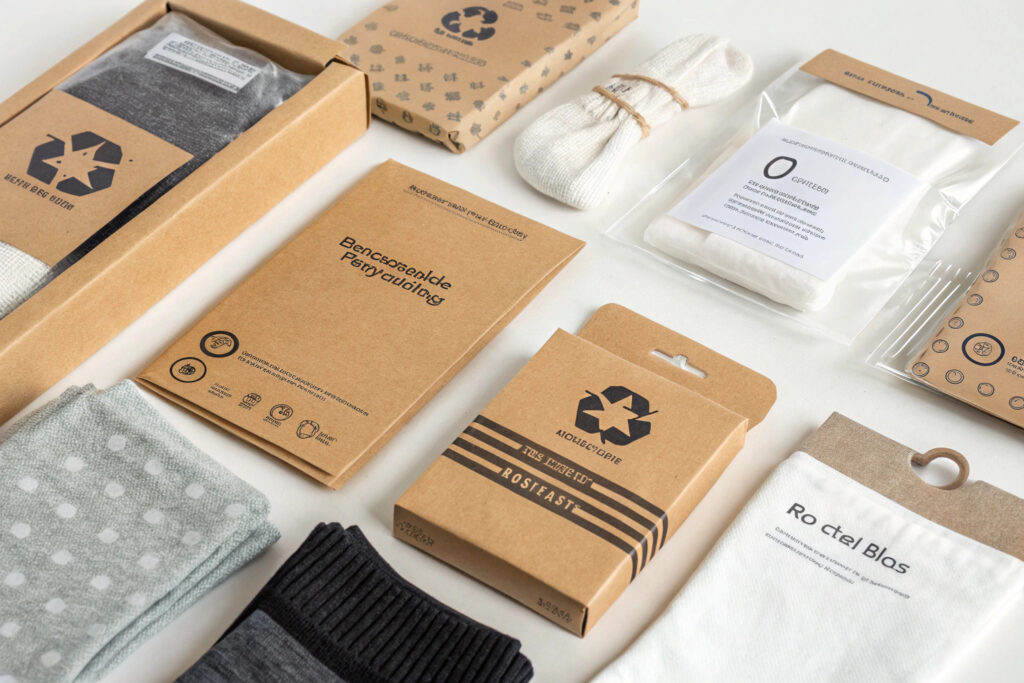
Lightweight packaging materials like recycled polybags and kraft paper boxes help reduce freight costs without sacrificing durability.
Why Are Biodegradable Polybags Gaining Popularity?
Biodegradable polybags have become popular among EU and US buyers because they meet both sustainability goals and reduce customs issues in markets like California. At EcoEnclose, suppliers offer clear plant-based mailers that decompose without harming marine life. Our clients—especially DTC brands—prefer these to show environmental responsibility.
These bags are moisture-resistant, lightweight, and compatible with printed branding or QR codes. Using them can improve consumer sentiment and reduce landfill waste. We’ve seen repeat orders increase by 23% among brands that switched to biodegradable options.
Can Printed Kraft Boxes Replace Blister Packs?
Kraft boxes are gaining traction as replacements for plastic blister packs. They are durable, recyclable, and perfect for retail-ready exports. Especially for gift sets or multi-pack athletic socks, kraft cartons with die-cut windows offer great shelf presence. Brands like Noissue provide FSC-certified custom boxes that meet EU packaging waste directives.
However, they may not be water-resistant, so we often recommend combining them with inner polybag liners for overseas shipments. This dual-layer method balances presentation with protection, especially for premium sock lines.
How Can We Maximize Carton Efficiency?
Maximizing carton efficiency means more units per container, fewer damaged goods, and easier unloading. But many factories still overpack or under-fill, which leads to losses on both ends.
Smart carton engineering ensures optimal fill rate, better stacking on pallets, and protection throughout long-haul transit.

How Do You Calculate Carton Fill Rate Accurately?
Carton fill rate is calculated by the ratio of total sock volume to carton capacity. An efficient fill rate is usually between 85%-95%. Anything below leads to wasted shipping volume. At GlobalSock, we use AI layout simulation to test various folding and sock stacking methods, then finalize carton specs accordingly.
We recommend software like Cape Pack to simulate pallet configurations and identify the best box dimensions for each sock type. Compression socks need different folding techniques than fluffy winter socks, and fill rate must adapt accordingly.
Should You Use Dividers or Bundle Wraps?
Dividers are essential for delicate or dyed socks prone to abrasion. For cotton dress socks, we often use paperboard inserts or kraft sleeves to separate sizes or colors inside a single carton. Bundle wrapping—grouping 5–10 pairs in shrink film or biodegradable tape—is another technique to minimize jostling in transit.
This approach also improves carton unpacking efficiency at the buyer’s end. Packsize offers custom packaging automation that integrates bundling and separation processes, especially for bulk orders exceeding 50,000 pairs per shipment.
How to Meet US and EU Labeling Requirements?
Labeling isn’t just for retail—it’s a legal requirement for cross-border shipping. Labels ensure your socks clear customs smoothly and reach shelves without reprocessing or repackaging.
From fiber content to care instructions, every label must align with the destination market’s standards to avoid fines or delays.
What Must Be Included on Export Sock Labels?
According to U.S. FTC labeling guidelines, socks shipped to the United States must include:
- Fiber content (e.g., 75% cotton, 23% polyester, 2% spandex)
- Country of origin (e.g., Made in China)
- RN (registered number) or brand name
- Care instructions (washing, drying, etc.)
For the EU, REACH and textile labeling regulations also require multilingual content and eco compliance icons if claiming sustainability. We help clients ensure all packaging carries GS1-compliant barcodes for logistics tracking.
Should You Use Hang Tags, Stickers, or Sewn-In Labels?
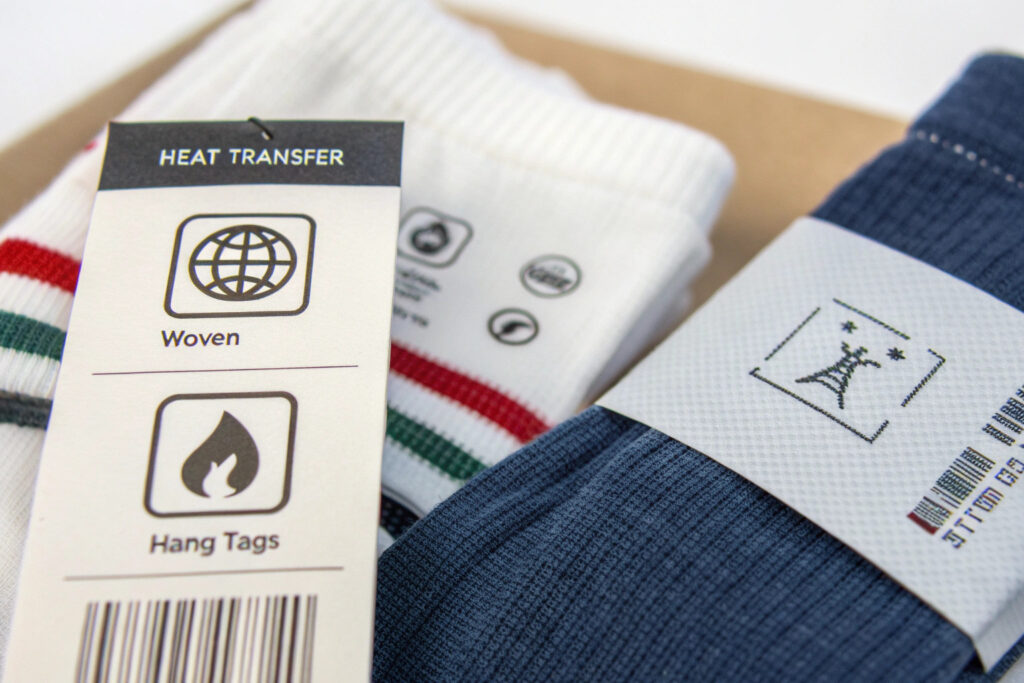
Hang tags are ideal for retail and eCommerce visibility, while sewn-in labels serve better for care information permanence. Stickers are cheaper but risk peeling off in humid environments.
For international shipments, we often combine these formats:
- Hang tags for product display and brand story
- Sewn-in labels for durability
- Stickers for SKU tracking or promotions
We source eco-certified tags from Avery Dennison, ensuring inkfastness, tear resistance, and recyclability.
How Can You Cut Freight Costs Without Sacrificing Protection?
Freight costs have become volatile due to container shortages, fuel hikes, and international tariffs. Optimizing packaging to reduce CBM (cubic meters) can save thousands per container.
From vacuum compression to custom box sizing, there are ways to shrink packaging footprint without compromising the socks inside.

Can Vacuum Packing Help with Bulk Sock Orders?
Yes, especially for certain sock types like gym socks or cotton basics. Vacuum packing can reduce the total volume by 40%–60%, allowing more units per carton and fewer cartons per pallet. For brands shipping 50,000+ pairs monthly, this method brings dramatic freight savings.
However, socks must be tested post-unpacking to ensure no permanent creases or damage. We recommend vacuuming only pre-retail packaged socks (not display-ready ones). Solutions like Packmate offer industrial vacuum packing equipment optimized for apparel exports.
What’s the Role of Modular Box Design in Logistics?
Modular packaging means creating boxes that stack efficiently within standard 20ft or 40ft containers. This eliminates “air space” and reduces shifting during transit. A 2cm dimension tweak can help a box go from 8 to 10 per layer, drastically improving your container utilization.
We collaborate with local packaging firms in Keqiao that use simulation software to design sock cartons tailored to our buyers’ shipping lanes. Combined with weight balancing, this ensures that no box is too heavy for manual handling or too light to waste space.
Conclusion
Shipping socks globally isn’t just about putting them in boxes—it’s about designing packaging that saves costs, enhances branding, and meets compliance. From biodegradable inner wraps to freight-efficient cartons, every decision affects your bottom line and customer satisfaction.
If you’re ready to scale your sock brand with optimized, export-ready packaging, contact Shanghai Fumao today. Our team at GlobalSock offers complete solutions from R&D to packaging to DDP shipping. For customized sock orders, reach out to our Business Director Elaine at elaine@fumaoclothing.com.