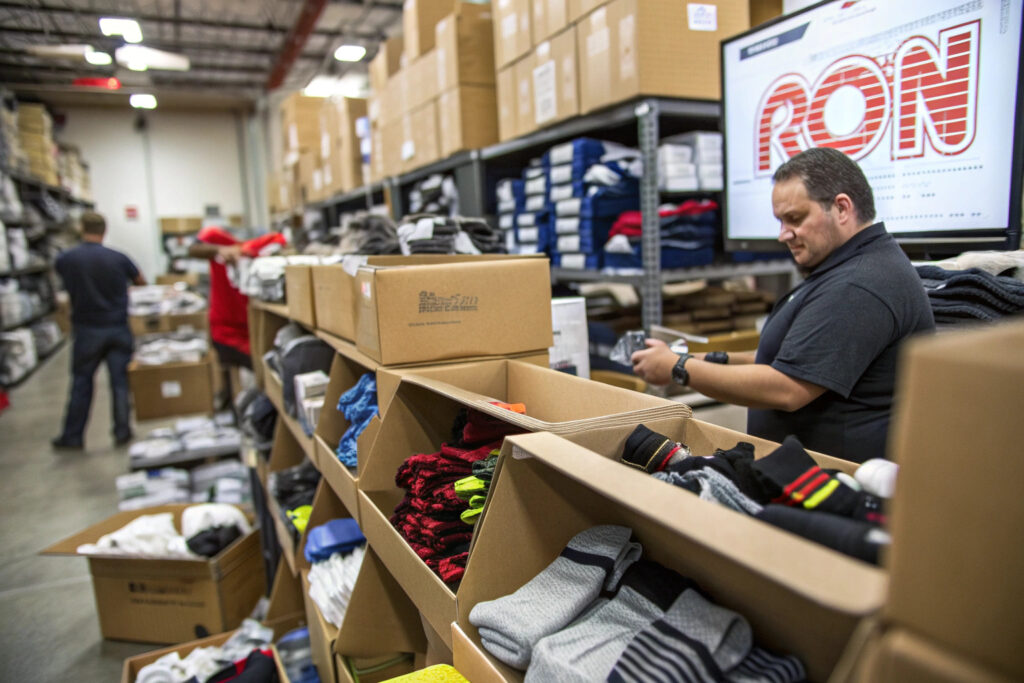
Are you tired of the guessing game in your sock inventory management? Losing track of stock levels, dealing with manual counting errors, and facing supply chain blind spots can cripple your retail business. For American buyers like Ron, who value both quality and efficient logistics, these inefficiencies directly impact profitability and customer satisfaction.
RFID-tagged socks offer a powerful solution to these inventory challenges. By integrating RFID technology directly into sock production, you can achieve real-time inventory visibility, reduce labor costs, and dramatically improve supply chain accuracy from our factory in China to your US warehouse. This technology is transforming how retailers manage inventory, providing data-driven insights that were previously impossible with traditional methods.
This guide will walk you through the entire process of sourcing RFID-enabled socks from a manufacturing perspective. You will learn why this technology is a game-changer, how to verify proper tag integration, ways to customize tags for your needs, and strategies for managing costs effectively. Let’s explore how you can upgrade your inventory management through smarter sourcing.
Why Use RFID Tags in Sock Inventory Management?
Manual inventory counts for socks are prone to errors and consume valuable time. For buyers managing thousands of SKUs across different styles like ankle socks and compression socks, this traditional approach leads to stockouts, overstocking, and revenue loss. RFID technology solves these problems by automating data collection.
RFID tags provide instant, accurate inventory visibility. Unlike barcode scanning that requires line-of-sight, RFID readers can capture data from multiple tagged items simultaneously through packaging and at a distance. This means entire cartons of socks can be counted in seconds without opening boxes. The result is 99% inventory accuracy, reduced labor costs, and real-time insights into stock levels across your supply chain.
Integrating RFID at the manufacturing source creates seamless tracking from production to point-of-sale. When we embed tags during sock production, you gain complete visibility as items move through global logistics to your distribution centers and retail stores. This end-to-end tracking is invaluable for optimizing inventory turnover and preventing losses.
What are the core benefits of RFID for sock inventory?
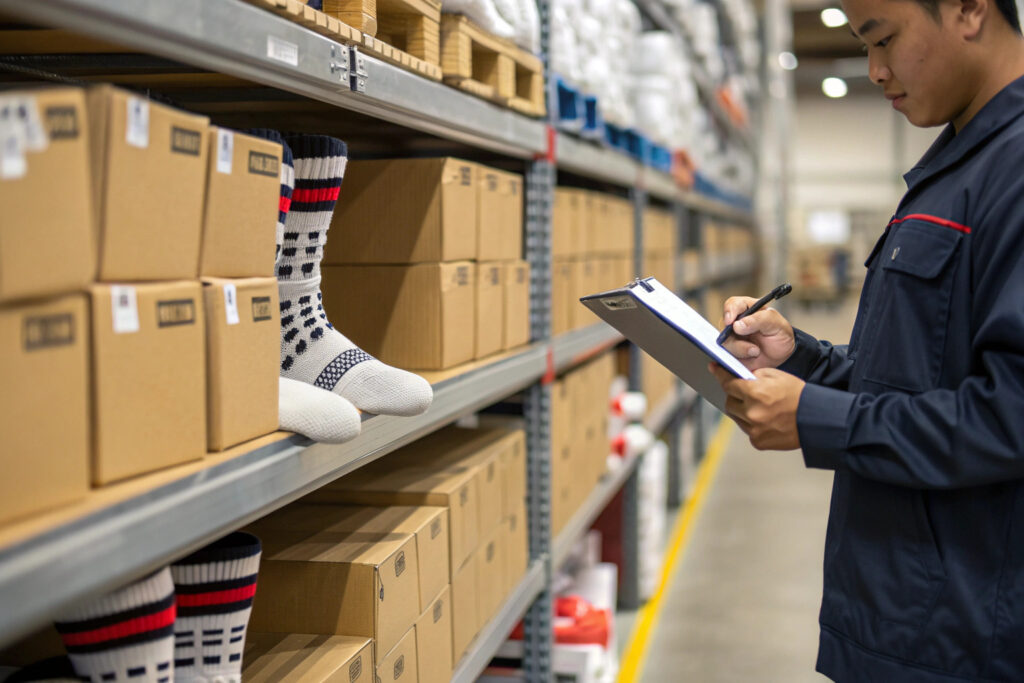
RFID technology delivers multiple advantages for sock retailers and distributors. The most significant benefit is inventory accuracy. Traditional manual counts typically achieve 60-70% accuracy, while RFID systems consistently deliver over 95% accuracy. This precision prevents both overstocking of seasonal items like thermal socks and stockouts of popular athletic socks.
Another major advantage is labor efficiency. RFID readers can process hundreds of tagged socks per second versus individual barcode scans. This reduces counting time by up to 90%, allowing staff to focus on customer service rather than inventory tasks. The American Apparel & Footwear Association provides resources on retail technology adoption that underscore these efficiency gains.
How does RFID improve supply chain visibility?
RFID creates unprecedented transparency throughout your supply chain. From our production facility in Keqiao, China, tagged socks can be tracked through manufacturing, quality control, packaging, shipping, and customs clearance. This visibility helps buyers like Ron monitor production progress and anticipate delivery timelines accurately.
The technology also enhances loss prevention. With unique identifiers for each tagged item, shrinkage can be pinpointed to specific supply chain segments. The GS1 US organization sets standards for RFID implementation that enable this level of traceability across global trade partners, making RFID essential for secure international sourcing.
How to Verify RFID Tag Quality in Sock Production?
Not all RFID tags perform equally in different sock materials. Tag placement, fabric composition, and manufacturing processes significantly impact RFID reliability. Without proper verification, you might invest in tags that fail during daily use or washing.
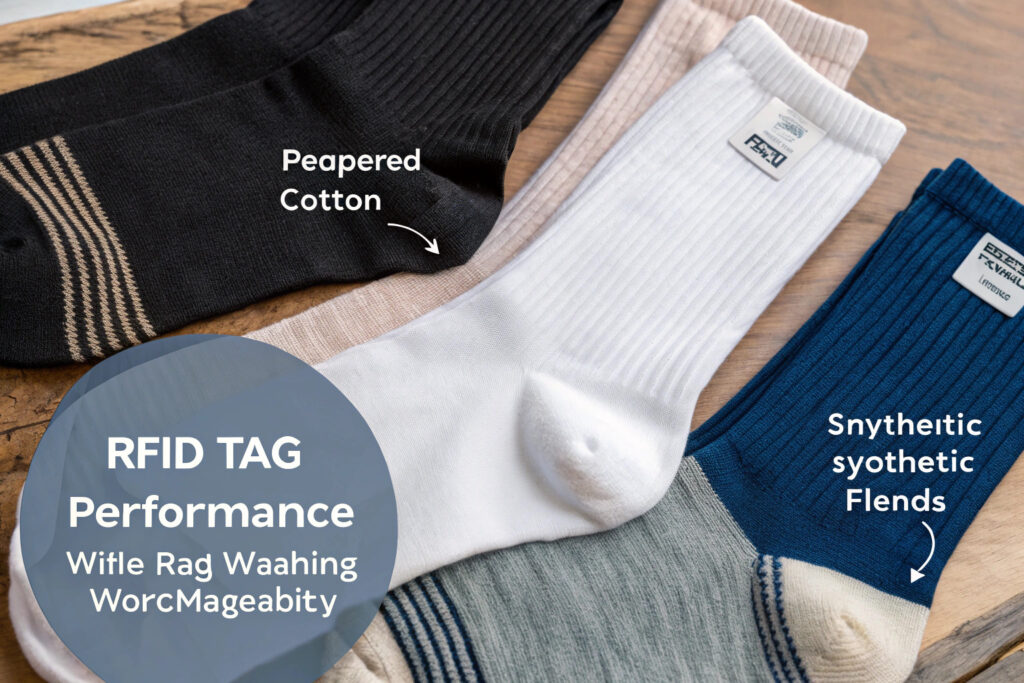
Quality verification begins at the manufacturing stage. Our CNAS-certified lab tests RFID tag performance across various sock types – from merino wool socks to nylon/spandex blends. We conduct durability tests simulating real-world conditions, including repeated washing, stretching, and abrasion to ensure tags remain functional throughout the product lifecycle.
Proper tag integration requires specialized expertise. The RFID inlay must be positioned where it won’t cause discomfort while maintaining optimal read range. For no-show socks, this means embedding tags in toe areas rather than heels. For compression socks, tag placement must avoid interfering with graduated pressure zones.
What testing standards ensure RFID reliability?
International standards govern RFID performance in textiles. The ISO/IEC 18000-6C standard defines parameters for UHF RFID tags commonly used in apparel. Additionally, ASTM D7771 outlines test methods for measuring RFID tag performance on various materials. Our quality control processes adhere to these global benchmarks.
We also conduct custom validation tests mimicking your specific retail environment. Whether you use handheld readers in backrooms or fixed portals at warehouse exits, we verify our tags perform reliably in your operational context. Partnering with RAIN RFID Alliance members ensures our components meet industry-recognized performance criteria.
How to prevent RFID tag failure in socks?
Tag failure typically results from three issues: physical damage, signal interference, or compatibility problems. Physical protection involves encapsulating RFID inlays in durable materials that withstand washing and wear. We use flexible urethane coatings that resist cracking during repeated sock stretching.
Signal interference occurs when metallic threads or moisture-rich fabrics like bamboo socks block RF transmission. Our technicians test different tag orientations and sock materials to identify optimal configurations. We also verify reader compatibility, ensuring our tags work with common retail systems from providers like Zebra and Impinj.
How to Customize RFID Tags for Different Sock Types?
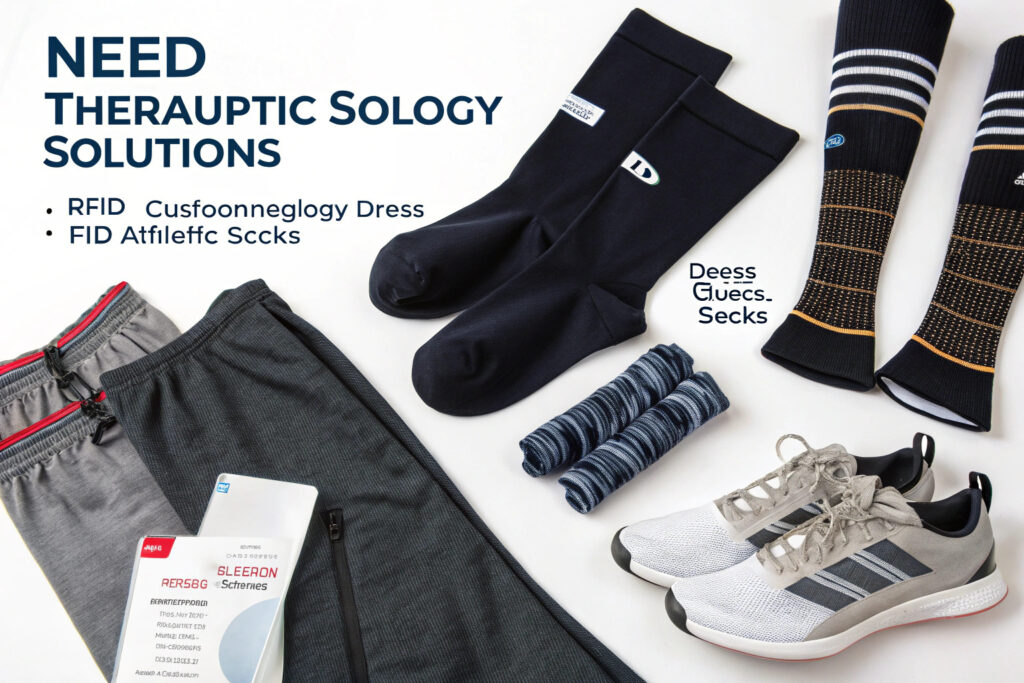
One-size-fits-all doesn’t work for RFID implementation across diverse sock categories. Athletic socks, dress socks, and therapeutic stockings each present unique tagging challenges and opportunities. Customization ensures optimal performance for your specific product mix.
The customization process begins with understanding your operational requirements. For fashion socks with seasonal designs, we recommend removable hang tags with RFID capability. For performance categories like sports socks where tags must survive washing, we embed laundry-resistant labels sewn into seams. Each approach balances readability with user experience.
Tag memory capacity is another customization area. Basic tags with 96-bit EPC memory suffice for inventory tracking. For socks requiring more data – like organic cotton certification or washing instructions – we implement tags with expanded user memory. This enables storing product details directly on the tagged item throughout its lifecycle.
What RFID options work best for each sock category?
Different sock types benefit from tailored RFID solutions. For bulk-packaged ankle socks sold in multipacks, we recommend case-level tagging with high-performance UHF tags. For premium individual pairs like silk socks or merino wool socks, we integrate smaller tags discreetly into care labels.
Here’s a quick reference table for RFID customization by sock type:
| Sock Category | Recommended RFID Type | Optimal Placement |
|---|---|---|
| Athletic Socks | Wash-resistant UHF tag | Inside cuff label |
| Dress Socks | Thin HF tag with small footprint | Side seam area |
| Compression Socks | Flexible stretchable tag | Above compression zone |
| No-Show Socks | Miniaturized tag solution | Toe section |
How to balance RFID functionality with comfort?
Comfort is paramount in sock design, making discreet tag integration essential. We achieve this through specialized materials and placement strategies. For sensitive skin types wearing bamboo socks or organic cotton socks, we use hypoallergenic tag encapsulation that prevents irritation.
Our development process includes wear trials to validate comfort alongside functionality. Testers wear prototype RFID-enabled socks during typical activities while we monitor both comfort feedback and tag performance data. This iterative approach ensures the final product meets both technical and user experience requirements.
How to Manage Costs When Sourcing RFID-Enabled Socks?
RFID implementation adds expense to sock production, but strategic approaches maximize return on investment. For price-conscious buyers like Ron, understanding cost drivers and optimization strategies is crucial for making informed sourcing decisions.
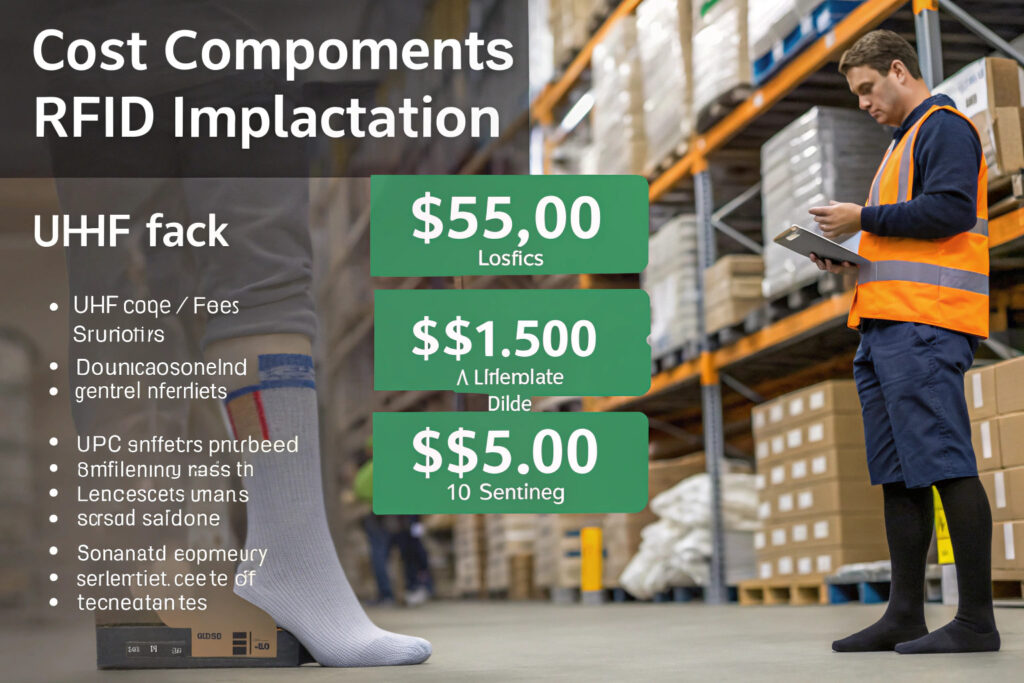
The primary cost components include RFID inlays, integration labor, and specialized equipment. UHF RFID tags suitable for sock applications typically range from $0.07 to $0.15 per tag in volume quantities. Integration adds approximately $0.02-$0.05 per pair depending on complexity. These costs must be weighed against potential savings from improved inventory accuracy and reduced labor.
Volume planning significantly impacts per-unit costs. While we support small-batch customization for market testing, substantial cost advantages emerge at higher volumes. Planning seasonal orders for your core products like crew socks and casual socks with RFID integration yields better pricing than last-minute small orders.
What strategies reduce RFID implementation costs?
Several approaches minimize RFID expenses without compromising performance. First, consider hybrid implementation – using RFID on your fastest-moving SKUs first, then expanding as ROI validates the investment. This phased approach reduces upfront costs while delivering benefits where they matter most.
Second, leverage our existing RFID infrastructure. As an established manufacturer serving EU markets where RFID adoption is advanced, we’ve already invested in the specialized equipment and expertise needed for efficient tag integration. This shared infrastructure approach spreads costs across multiple clients, making RFID more accessible than developing capabilities independently.
How to calculate ROI for RFID-enabled socks?
Quantifying RFID return justifies the investment. Calculate potential savings from: reduced inventory shrinkage (typically 1-3% of sock inventory), decreased labor costs (up to 80% reduction in counting time), improved sales through better stock availability (2-7% revenue increase), and lower administrative errors.
The National Retail Federation offers resources on retail technology ROI that can inform your calculations. Many partners recover RFID implementation costs within 12-18 months through these combined efficiencies, making the technology increasingly essential for competitive retail operations.
Conclusion
RFID technology transforms sock inventory management from a constant challenge into a strategic advantage. By sourcing socks with properly integrated RFID tags, you gain unprecedented visibility, accuracy, and efficiency throughout your supply chain. The technology addresses critical pain points for American buyers like Ron – from tariff documentation to inventory security – while providing data-driven insights for business growth.
The implementation journey begins with selecting a manufacturing partner who understands both RFID technology and sock production nuances. From verifying tag quality to customizing solutions for different sock categories, the right supplier ensures seamless integration that delivers tangible operational benefits.
Ready to upgrade your sock inventory management? Contact our Business Director Elaine at elaine@fumaoclothing.com to discuss how our RFID-enabled sock manufacturing can solve your inventory challenges. With over 10 years of expertise in sock production and technology integration, we’ll help you implement a solution that improves your bottom line while delighting your customers with quality products.