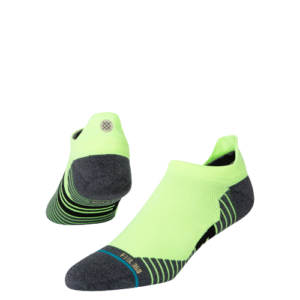
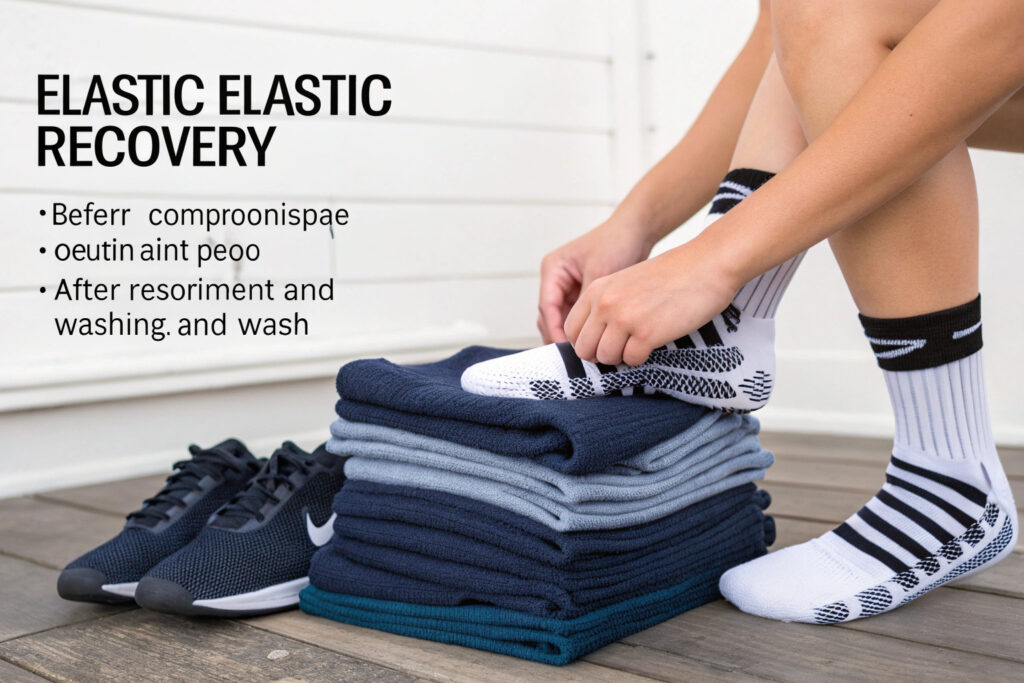
As a leading athletic socks manufacturer, we understand the critical importance of elastic recovery – the ability of socks to maintain their shape and compression after multiple washes. This isn’t just about comfort; it’s about performance durability that your customers demand.
Elastic recovery is tested through standardized laboratory washing cycles followed by precise measurements of dimensional changes and tension recovery against international standards like ASTM or ISO. At GlobalSock, our CNAS-accredited lab conducts these tests routinely, ensuring every batch maintains optimal performance through repeated laundering.
Understanding proper testing methodologies can protect your brand from returns and ensure customer satisfaction. Let’s explore the proven methods to guarantee the socks you source will maintain their fit and function.
What is Elastic Recovery and Why Does it Matter for Socks?
Elastic recovery defines how well sock fabric returns to its original shape after stretching. For athletic socks, this isn’t optional – it’s essential for maintaining compression, preventing slippage, and ensuring consistent performance throughout the product’s lifespan.
Elastic recovery directly impacts user comfort, product longevity, and retention of technical features like moisture-wicking and blister prevention. Poor recovery leads to socks that sag, bunch, and lose their performance benefits, resulting in dissatisfied customers and increased returns.
What Fabric Blends Offer the Best Elastic Recovery?
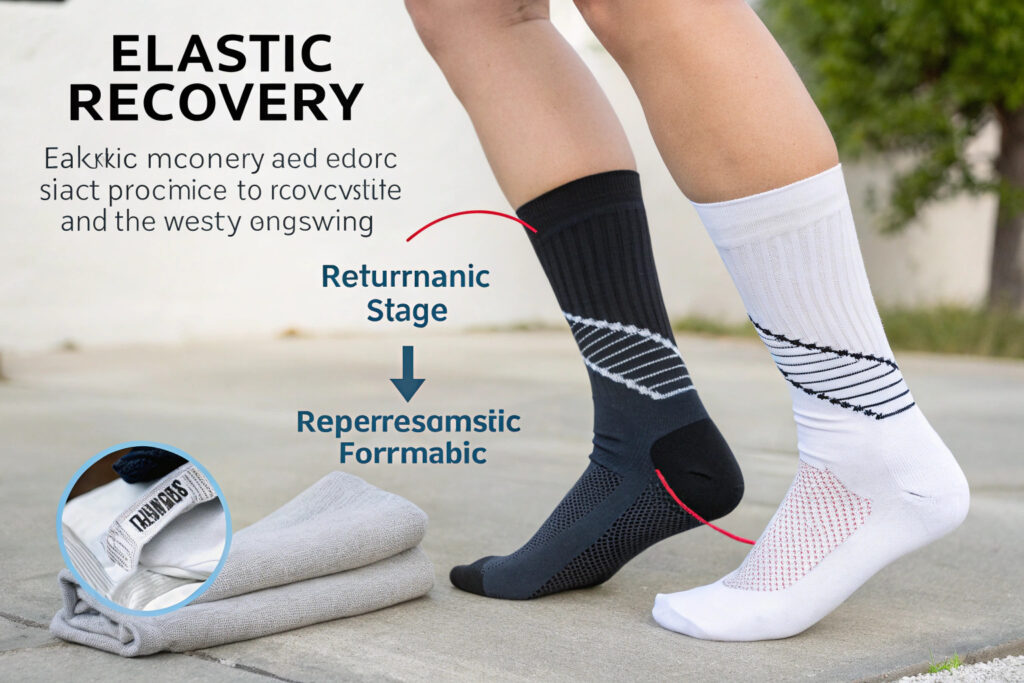
The foundation of superior elastic recovery lies in material science. While cotton provides comfort, it offers poor natural recovery. High-performance athletic socks rely on synthetic blends with spandex (Lycra/elastane) as the elastic component within durable bases like nylon or polyester.
At GlobalSock, we’ve perfected blends like our 75% Nylon/22%Cotton/3%Spandex combination, balancing softness with exceptional shape retention. We source premium materials from leaders like Invista and Hyosung, ensuring consistent quality control and performance across all production batches.
How Does Manufacturing Impact a Sock’s Stretch?
Manufacturing precision determines how well materials perform. We utilize advanced knitting machines from manufacturers like Santoni that enable precision engineering of sock structures. Techniques like reinforced heel and toe construction create zones resistant to deformation.
The post-knitting thermal setting process "programs" the spandex fibers to remember their original shape. Our computer-controlled boarding systems ensure every pair receives consistent heat treatment, locking in elasticity that withstands repeated washing and wearing.
What Are the Standard Wash Test Methods for Socks?
Industry-standard wash tests simulate real-world conditions through controlled, repeatable processes. These tests provide reliable data predicting how socks will perform throughout their lifespan, using protocols from ASTM and ISO that specify every detail from water temperature to detergent type.
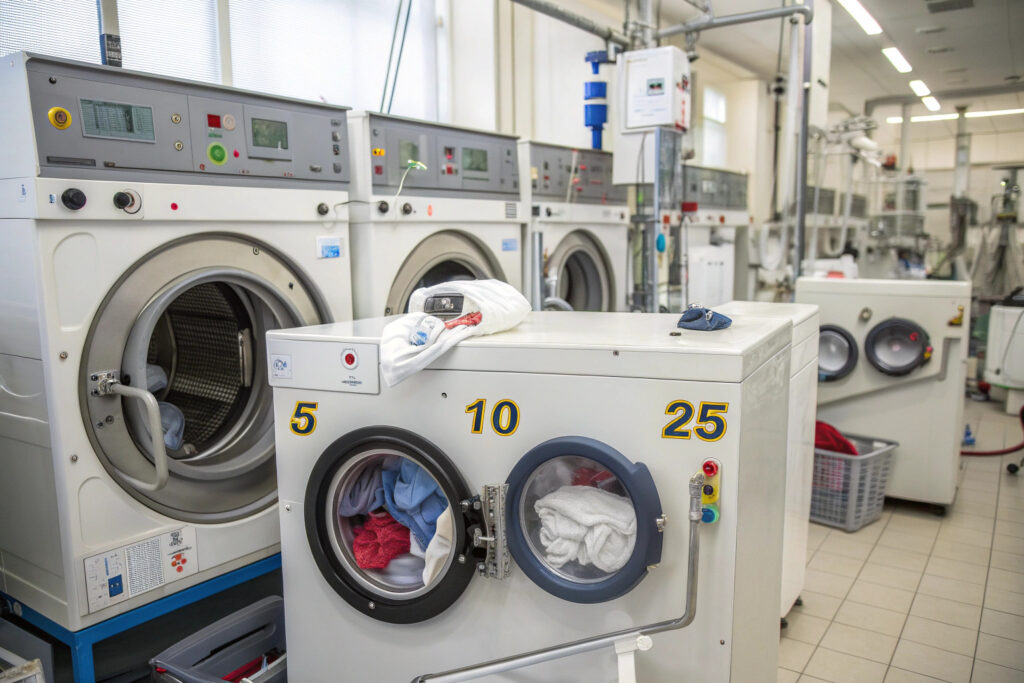
Standard testing involves laboratory-grade washers and dryers subjecting socks to predetermined cycles (typically 5, 10, or 25), followed by conditioning and precise measurement of dimensional changes and recovery properties. This scientific approach eliminates variables and provides comparable data between samples and production batches.
How Many Wash Cycles Are Considered Adequate for Testing?
The number of cycles depends on target market expectations. Basic assessment may use 5 cycles, while premium athletic socks require more rigorous testing of 25 cycles, aligning with International Organization for Standardization (ISO) method 6330 for domestic washing and drying.
For clients supplying major retailers or performance brands, we often conduct accelerated durability tests exceeding standard requirements. This thorough approach in product development ensures the socks we co-create withstand demanding use cases and maintain quality through extended use.
What Equipment is Used in a Professional Sock Wash Test?
Professional testing requires specialized equipment like James Heal Nu-Martindale or SDL Atlas laundry testers. These machines provide precise control over water levels, temperature, agitation speed, and spin cycles, using standard reference detergents and balanced loads for consistent washing action.
Post-wash drying follows specified methods, with tumble drying representing typical consumer practice. Regular equipment calibration ensures results remain accurate and reproducible, providing reliable data for quality assurance and batch consistency verification.
How to Measure Sock Dimension and Tension Changes?
Post-wash analysis focuses on two critical metrics: dimensional stability (size change) and tension recovery (elastic spring-back). Both measurements follow strict protocols in climate-controlled environments to eliminate external factors affecting results.
Dimensional change measurement involves marking precise reference points before washing and measuring distance changes afterward, while tension recovery uses tensile testers to stretch sock sections and record recovery percentages. This objective data forms the basis of our quality reporting system.
What is the Process for Measuring Dimensional Stability?
The process begins with laying new socks on calibrated measuring tables, marking specific points for length (cuff to toe) and width (across foot ball). After wash cycles and conditioning, changes in marked distances are measured and calculated as percentages.
High-quality athletic socks typically maintain dimensional changes within -5% to +5% after multiple washes. This meticulous measurement process is integral to our comprehensive quality assurance framework, identifying potential issues before production scaling.
How is Tension Recovery Quantified in a Lab?
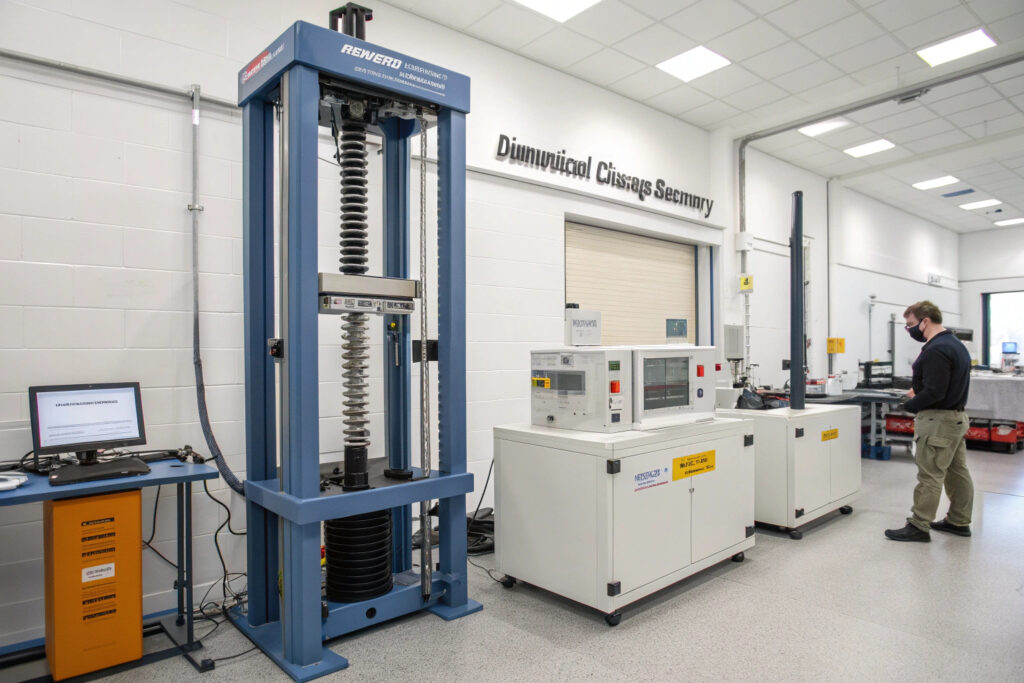
We use constant-rate-of-extension (CRE) tensile testers to quantify recovery. Sock sections are clamped and stretched to predetermined elongation (typically 50%), held briefly, then released. The critical metric is immediate recovery percentage – how completely the fabric returns to its original length.
Performance socks should maintain over 90% recovery even after repeated washing. This testing, combined with assessments of properties like abrasion resistance, provides a complete durability profile ensuring products deliver lasting value to end consumers.
How Can Sock Manufacturers Improve Wash Durability?
Superior wash durability results from strategic material selection, advanced production technology, and optimized finishing processes. At GlobalSock, we approach elastic recovery as an integrated system where each production stage contributes to final product performance.
Manufacturers enhance wash durability through high-tenacity materials, optimized knitting structures, and precise thermal setting processes, creating synergistic effects that maximize product longevity. Post-wash treatments must be carefully managed to avoid compromising elastic properties.

What Role Do Yarn Quality and Knitting Techniques Play?
Spandex quality fundamentally determines recovery capabilities. We source from premium producers ensuring consistent elastic properties. Yarn construction – whether core-spun or covered – affects durability, with core-spun yarns better protecting elastane filaments during washing.
Knitting programming creates structures supporting recovery. Tighter cuff knits with specific ribbing patterns significantly enhance bounce-back capability. Our technicians continuously monitor knitting processes, ensuring every stitch contributes to final product performance and durability.
How Does Thermal Setting Lock in Elasticity?
Thermal setting represents the crucial final step programming sock shape and elasticity. After knitting, socks are placed on metal forms matching final dimensions and passed through computer-controlled heat tunnels. Temperature and duration are precisely managed to optimize spandex memory.
Incorrect heat-setting damages spandex or creates weak shape memory. Our advanced boarding and heating systems ensure every style – from ankle socks to over-the-knee designs – receives perfect, consistent setting. This process guarantees lab-verified elastic recovery translates to real-world customer satisfaction.
Conclusion
Elastic recovery testing transcends technical procedure – it represents commitment to product excellence, brand protection, and customer satisfaction. Through standardized wash testing, precise measurement, and durability-focused manufacturing, brands can deliver athletic socks maintaining performance through extensive use and laundering.
If you seek a manufacturing partner prioritizing scientific quality assurance and proven durability for your sock orders, experience the GlobalSock advantage. Our integrated design-to-delivery approach ensures products built for lasting performance. For direct consultation, contact Business Director Elaine at elaine@fumaoclothing.com. Let’s create enduring value for your brand.