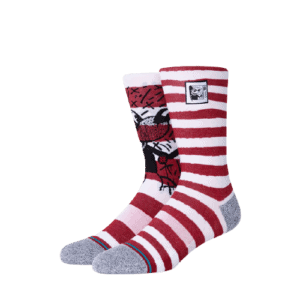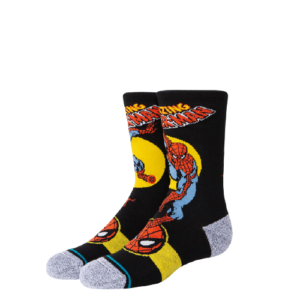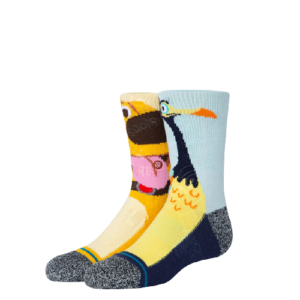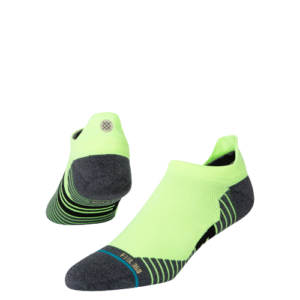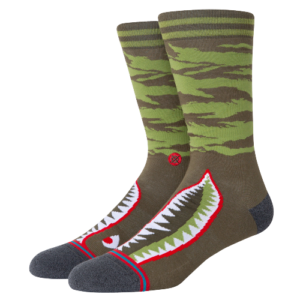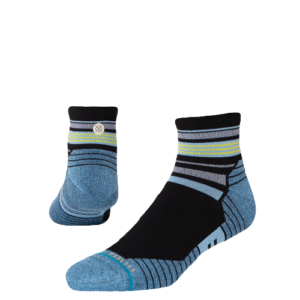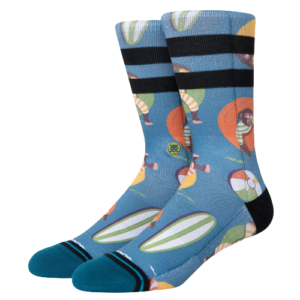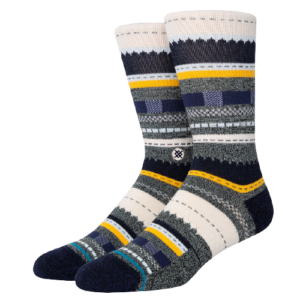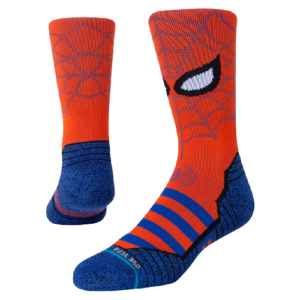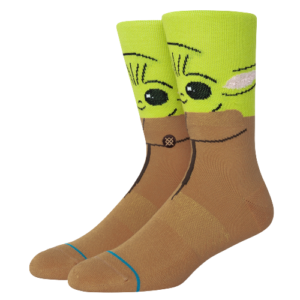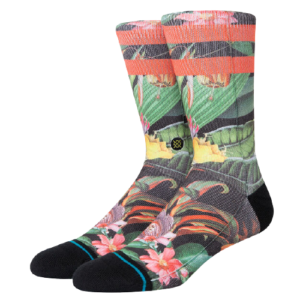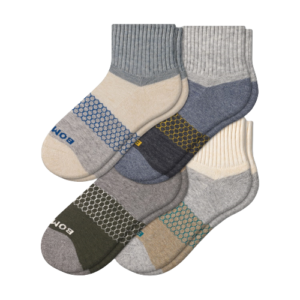
In the sock industry, staying ahead of fashion trends is a challenge that never ends. Retail buyers, online store owners, and fashion brands all want designs that will sell next season, not just today. Yet, by the time many suppliers react, the trend window is already closing. This gap between market desire and production reality is where AI trend forecasting becomes a game-changer.
We at GlobalSock have turned this challenge into an opportunity. By combining AI data analytics with our design and manufacturing expertise, we can predict what styles, colors, and materials will be in demand months in advance. That means we don’t just follow the market — we help shape it.
With AI trend forecasting, I can speed up sample development, cut guesswork, and ensure that every new collection has the highest possible chance of hitting the sales sweet spot. In the following sections, I’ll walk you through exactly how we apply AI in our sock design and manufacturing process, and how it gives our clients a measurable competitive edge.
Top Benefits of AI in Sock Trend Prediction
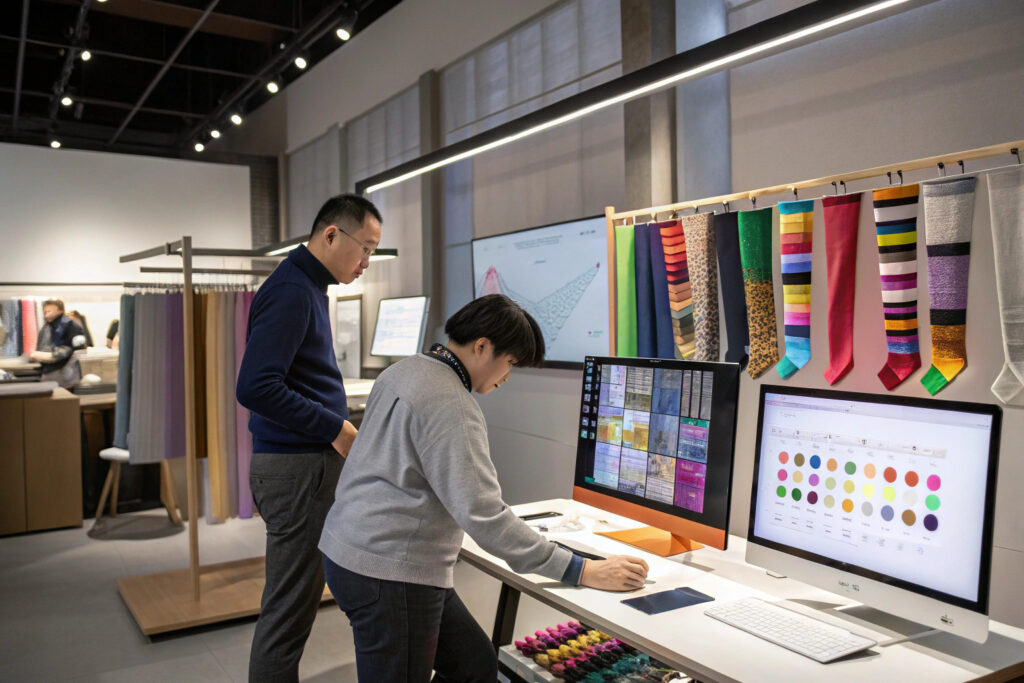
AI in fashion trend forecasting is not about replacing creativity — it’s about empowering it. The right tools analyze millions of online images, social media posts, e-commerce listings, and runway collections to spot patterns no human could process in time. In the sock industry, this means knowing what’s going to be big before it even hits mass media.

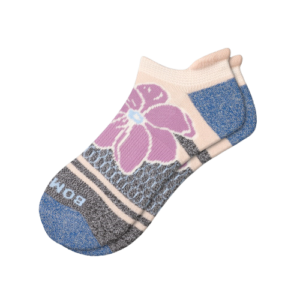
With AI, I can track demand for patterns like argyle or tie-dye, see which colors are gaining popularity in key markets, and adjust my raw material orders accordingly. For buyers like Ron in the U.S., this means fewer overstock risks, faster response to trends, and more sell-through on each design.
How Can AI Reduce the Risk of Overstock?
One of the main benefits of AI forecasting is reducing inventory risks. Traditional forecasting often relies on last year’s sales, which ignores fast-moving changes in consumer tastes. Tools like Edited and WGSN feed us live data from global retail, so I can adjust production quantities in real time.
This isn’t just theory. Last winter, AI data showed a sharp rise in demand for merino wool socks in neutral earth tones in Northern Europe. By shifting production early, we avoided leftover stock of bright-colored wool socks that would have underperformed.
Can AI Help Identify Niche Sock Markets?
Absolutely. AI algorithms can uncover micro-trends that manual research often misses. For example, a spike in interest for toe socks among yoga communities might be invisible in general retail data but very clear in AI-driven social listening tools. Acting on this insight lets us supply niche markets ahead of competitors.
Integrating AI Into the Design Process
Once AI tells me what’s trending, the real design work begins. The secret is not just knowing the trend — it’s adapting it to your product line, customer base, and production capacity. At GlobalSock, we use AI as the starting point, then layer in creative decisions and technical feasibility.
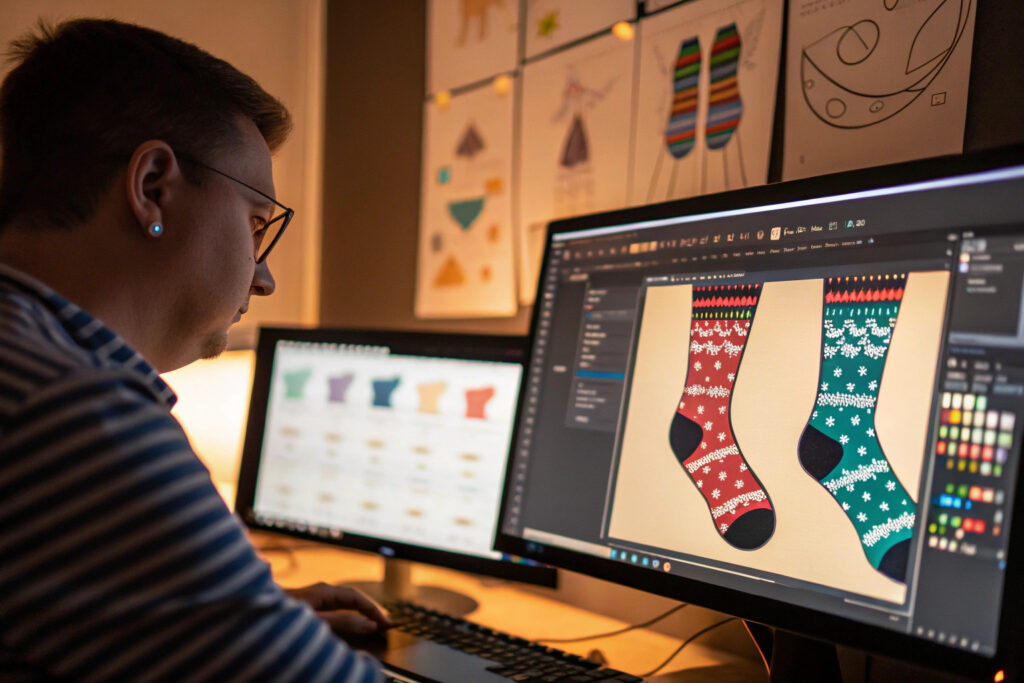
Our design software integrates AI-generated color palettes and pattern templates, so my team can create multiple variations quickly. That way, we can present buyers with options they can take to market with confidence.
How Does AI Influence Color Choices?
Color forecasting used to depend on seasonal trend reports from agencies. Now, I get real-time data from Pantone Connect and AI-powered visual search tools that track Instagram, Pinterest, and TikTok. When I see a certain shade gaining traction in multiple regions, I know it’s safe to recommend to buyers.
AI also helps us adapt colors for cultural preferences. For instance, while pastel pinks may trend in Europe, bolder reds may dominate in Asian markets. With AI insights, we can split production to match both.
Can AI Speed Up the Prototyping Stage?
Yes — and dramatically. By using AI-generated mockups, I can skip weeks of trial and error. Platforms like Adobe Firefly allow us to visualize patterns on different sock styles instantly, so we can approve designs and move to physical sampling faster.
Using AI to Optimize Manufacturing Schedules
Design is only half the story — manufacturing is where deadlines and budgets live or die. AI trend forecasting also helps us plan production more efficiently. If AI predicts a surge in compression sock demand for the holiday season, I can book machine time and raw materials in advance.
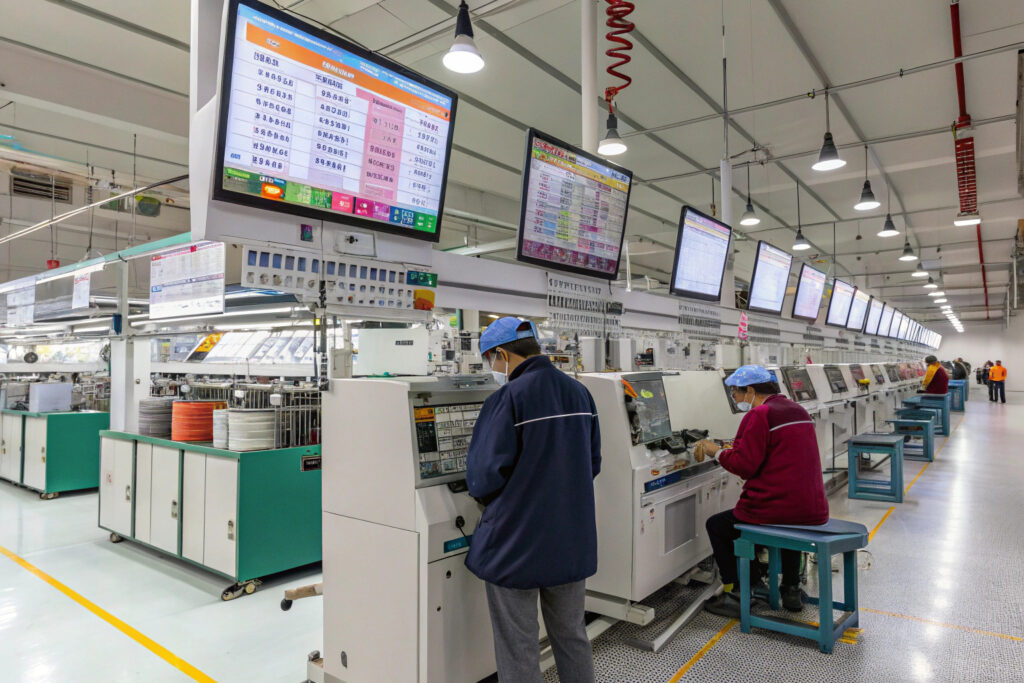
With AI, I avoid bottlenecks and ensure we meet the tight shipping windows U.S. and European buyers expect.
How Does AI Help With Raw Material Planning?
Raw material shortages can ruin delivery schedules. By using AI forecasts from Fibre2Fashion and market price tracking tools, I can secure yarn orders before prices spike. This is especially valuable for specialty fibers like bamboo silk or merino wool.
It also helps reduce waste. Knowing how much of each yarn type we’ll need months ahead keeps leftover inventory to a minimum.
Can AI Forecast Global Shipping Challenges?
Surprisingly, yes. AI tools like Project44 analyze global logistics data and warn us of potential delays. If AI predicts port congestion in Los Angeles, I can reroute shipments via alternative U.S. ports or even switch to air freight for urgent orders.
Building Long-Term Buyer Relationships With AI Insights
AI isn’t just about production — it’s a sales tool. By showing buyers the data behind our design choices, I build trust. They see we’re not guessing, but making decisions backed by market intelligence.
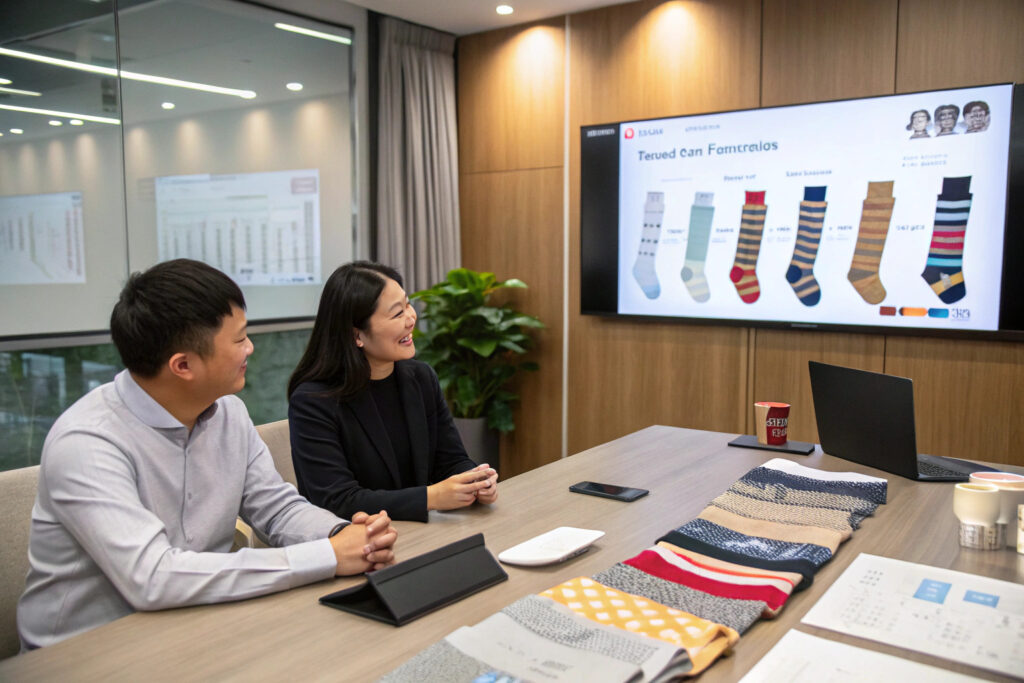
This transparency turns one-off orders into long-term partnerships.
How Can AI Data Improve Buyer Confidence?
When I show a U.S. buyer AI graphs proving that certain patterns are trending upward, it’s easier for them to commit to larger quantities. Using platforms like Trendalytics, I can pull up charts that make the decision almost self-explanatory.
This positions me as a strategic partner, not just a supplier.
Can AI Support Private Label Development?
Definitely. Many brands want exclusive designs. AI lets us spot upcoming trends and adapt them into private-label collections before they hit mainstream retail. That’s how we’ve helped several mid-size European brands gain a head start in seasonal releases, using tools like Heuritech for fashion trend AI.
Conclusion
AI trend forecasting is transforming how socks are designed, manufactured, and delivered to global markets. It reduces risk, speeds up decision-making, and helps us create collections that sell. At GlobalSock, we’ve built an end-to-end system that integrates AI insights into every stage — from color choice to shipping schedules.
If you’re ready to produce your own sock line with data-driven precision, contact our Business Director Elaine at elaine@fumaoclothing.com. Together, we can turn tomorrow’s trends into today’s sales success.