
Recovery socks aren’t just for athletes anymore—they’re becoming a go-to solution for busy professionals, frequent flyers, and anyone seeking improved leg circulation. But with terms like “15-20 mmHg” or “20-30 mmHg” floating around, buyers often feel lost when trying to choose the right compression level.
The best compression level for recovery socks depends on the wearer’s needs. For mild fatigue relief and daily use, 15-20 mmHg is ideal. For post-workout muscle recovery or medical-grade support, 20-30 mmHg or higher is recommended—especially when comfort, performance, and safety matter.
Before you place bulk orders or develop your own sock line, understanding the science behind compression levels—and how they align with your target customer’s lifestyle—can give you an edge in both product quality and sales. Let’s explore it all below.
What Does Compression Level Mean in Socks?
Compression socks are often labeled with pressure levels like 15-20 mmHg, but what do these numbers really mean? Many first-time buyers or startup brands overlook this detail, but it’s critical to product effectiveness and user comfort.
Compression level refers to the amount of pressure (measured in mmHg) a sock applies to your legs—graduated from the ankle upward—to help blood circulation and reduce swelling.
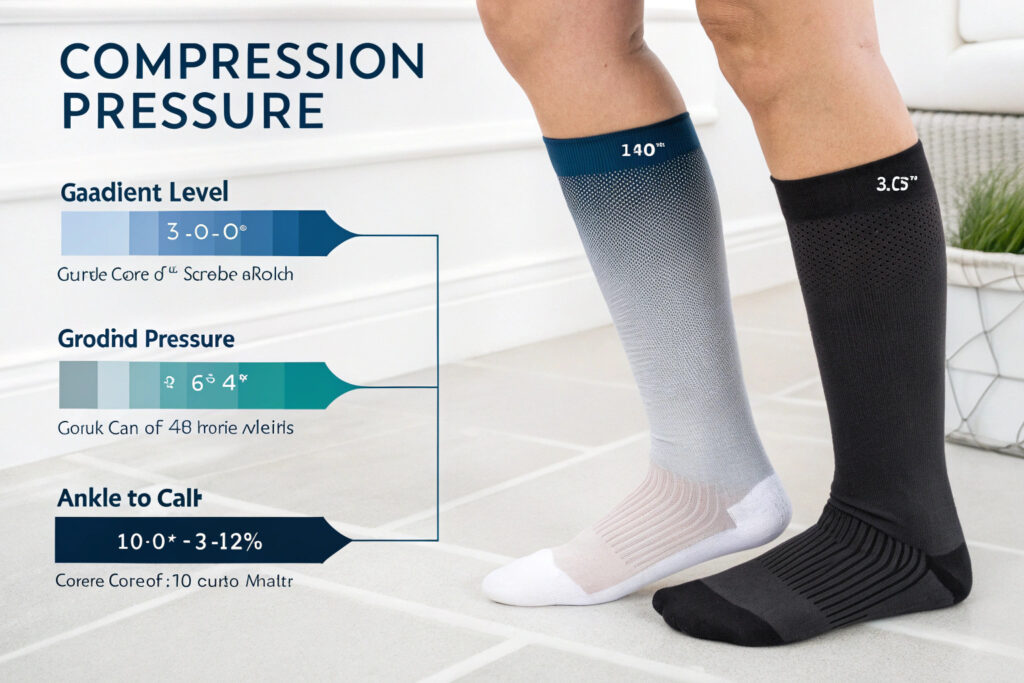
Understanding these levels can help you match your product offering with buyer intent—especially in wholesale scenarios where medical compliance or athletic recovery is a key selling point.
Why Does Graduated Compression Matter?
Graduated compression means the sock is tightest at the ankle and gradually looser toward the calf. This encourages upward blood flow, reduces swelling, and prevents blood pooling. Whether your clients are post-surgery patients or fitness enthusiasts, this structure is what makes socks therapeutic, not just snug. The American Vein & Lymphatic Society provides a useful overview on graduated compression.
Meanwhile, for brands exporting to Europe, products with certified compression levels can fall under Class I or Class II CE Medical Device classification if intended for recovery or therapy, opening new compliance markets.
How Are Compression Levels Measured?
Compression is measured in millimeters of mercury (mmHg), the same unit used for blood pressure. The pressure values are tested using pneumatic pressure testing equipment under standardized lab settings, often guided by ASTM or ISO textile testing standards. Reliable testing data from CNAS-certified labs—like ours—can be used in medical device registration in various global markets.
What Compression Level is Best for Athletes?
Athletes often seek faster muscle recovery, improved circulation, and lower risk of injury—reasons why compression socks are a growing staple in sportswear.
The best compression level for post-exercise recovery in athletes is usually 20-30 mmHg, offering sufficient pressure to reduce lactic acid buildup without discomfort.
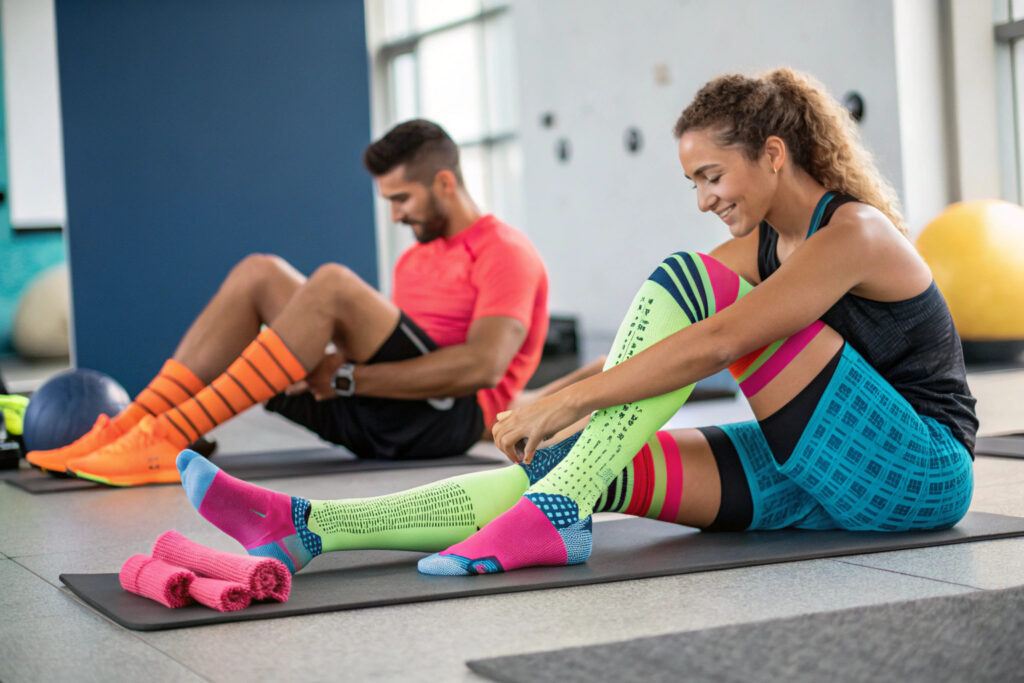
This range is often preferred by fitness trainers, runners, cyclists, and basketball players who need advanced support during or after high-intensity activity.
Can Compression Socks Improve Athletic Performance?
Scientific studies suggest that graduated compression socks may slightly enhance performance by reducing muscle oscillation and vibration, especially during endurance sports. For brands marketing to serious athletes, using compression-validated designs can create differentiation and justify a premium price point.
Product ranges using anti-odor yarns, reinforced toes, and moisture-wicking materials are ideal complements to compression properties in sport-focused SKUs.
What Design Features Enhance Athletic Compression Socks?
For sports recovery socks, features like cushioned soles, seamless toe stitching, reinforced heels, and arch compression zones are critical. You can also enhance value with mesh paneling for breathability and anti-blister yarns like PTFE blends. For outdoor athletes, combining UV protection with 20-30 mmHg compression builds high-performance appeal.
When Should You Choose 15-20 mmHg Compression?
If your target buyers are not athletes or patients—but regular office workers, frequent travelers, or retail shoppers—then milder compression is usually the smarter bet.
15-20 mmHg is ideal for daily wear, helping prevent fatigue, swelling, and minor circulation issues—without the pressure of higher medical-grade socks.

This range is often labeled as “mild” or “moderate” support, and is best for preventative wellness applications in urban or lifestyle product lines.
Who Are the Best Buyers for Mild Compression?
Frequent flyers, teachers, nurses, pregnant women, and office professionals are all ideal customer profiles. They don’t need a prescription-level product, but they do want to avoid leg pain and fatigue. For example, in the U.S. market, compression socks have become a trending Amazon category due to increased demand for wellness gear in sedentary lifestyles.
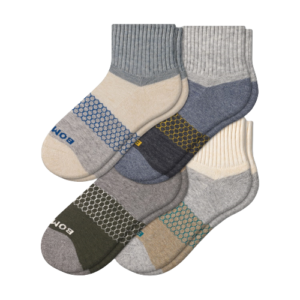
Retail brands like Bombas and Physix Gear promote 15-20 mmHg options as travel essentials, offering fashion-forward patterns and sustainability features like recycled nylon.
Can These Socks Still Offer Performance Benefits?
Absolutely. Even at 15-20 mmHg, you can integrate functional yarns such as bamboo charcoal for odor control or Tencel™ blends for cooling and moisture-wicking. Such hybrid designs serve both fashion and function, supporting our B2B clients who sell under lifestyle and wellness categories.
What Compression Level is Considered Medical-Grade?
As sock manufacturers, we often receive inquiries from buyers sourcing for pharmacies, clinics, or hospitals. In these markets, compliance isn’t optional—it’s essential.
Medical-grade compression starts at 20-30 mmHg, with 30-40 mmHg and above reserved for patients with diagnosed conditions like DVT, lymphedema, or post-surgical needs.
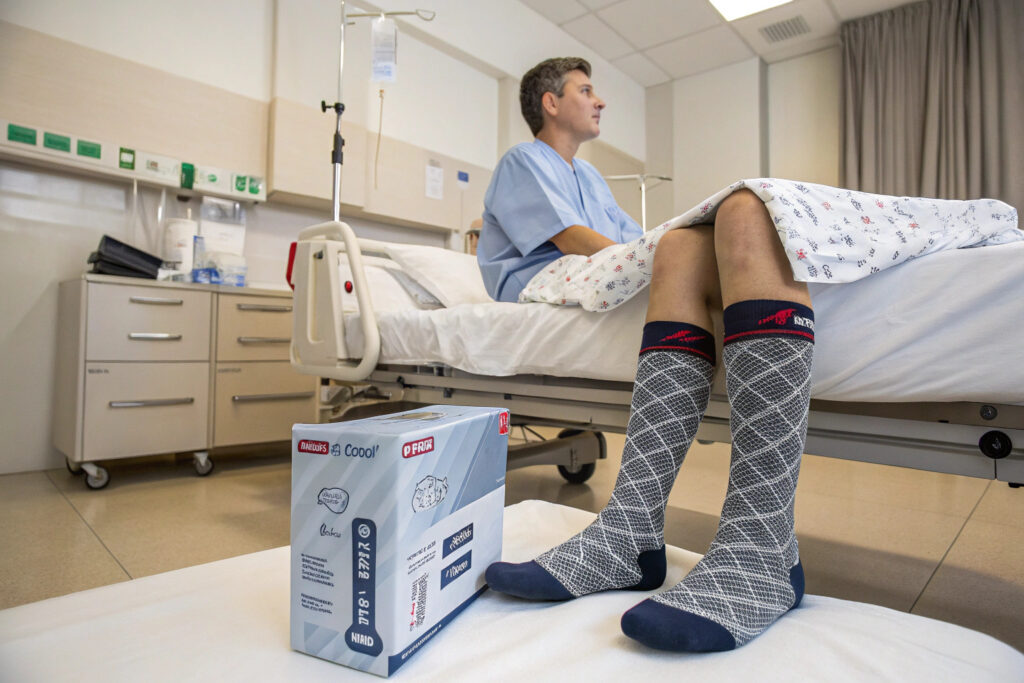
These products typically require certification from the FDA (U.S.), CE (EU), or equivalent regulatory bodies, especially if sold as Class I or II medical devices.
What Are the Regulatory Requirements?
To market socks as medical-grade in the U.S., you may need to register with the FDA’s medical device database. In Europe, MDR compliance is necessary. This includes quality testing, safety labeling, and often clinical documentation or lab results. Partnering with a factory that provides CNAS-accredited quality reports can streamline this.
What Fabrics and Features Are Used in Medical Socks?
Medical compression socks often incorporate soft, hypoallergenic yarns with antibacterial finishes. Some include silver-ion technology or copper-infused fibers to reduce infection risk. Strong, stretch-retentive weaves and reinforced pressure zones ensure consistent pressure over time, even after multiple washes.
Conclusion
Choosing the right compression level for recovery socks is not just a technical decision—it’s a strategic one. From lifestyle wellness to sports recovery to medical-grade support, each compression level serves a distinct audience with unique needs and regulations. As suppliers, offering detailed product documentation and multi-level compression ranges can give your brand a strong edge.
If you’re looking to develop or source your next high-performance compression sock line, we’d love to help. Contact our Business Director Elaine at elaine@fumaoclothing.com to start your project with Shanghai Fumao. Let’s bring comfort and circulation to your customers—one pair at a time.