
Tactical professionals and outdoor enthusiasts face a common enemy: foot odor. This issue goes beyond simple discomfort. It can impact morale, hygiene, and even operational readiness during long deployments or extended treks. As a manufacturer deeply embedded in the global hosiery industry, we hear this concern daily from buyers seeking reliable solutions for their clients.
The best odor-control technologies for tactical socks combine advanced antimicrobial agents with high-performance moisture-wicking fabrics. Key solutions include silver-ion infusion, copper-based treatments, and natural bamboo viscose, which work to eliminate bacteria rather than just mask odors. These technologies are integrated into specialized yarns and knitting constructions to ensure long-lasting protection even after repeated washes, making them essential for military, law enforcement, and serious outdoor users who demand both comfort and reliability from their gear.
Understanding the core technologies is the first step. The real value comes from knowing how to combine them for maximum effect, ensuring performance meets the rigorous demands of tactical use. Let’s explore the proven methods that keep feet fresh and functional under pressure.
What is the most effective antimicrobial for socks?
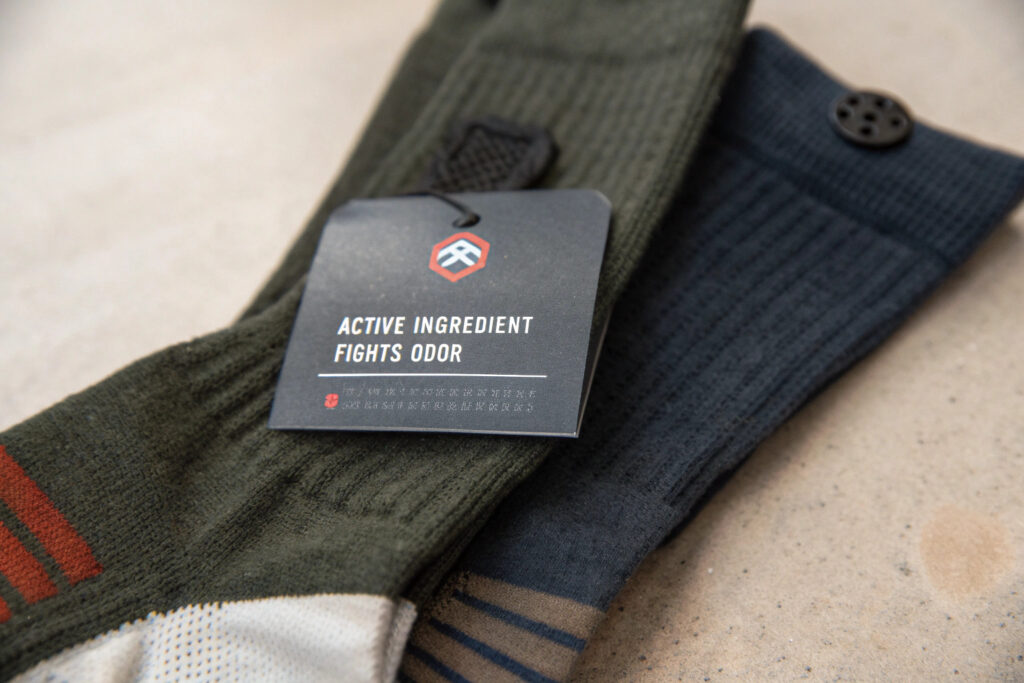
For anyone sourcing tactical socks, the primary question is about the active ingredient that fights odor. The effectiveness of an antimicrobial agent determines how well the sock performs in the field. Not all technologies are created equal, and their longevity and safety profiles vary significantly.
The most effective antimicrobials for socks are silver-ion and copper-oxide treatments, proven to provide broad-spectrum, durable, and safe odor protection. These technologies are embedded into the fibers at a molecular level, creating a permanent shield that actively eliminates odor-causing bacteria and fungi. Unlike topical coatings that wash out, these integrated solutions maintain their efficacy for the lifetime of the product, making them the gold standard for demanding tactical applications.
The choice between different antimicrobials often comes down to the specific requirements of the end-user, including any potential skin sensitivities and the required durability of the odor protection.
How do silver ions work in odor prevention?
Silver ions (Ag+) are a powerhouse in the fight against odor. This technology leverages the natural oligodynamic effect, where metal ions disrupt the cellular processes of microorganisms. When integrated into sock fibers, silver ions are slowly released in the presence of moisture.
They attack odor-causing bacteria by binding to their cell walls and disrupting their metabolic enzymes. This action prevents the bacteria from reproducing and effectively neutralizes them. The result is a sock that remains fresh even after hours of intense activity. At our CNAS-certified lab, we rigorously test the antimicrobial efficacy of our silver-ion treated socks against standards like AATCC TM100 to ensure consistent performance. This technology is particularly valued for its broad-spectrum activity and skin-friendly properties.
Why is copper oxide a superior choice for tactical scenarios?
Copper oxide (CuO) is another heavy-hitter in the antimicrobial arena. Similar to silver, copper ions disrupt bacterial cell membranes and generate reactive oxygen species that destroy the microbes from within. What makes copper oxide particularly suited for tactical scenarios is its robustness.
It is exceptionally durable and can withstand high-temperature washes and harsh environmental conditions without losing its effectiveness. Furthermore, copper is an essential trace mineral for the human body, making it an excellent choice for users with sensitive skin. We often incorporate copper oxide into moisture-wicking socks designed for multi-day operations where laundry facilities are nonexistent. Its reliability makes it a cornerstone for performance socks that cannot fail when it matters most.
How does moisture management reduce sock odor?
It’s a fundamental principle: moisture is the enemy. Odor-causing bacteria thrive in damp, warm environments. Therefore, the most advanced antimicrobial is only half the battle; effective moisture management is the other critical component. A truly high-performance tactical sock must excel at both.
Moisture management reduces sock odor by actively pulling sweat away from the skin and rapidly evaporating it, depriving odor-causing bacteria of the damp environment they need to multiply. This is achieved through specialized yarn engineering and fabric construction that enhances capillary action and increases the surface area for faster drying. By keeping the foot dry, these socks directly tackle the root cause of the problem, complementing antimicrobial technologies for comprehensive odor control.
A dry foot is a fresh foot. The synergy between wicking fabrics and antimicrobial treatments creates a powerful defense system that is greater than the sum of its parts.
What fabric constructions wick moisture best?
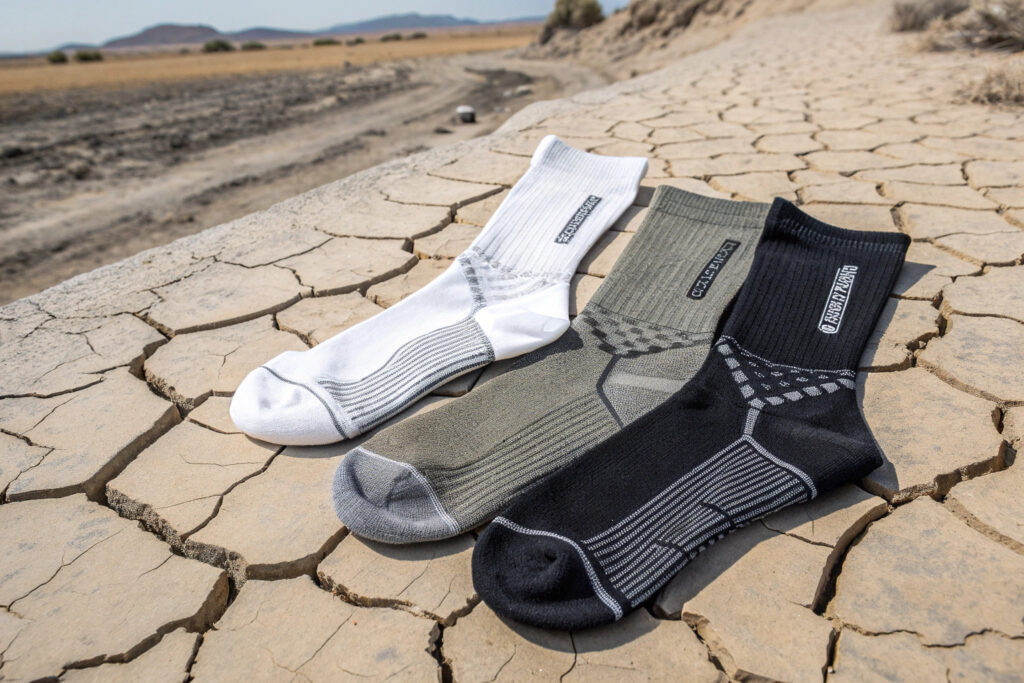
The ability to wick moisture is not just about the fiber type but also how those fibers are constructed. Two primary knitting techniques excel in this area:
- Terry Loop Construction: This involves loops of yarn on the inside of the sock (the footbed) that create tiny channels. These channels pull moisture away from the skin and into the body of the fabric where it can spread out and evaporate. It’s ideal for cushioning and intense sweat scenarios.
- Mesh Ventilation Zones: Knitting mesh-like panels in high-sweat areas like the instep and ankle increases airflow. This significantly boosts the evaporation rate, providing a cooling effect and further reducing moisture buildup.
We combine these constructions with moisture-wicking yarns like Merino wool and specialized polyesters to create a multi-layered defense against wetness. The right construction turns the entire sock into a moisture-transporting engine.
Which fibers dry the fastest for active use?
While construction handles transport, the fiber type dictates the speed of moisture release. Here’s a quick comparison of top-performing fibers:
| Fiber Type | Key Moisture-Wicking Property | Drying Speed | Ideal For |
|---|---|---|---|
| Merino Wool | Hydrophilic core absorbs moisture vapor and releases it. | Moderate | Temperature regulation in varying climates. |
| Bamboo Viscose | Micro-gaps in fibers enhance breathability and wicking. | Fast | General comfort and softness with good drying. |
| Recycled Polyester | Hydrophobic nature pushes moisture to the surface. | Very Fast | High-intensity activities where speed is critical. |
| Nylon/Spandex Blend | Provides structural support and elasticity for fit. | Fast | Enhancing durability and fit of the primary wicking fiber. |
In our athletic socks, we often use a blend of these fibers to balance quick-drying performance with comfort and durability. For instance, a blend of Merino wool and recycled polyester offers both initial absorption and rapid evaporation.
Are natural or synthetic odor-resistant socks better?
This is a classic debate in the textile industry. The choice between natural and synthetic odor-resistant socks isn’t about which is universally "better," but which is better suited for a specific application, budget, and value proposition. Each has distinct advantages that appeal to different segments of the market.
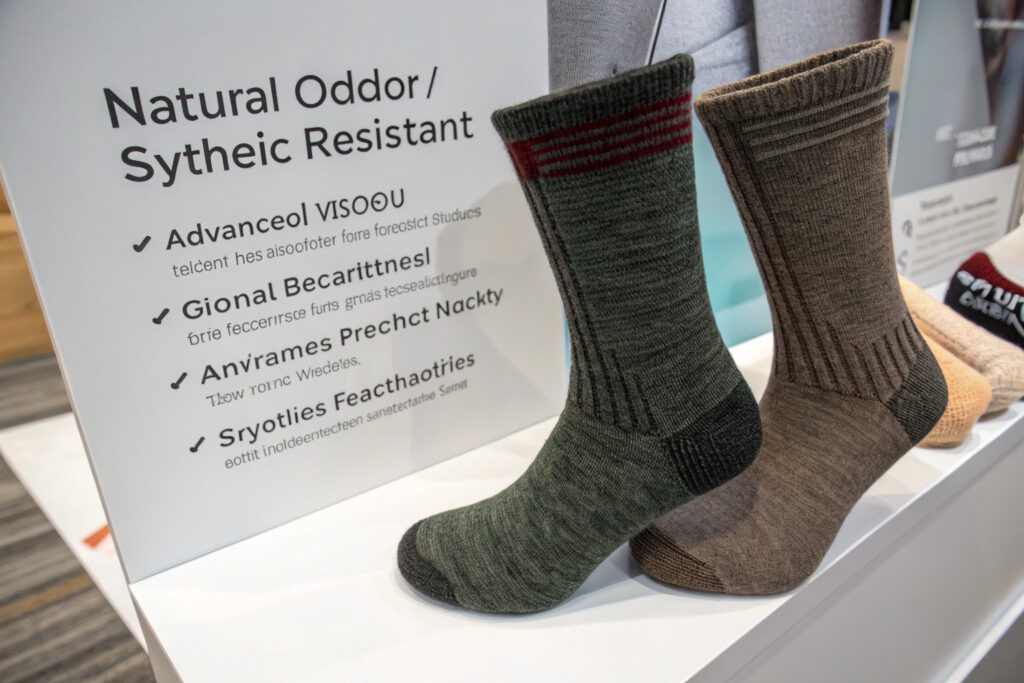
Both natural and synthetic odor-resistant socks offer excellent performance, but they excel in different areas. Natural fibers like bamboo and Merino wool provide inherent, chemical-free antibacterial properties and superior comfort. Synthetic fibers, often enhanced with silver or copper, offer unmatched durability, faster drying times, and consistent long-term odor resistance. The best tactical socks often blend both to create a perfect balance of comfort, performance, and longevity.
The decision often comes down to the brand’s positioning and the end-user’s priorities—be it eco-friendliness, ultimate durability, or specific performance features.
What are the benefits of bamboo for odor control?
Bamboo viscose is a remarkable natural fiber for odor control. It contains a natural antimicrobial bio-agent called "bamboo kun," which inhibits the growth of bacteria. This makes it an excellent choice for brands targeting the eco-conscious and comfort-focused consumer.
Beyond its odor-fighting properties, bamboo is incredibly soft, reducing the friction that can lead to blisters. It is also highly breathable and hypoallergenic, making it ideal for users with sensitive skin. In our eco-friendly socks line, we use bamboo blended with organic cotton to create a product that is gentle on the skin and the planet, without compromising on performance.
When should you choose silver-infused synthetic blends?
Silver-infused synthetic blends are the go-to choice for scenarios demanding maximum durability and consistent performance. These socks are engineered for the most extreme conditions.
You should choose them for high-abrasion activities, multi-day missions where laundry is not an option, or when the fastest possible drying time is critical. The synthetic base, typically a nylon/spandex blend, provides exceptional abrasion resistance and shape retention. The integrated silver ions ensure the odor protection lasts the lifetime of the sock, outlasting topical treatments. This makes them a reliable workhorse for professional tactical socks and high-performance sports socks.
How to verify quality in odor-control socks?
Sourcing socks with claimed odor-control features is one thing; verifying their quality and performance is another. As a savvy buyer, you need tangible proof that the products will deliver on their promises. This involves looking beyond marketing claims and demanding concrete evidence from your supplier.
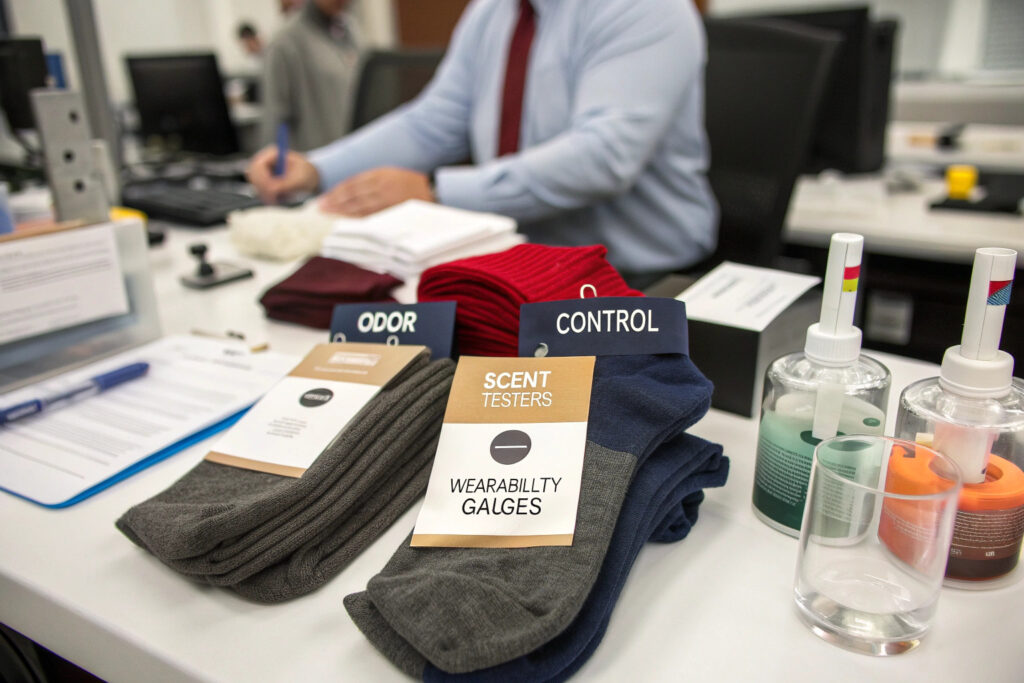
To verify quality in odor-control socks, insist on third-party laboratory test reports and inspect the manufacturing standards. Key certifications to request include OEKO-TEX® STANDARD 100 for harmful substances and specific test reports like AATCC TM100 or ISO 20743 for antimicrobial efficacy. These documents provide unbiased validation of the product’s safety and functional claims, ensuring you are investing in reliable, high-performance gear.
A reputable manufacturer will be transparent with their testing data and quality control processes, providing you with the confidence needed to make an informed purchasing decision.
What certifications should you look for?
Certifications are your first line of defense against substandard products. They are independent verifications of a manufacturer’s claims. The most critical ones for odor-control socks are:
- OEKO-TEX® STANDARD 100: This is a global standard for testing harmful substances in textiles. It certifies that every component of the sock, from the yarn to the thread, is free from over 100 regulated harmful chemicals, ensuring product safety.
- AATCC TM100 / ISO 20743: These are the benchmark test methods for quantifying
antibacterialactivity. A report from an accredited lab (like our CNAS-accredited lab) will show the percentage reduction of specific bacteria on the fabric after a set time, providing a scientific measure of odor-control effectiveness.
Requesting these certificates should be a standard part of your quality control protocol. They are non-negotiable for building trust and ensuring product integrity.
How does factory auditing ensure consistent quality?
Certifications are a snapshot, but consistent quality requires ongoing oversight. This is where factory auditing becomes crucial. An audit evaluates the manufacturer’s entire system, from raw material sourcing and production processes to final packaging and shipping.
When you partner with a manufacturer, ask about their internal auditing procedures. Do they have a robust Quality Control team? How do they track production batches? At our facilities, we employ a QR code tracking system that allows us, and our clients, to trace the lifecycle of every batch, accessing data on composition, shrinkage, and colorfastness. This level of transparency ensures that every order meets the same high standard, batch after batch, giving you peace of mind.
Conclusion
Choosing the best odor-control technology for tactical socks is a strategic decision that impacts performance, comfort, and client satisfaction. The most effective approach combines proven antimicrobial agents like silver and copper with advanced moisture-wicking fabrics and constructions. By understanding the strengths of both natural and synthetic options and rigorously verifying quality through certifications and audits, you can source socks that truly meet the demanding needs of tactical professionals.
If you are looking to develop or source high-performance, odor-resistant tactical socks with reliable quality and fast production cycles, we are here to help. For a direct conversation about your specific needs, please contact our Business Director, Elaine, at elaine@fumaoclothing.com. Let’s co-create the next generation of tactical footwear.