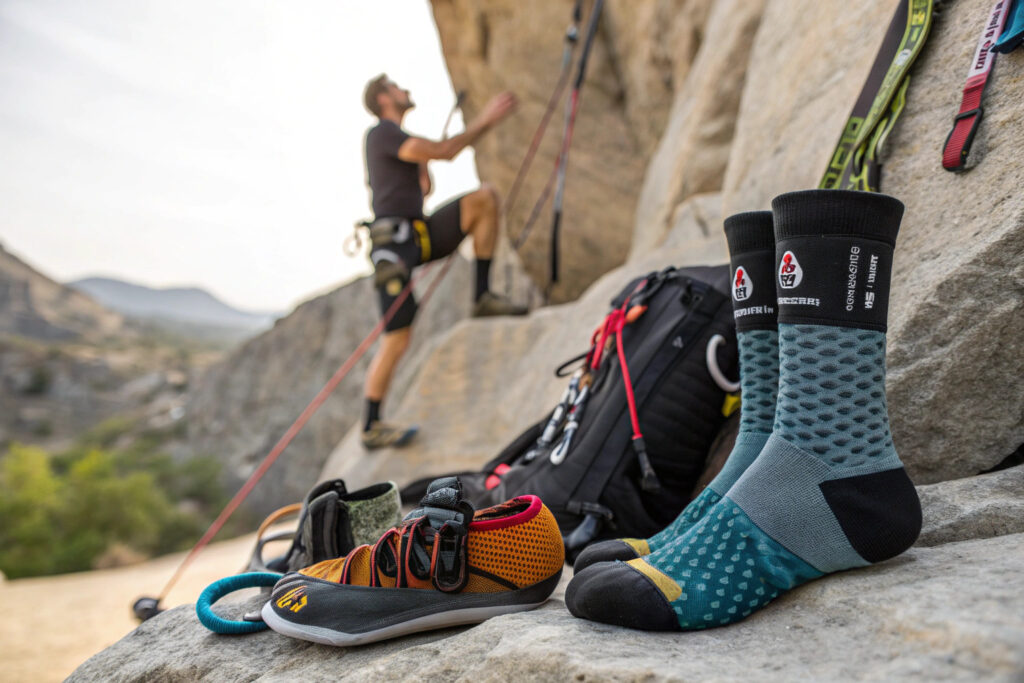
Rock climbing demands peak performance from every piece of gear, including your socks. Many climbers focus on their shoes but overlook the critical role socks play in comfort, grip, and blister prevention. Choosing the wrong socks can lead to slippery feet, discomfort, and even injuries during a crucial climb. So, what should you look for to ensure your feet are as prepared as your hands?
The best socks for rock climbing are those that prioritize a secure, non-slip fit, exceptional moisture-wicking properties, and reinforced durability in high-friction areas like the heel and toe. They should be thin yet cushioned enough to protect your feet without compromising the sensitive fit of your climbing shoes, with materials like merino wool, nylon, and spandex blends being top choices for their balance of comfort and performance.
Understanding the specific needs of your feet during climbing is the first step. Let’s explore the key features that make a sock ideal for tackling vertical challenges, ensuring your focus remains on the climb, not on your feet.
What features make socks good for rock climbing?
The right climbing socks act as a critical interface between your foot and the climbing shoe. They are not just for warmth; they are engineered for performance. Key features work together to enhance your grip, prevent blisters, and provide all-day comfort on the wall.
Excellent rock climbing socks are defined by their material blend, construction, and specialized functional features. The best options use advanced fabrics like merino wool or synthetic blends for moisture management, incorporate a seamless toe to eliminate bunching, and offer strategic cushioning in high-impact areas without adding bulk that could ruin your shoe’s fit.
Why is moisture-wicking ability crucial for climbing socks?
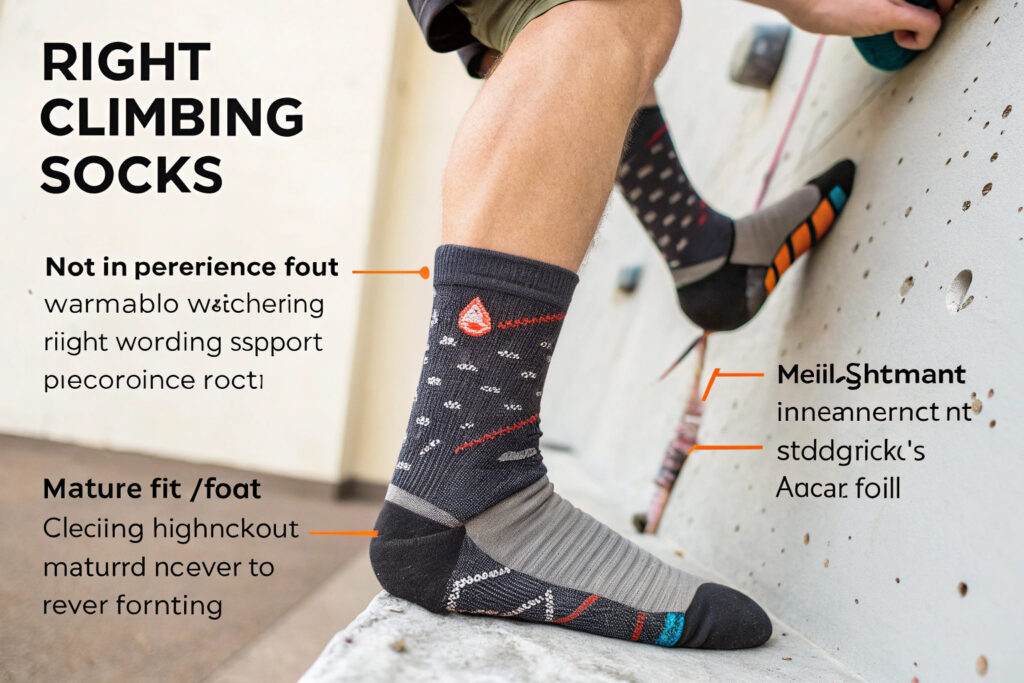
When you’re clinging to a small hold, the last thing you need is a sweaty, slippery foot inside your shoe. Moisture-wicking is arguably the most critical feature of a climbing sock. Socks made from materials like merino wool or advanced synthetics pull sweat away from your skin to the outer surface of the fabric, where it can evaporate. This process keeps your feet dry, which directly enhances the friction between your foot and the shoe’s inner lining. Dry feet are less prone to slipping, providing a more secure and confident feel on the rock. Furthermore, keeping feet dry is the primary defense against blister prevention, as friction caused by damp skin is the main culprit for these painful injuries.
How does reinforced construction improve sock durability?
Rock climbing is tough on gear, and socks are no exception. The constant pressure and abrasion against the inside of a tight climbing shoe can quickly wear out a standard sock. This is why reinforced construction in high-stress areas is non-negotiable. Look for socks with extra material or specialized weaving at the heel and toe. This reinforcement doesn’t just prevent holes; it also provides a consistent surface for your shoe to grip, enhancing overall performance. A seamless toe is another key aspect of durable construction, as it removes the bulky, irritating seam that can cause hotspots and wear down faster than the rest of the sock. Investing in well-constructed socks means your gear lasts longer and performs more reliably.
Which sock materials are best for grip and comfort?
The material composition of your sock is the foundation of its performance. It dictates how the sock feels, how it manages moisture, and how long it will last through repeated, strenuous use. The goal is to find a blend that offers a barefoot-like feel with enhanced protection and climate control.
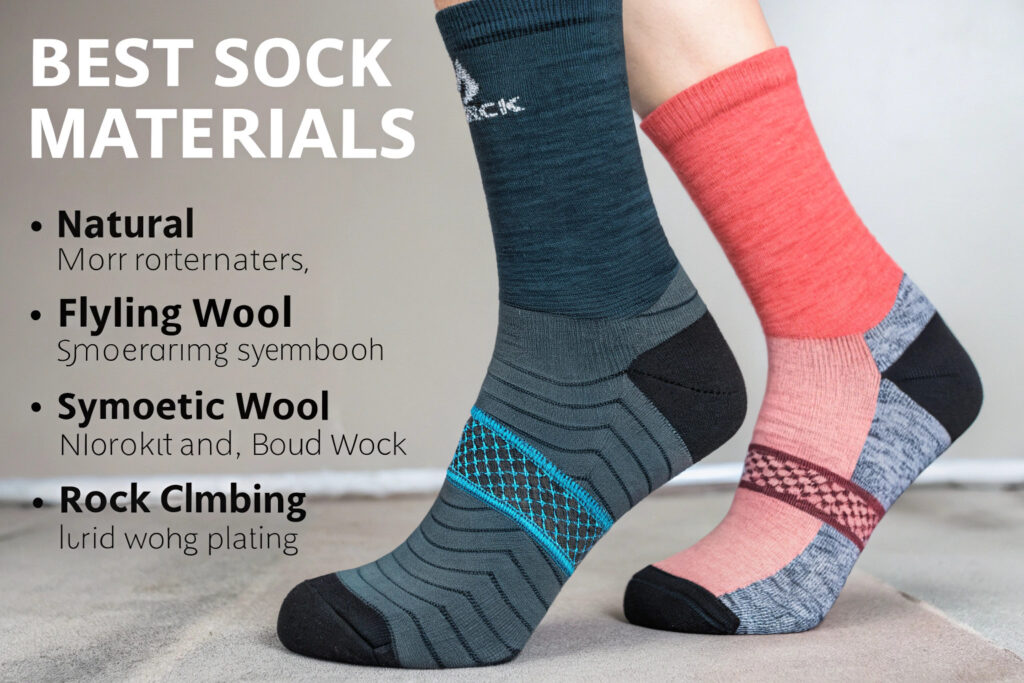
The best sock materials for rock climbing combine natural and synthetic fibers to leverage their unique advantages. Merino wool is renowned for its natural temperature regulation and odor resistance, while synthetic materials like nylon and spandex provide essential durability, elasticity, and superior moisture-wicking capabilities for a secure, non-slip fit.
What are the benefits of Merino Wool for climbing?
Merino wool is a superstar in the outdoor apparel world for good reason. Unlike traditional wool, it is soft, thin, and not itchy. Its natural temperature regulation keeps your feet warm in cold conditions and cool in warm conditions, making it versatile for different climbing environments. Crucially, merino wool can absorb a significant amount of moisture vapor without feeling wet, which aids immensely in moisture-wicking and comfort. Additionally, it has inherent antibacterial & odor-control properties, meaning your socks will stay fresher longer, especially on multi-day climbing trips. For climbers, this translates to consistent comfort and performance regardless of the weather.
Why are synthetic blends like Nylon/Spandex popular?
While merino wool is excellent, synthetic blends offer distinct advantages that are vital for climbing. Nylon is exceptionally strong and abrasion & pill resistant, making it ideal for reinforcing high-wear areas and ensuring the sock maintains its shape over time. Spandex (also known as Lycra or elastane) is what gives climbing socks their crucial secure fit. It provides the compression and elasticity needed to keep the sock firmly in place, eliminating wrinkles and bunching that can cause blisters. Most high-performance climbing socks use a blend, such as merino wool, nylon, and a small percentage of spandex, to create the perfect balance of comfort, moisture management, and a locked-in, non-slip feel.
How to choose the right thickness and fit?
Selecting the correct thickness and fit is just as important as choosing the right materials. A sock that is too thick will alter the precise fit of your climbing shoe, while a sock that is too thin may offer inadequate protection. The goal is a "second skin" feel that enhances performance.
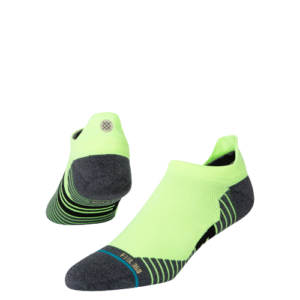
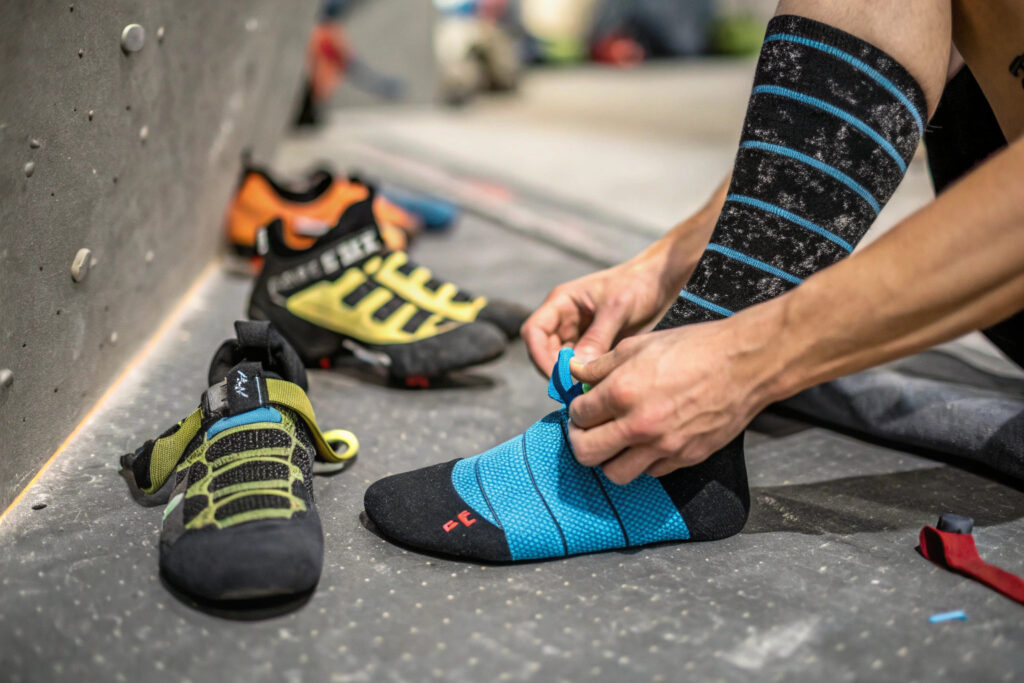
The right thickness for rock climbing socks is typically thin to ultra-thin, designed to provide a protective layer without compromising the sensitive fit of your climbing shoes. The fit should be snug and secure, utilizing elasticity to stay in place and featuring a seamless toe to prevent irritation and bunching.
What sock thickness is ideal for sensitive footwork?
For most rock climbing, especially technical face climbing where footwork is precise, a thin or ultra-thin sock is ideal. This thickness provides a minimal barrier that protects your skin from the rough interior seams of the shoe and reduces friction, without adding volume that can deaden the feel for the rock. It allows you to better sense the footholds and apply pressure more effectively. Some climbers even prefer liner socks, which are the thinnest option available, for a near-barefoot experience. If you are climbing in colder conditions or are more prone to blisters, a light cushioning in the heel and forefoot can be beneficial, but the overall profile should remain low.
Why is a non-slip fit critical for performance?
A secure, non-slip fit is non-negotiable. If your sock slides around inside your shoe, it creates friction and movement that leads to hotspots and blisters. More importantly, it compromises the direct connection between your foot and the shoe, reducing your control and grip on small holds. Look for socks that offer arch support through elastic bands or compression. This feature helps lock the sock in position and prevents it from sliding down into the heel of your shoe. Combined with a secure fit from spandex, this ensures that every movement of your foot is transmitted directly to the climbing shoe, maximizing power and precision.
How do you maintain and care for climbing socks?
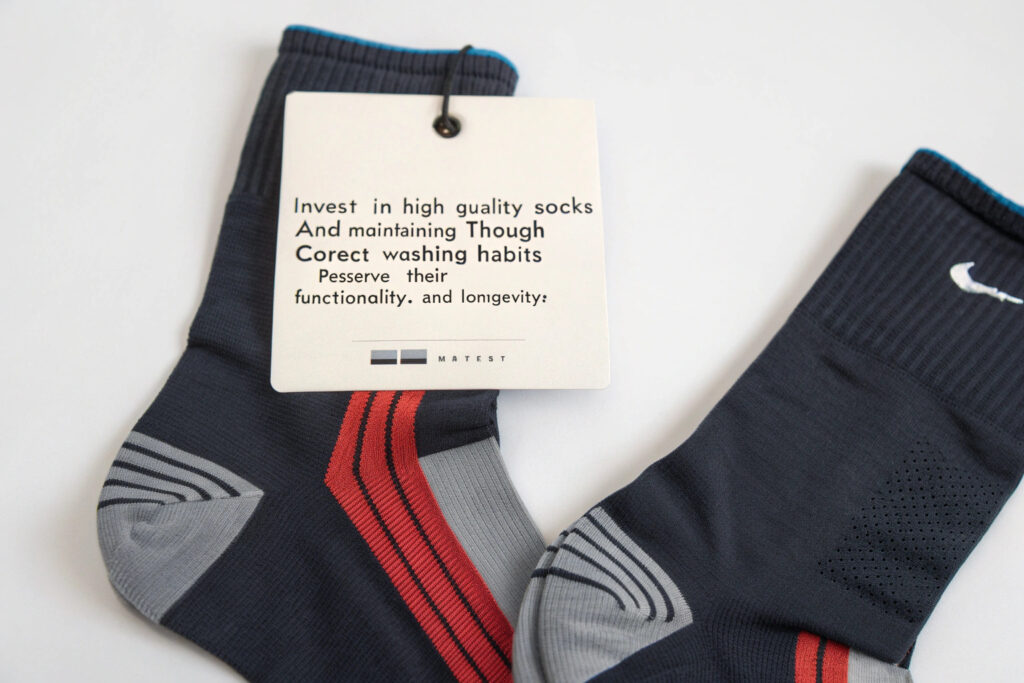
High-performance socks are an investment, and proper care is essential to maintain their functional properties and extend their lifespan. The wrong washing habits can break down elastic fibers, cause pilling, and reduce the sock’s moisture-wicking and odor-fighting abilities.
Proper maintenance of climbing socks involves washing them in cold water with mild detergent, avoiding fabric softeners which clog fibers, and tumble drying on low heat or air-drying. Regular care preserves the integrity of the materials, ensuring the socks continue to provide a secure fit, moisture-wicking, and durability climb after climb.
What is the best way to wash technical socks?
The golden rule for washing technical socks, especially those with merino wool or synthetic blends, is to use cold water and a gentle, mild detergent. Hot water can damage the fibers and cause shrinkage. You should always avoid fabric softeners and bleach. Fabric softeners coat the fibers, blocking their ability to wick moisture and reducing their breathability. This effectively negates the very performance features you paid for. Instead, the mechanical action of the washing machine is sufficient to clean them. Turning the socks inside out before washing can also help preserve the outer surface and any printed logos.
How can proper drying extend sock life?
How you dry your socks is just as important as how you wash them. The best method is to air dry them flat, away from direct heat or sunlight. If you need to use a dryer, select the lowest heat setting or an air-fluff cycle. High heat is the enemy of elasticity; it breaks down the spandex fibers over time, causing the sock to lose its snug, secure fit. High heat can also melt or damage synthetic fibers, reducing their durability & long-lasting qualities. By adopting a gentle drying routine, you ensure that the socks’ shape, compression, and technical features remain intact for many more climbing sessions.
Conclusion
Choosing the best socks for rock climbing is a detailed but crucial process. It requires attention to moisture-wicking materials, durable and seamless construction, a precise non-slip fit, and proper long-term care. The right pair will enhance your grip, protect your feet from blisters, and provide the comfort needed to focus entirely on your ascent. Don’t let an overlooked piece of gear be the weak link in your climbing performance.
If you are looking for a reliable manufacturing partner to produce high-performance climbing socks with these exact features, we are here to help. Our expertise in functional materials and precision construction ensures top quality. For inquiries about developing your own line of climbing socks, please contact our Business Director Elaine at elaine@fumaoclothing.com.