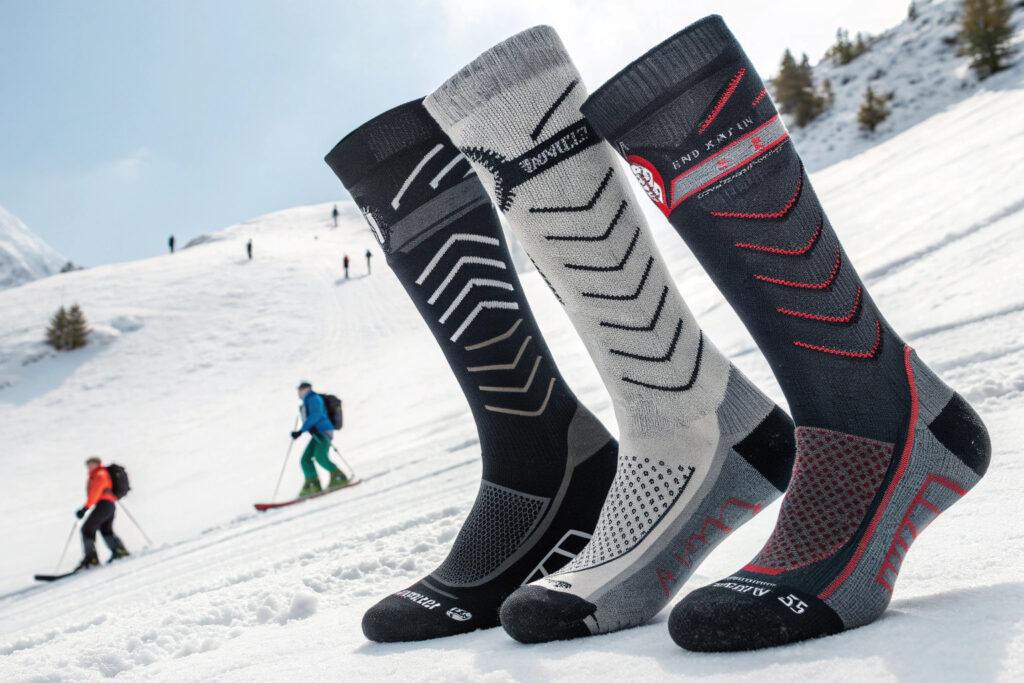
As a leading socks manufacturer with over a decade of experience, I’ve seen countless skiers struggle with cold, wet feet on the slopes. The right ski sock is not just about comfort; it’s about performance and safety. Many of our clients, from major sports brands to individual retailers, ask us the same question: what truly makes the best ski sock? The answer often boils down to a critical balance between two key functions: moisture-wicking and insulation. Getting this balance wrong can turn a perfect ski day into a miserable one.
The best socks for skiing effectively manage moisture while providing adequate insulation without bulk. They should keep your feet dry from sweat and warm in cold conditions, ensuring comfort and preventing blisters. The core of this performance lies in the materials used and the sock’s construction. At our production facility in Zhejiang, we specialize in developing socks that master this balance, using advanced fabrics and precise engineering to meet the demands of winter sports.
In this article, we will break down the science behind moisture-wicking and insulation in ski socks. You will learn how to choose the right materials, understand the importance of a perfect fit, and discover what features to look for to enhance your skiing experience. Let’s dive into the details that separate a good ski sock from a great one.
What Materials Are Best for Ski Socks?
The battle for warm, dry feet starts with the material. Not all fabrics are created equal, especially in the harsh environment of a ski boot. The ideal material must do two things simultaneously: pull sweat away from your skin and trap warm air to maintain a stable temperature. This is a complex challenge that requires specialized fibers and smart fabric blends.
Merino wool is widely considered the gold standard for ski socks due to its natural moisture-wicking and insulating properties, even when wet. Unlike traditional wool, Merino is soft, non-itchy, and highly breathable. It absorbs moisture vapor and moves it away from the skin before it can turn into liquid sweat. Synthetic materials like nylon and spandex are also crucial. They provide the durability and stretch needed to maintain the sock’s shape and fit, which is vital for blister prevention. Our factory often creates blends of Merino wool, nylon, and spandex to produce socks that offer the best of all worlds: warmth, moisture management, and a secure fit.
Why is Merino Wool a Top Choice for Skiing?
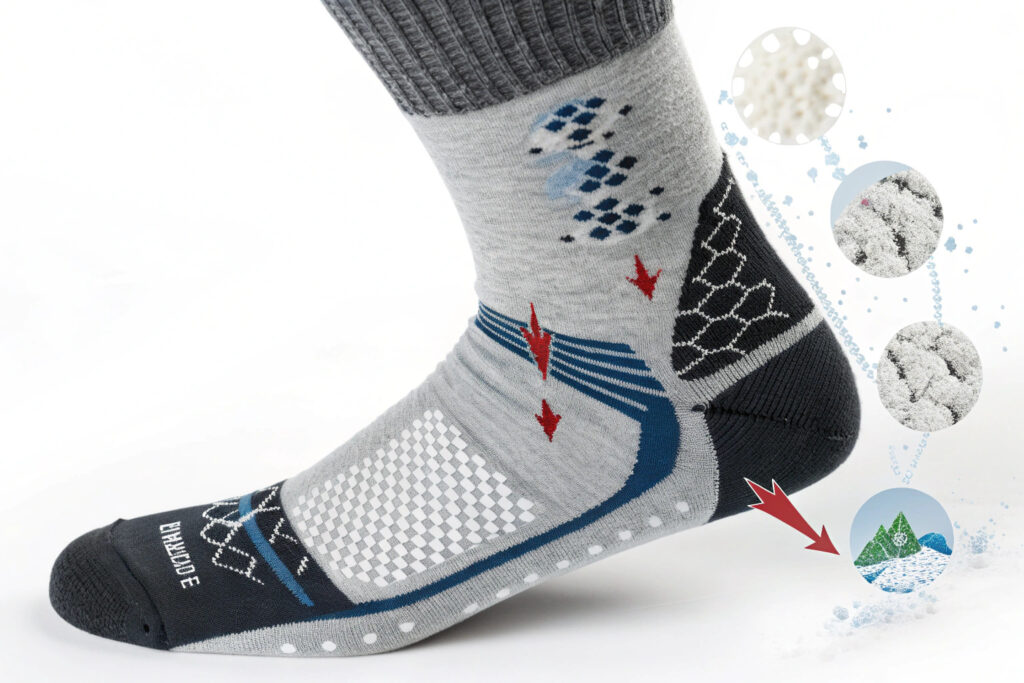
Merino wool’s unique structure makes it a superstar for ski socks. The fibers have natural crimps that create tiny air pockets, which trap body heat for superior insulation. Furthermore, Merino wool can absorb up to 30% of its weight in moisture from your skin without feeling wet. This is a game-changer on the slopes, where physical exertion and changing temperatures cause feet to sweat and then get cold. Our Merino wool socks are a bestseller in Europe and North America because they effectively regulate temperature, keeping feet warm during lift rides and cool during strenuous hikes back to the lodge. We ensure our Merino is sourced from ethical farms and tested in our CNAS-certified lab for quality and performance, giving our clients confidence in the product.
How Do Synthetic Fibers Enhance Sock Performance?
While natural fibers are excellent for insulation and comfort, synthetics like nylon and spandex bring critical performance features. Nylon is incredibly strong and abrasion resistant, which means the sock can withstand the constant friction inside a rigid ski boot without developing holes. Spandex (also known as elastane) provides the essential stretch for a secure fit that doesn’t bunch up or slide down. A sock that moves around inside your boot is a primary cause of blisters. In our manufacturing process, we use high-quality, durable nylon and precisely calibrate the amount of spandex to ensure our socks hug the foot and ankle perfectly, providing support without constricting blood flow.
How Does Moisture-Wicking Technology Work?
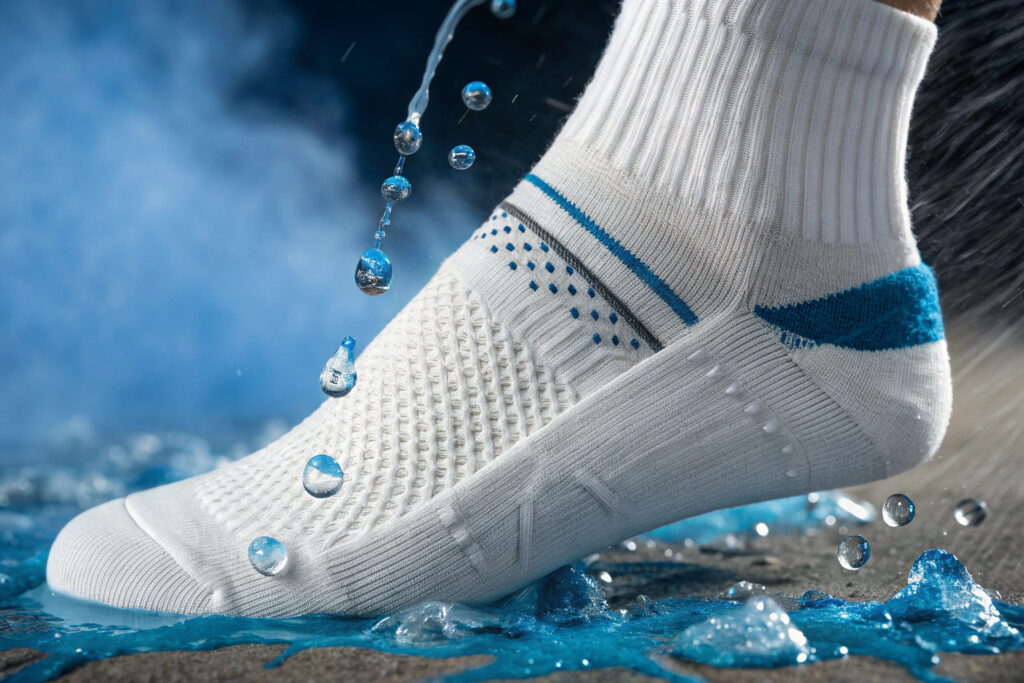
Moisture-wicking is not just a marketing term; it’s a fundamental physical process. When your feet sweat, the moisture needs to be moved from the inside of the sock to the outside where it can evaporate. If this doesn’t happen, the moisture saturates the fabric, making your feet feel cold and drastically increasing the risk of blisters. Effective moisture management is the first line of defense against cold feet.
Moisture-wicking works through capillary action, where specialized fibers pull sweat away from the skin and spread it across a larger surface area for faster evaporation. This process keeps the layer of air next to your skin dry, which is crucial for maintaining body heat. At GlobalSock, we engineer this capability into our fabrics. For instance, our Bamboo socks are naturally hydrophilic, meaning they attract water molecules and pull them away from the skin efficiently. We also use recycled polyester in many of our performance lines, a material known for its excellent wicking abilities and quick-drying properties, making it a popular choice for our eco-conscious clients.
What is the Role of Blister Prevention?
Blisters are caused by a combination of moisture, heat, and friction. A sock that excels at moisture-wicking directly tackles two of these three factors. By keeping the skin dry, it reduces the friction coefficient. A damp foot is a sticky foot, and sticky skin rubs more aggressively against the sock and boot. Our athletic socks are designed with seamless toe construction to eliminate a major source of friction. We also incorporate arch support bands that hold the sock securely in place, preventing any sliding that could chafe the skin. This focus on detail is why our clients report a significant reduction in foot problems.
Why is Breathability Crucial for Temperature Regulation?
Breathability and moisture-wicking are partners in keeping your feet comfortable. A breathable fabric allows the water vapor that has been wicked away to actually escape the sock. Without good breathability, the moisture would just be trapped inside the boot, creating a humid, swampy environment. Our socks are designed with breathable mesh zones in high-sweat areas like the instep and shin. This promotes constant air circulation, which aids in temperature regulation. This means your feet are less likely to overheat during activity and then freeze when you stop moving. It’s this smart combination of wicking and breathing that creates a stable microclimate for your feet.
Is Thicker Always Warmer for Ski Socks?
This is one of the most common misconceptions we encounter. It seems logical that a thicker sock would be warmer, but in the context of skiing, this can be a critical mistake. A ski boot is a fixed volume. Stuffing a thick, bulky sock into it can compress the insulation, reducing its ability to trap warm air. More importantly, it can restrict circulation, cutting off the blood flow that naturally warms your feet.
No, thicker is not always warmer. A properly insulated, medium-weight sock that maintains blood circulation is far more effective than a thick, bulky one. The key to warmth is not thickness, but the quality of the insulation and the amount of non-compressed air the fabric can hold. Our thermal socks use advanced knitting techniques to create loft in specific areas—like the shin and toe—without adding excessive bulk around the ankle and instep where the boot fits most snugly. This strategic cushioned comfort protects bony prominences without compromising the overall fit or cutting off circulation.
How Can Compression Socks Help or Hinder?
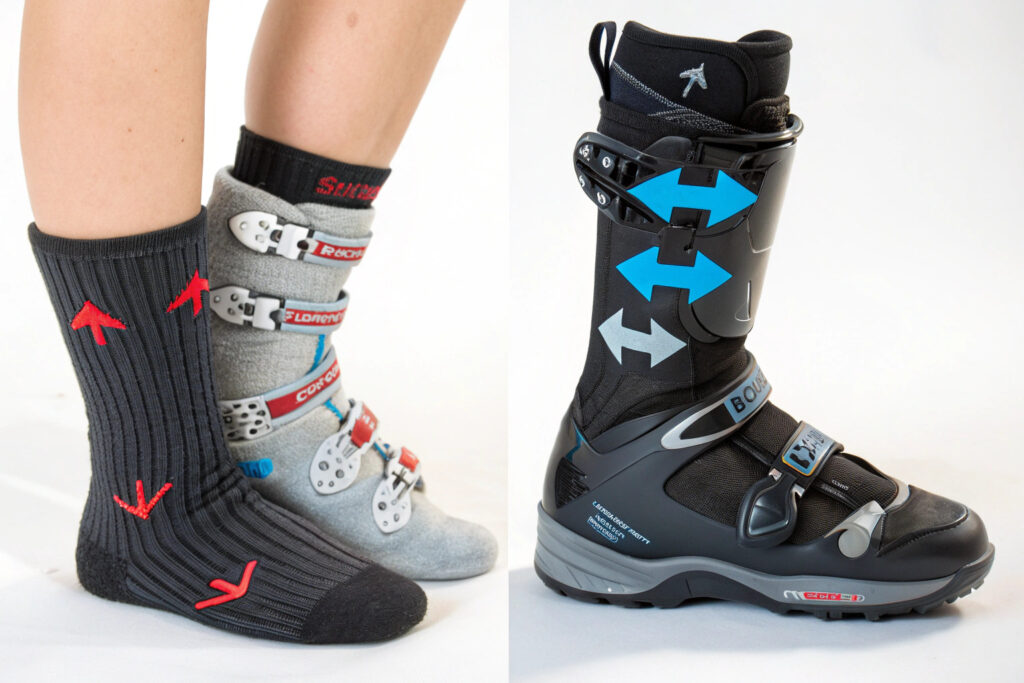
This is a nuanced topic. Gentle compression can be beneficial for sports like skiing. It supports muscles, improves blood flow, and can reduce fatigue during long days on the mountain. However, strong, medical-grade compression socks can be too tight inside a ski boot. At GlobalSock, we differentiate between recovery socks, meant for post-activity, and sports compression socks. Our sports-focused designs offer light, graduated compression that stabilizes muscles without constriction, promoting better temperature regulation and endurance. It’s a fine balance that our R&D team perfects through extensive wear-testing.
What is the Importance of a Secure Fit?
A secure fit is the foundation of both warmth and blister prevention. A sock that wrinkles, bunches, or slides will create pressure points and areas of friction. This not only causes blisters but also impedes circulation, making your feet cold. Our socks are engineered with a secure fit / non-slip design, featuring elasticated arches and ribbed cuffs that lock the sock in place. We use nylon/spandex blend yarns to ensure the sock recovers its shape after stretching, providing a consistent, comfortable fit throughout the day. A well-fitted sock acts as a seamless second skin, allowing all its technical features to work as intended.
What Features Should You Look for in a Ski Sock?
Beyond the core materials and fit, several specific features can elevate a ski sock from good to exceptional. These are the details that we, as manufacturers, focus on to deliver superior value and performance. They are often the deciding factors for our bulk buyers from major brands who need to meet the high expectations of their customers.
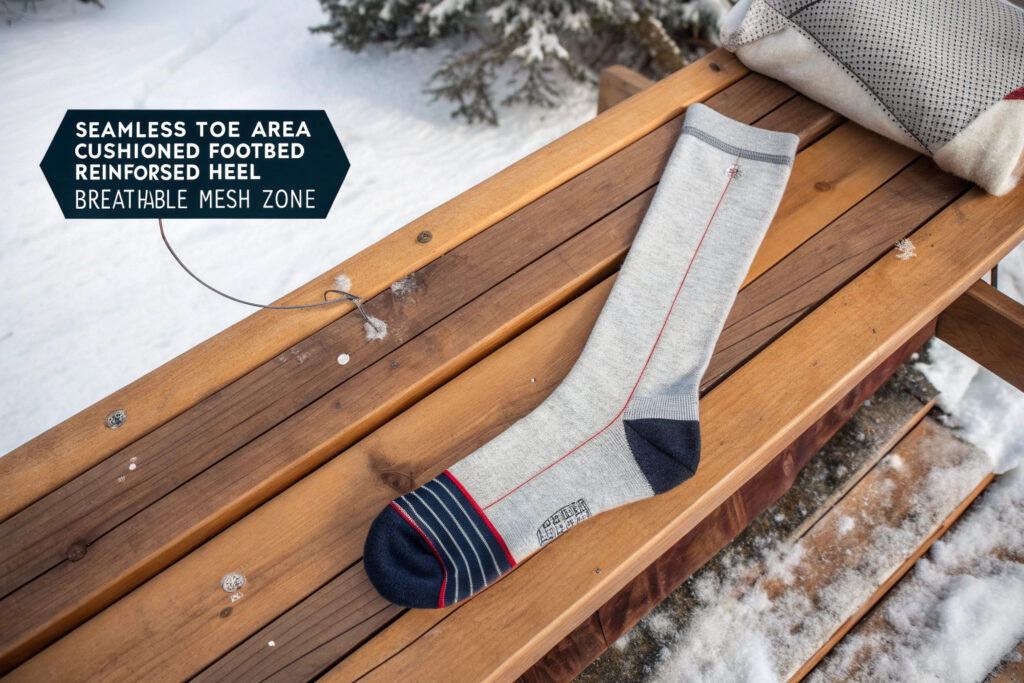
Look for targeted cushioning, seamless construction, reinforced high-wear areas, and antimicrobial treatment. Targeted cushioning provides extra protection and insulation exactly where you need it—under the foot and on the shin—without adding bulk elsewhere. A seamless toe is critical for preventing rub and irritation. Reinforced heel and toe areas enhance durability, making the socks abrasion & pill resistant. Finally, an antibacterial & odor-control treatment keeps the socks fresh after use, which is especially important for multi-day trips. Our factory is equipped to add all these features, and we provide one-stop customization for clients who want their own branded versions.
Why is a Seamless Toe Important?
The toe seam is a common failure point for comfort. A poorly finished seam can create a lump that constantly rubs against your toes, leading to hot spots and blisters. A seamless toe closure, often achieved through advanced looping machinery, creates a smooth, flat junction that is virtually unnoticeable when worn. This technology is a standard feature in our high-end crew socks and athletic socks because it directly enhances user comfort. For our clients, offering socks with this feature means fewer customer complaints and higher product satisfaction.
How Do Reinforced Heel and Toe Enhance Durability?
The heel and toe areas endure the most stress inside a ski boot. Every step and shift in position creates friction. Without reinforcement, these areas would wear out quickly. We integrate reinforced heel & toe sections by using higher-density knitting and tougher yarn blends in these specific zones. This makes the socks durable & long-lasting, a key selling point for retailers and consumers alike. It’s a small manufacturing detail that significantly extends the life of the sock, providing better value for money and aligning with sustainable consumption by reducing waste.
Conclusion
Choosing the best ski sock is a science of balancing moisture-wicking capabilities with effective insulation. The ideal sock uses smart material blends like Merino wool and synthetics, employs advanced moisture management technology, and features a precise, secure fit with targeted cushioning and seamless construction. It’s not about finding the thickest sock, but the smartest one. As a manufacturer, we see these principles applied daily to create products that perform reliably in the most demanding conditions.
If you are a retailer, buyer, or brand looking to develop your own line of high-performance ski socks, we have the expertise and capacity to bring your vision to life. From material sourcing to final packaging, we ensure every pair meets the highest standards of quality and performance. Contact our Business Director Elaine at elaine@fumaoclothing.com to discuss how we can partner to create socks that your customers will love.