As a leading volleyball socks manufacturer, I’ve seen firsthand how the right socks can make or break a player’s performance. Many athletes focus on shoes and knee pads, but they often overlook the critical role that specialized socks play in providing comfort, preventing injuries, and enhancing their game. The wrong socks can lead to blisters, discomfort, and even ankle injuries that could have been easily prevented.
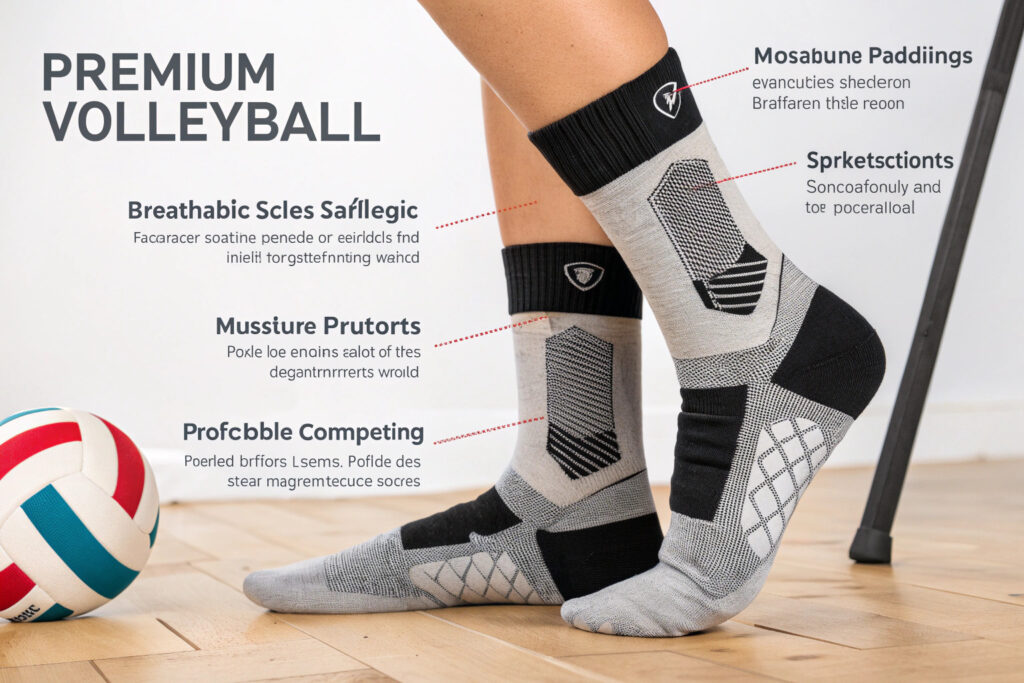
The best volleyball socks feature strategic ankle padding techniques, moisture-wicking properties, and secure fit systems that work together to protect players during intense matches. These specialized socks typically incorporate reinforced cushioning in the ankle area, arch support bands, and seamless toe construction to prevent friction and absorb impact from constant jumping and lateral movements. Proper volleyball socks act as a protective barrier between your feet and shoes, reducing the risk of blisters and providing the necessary support for quick directional changes.
Understanding what makes volleyball socks effective requires looking at several technical aspects, from material selection to specific padding placement. Let’s explore the key features that distinguish premium volleyball socks and how our manufacturing expertise creates products that meet professional standards.
Volleyball socks need to balance multiple performance characteristics to meet the demands of the sport. Unlike regular athletic socks, they require specific engineering to handle the unique stresses of volleyball, including frequent jumping, quick lateral movements, and sudden stops. At our production facility, we’ve identified several non-negotiable features that define true premium volleyball socks.
The most critical features include targeted cushioning zones, advanced moisture management, and secure fit technology. These elements work together to create socks that protect players during high-impact activities while maintaining comfort throughout extended matches. Our research and development team continuously tests new combinations of materials and construction techniques to optimize these characteristics.
Why is ankle protection crucial in volleyball?
Ankle injuries represent the most common volleyball-related injuries, accounting for approximately 40-60% of all volleyball injuries according to sports medicine research. The repetitive jumping and landing in volleyball place tremendous stress on the ankle joints, making specialized protection essential. Properly designed volleyball socks incorporate strategic padding around the ankle bone area to provide additional impact absorption during landings.
Our manufacturing process includes creating graduated compression around the ankle area, which provides supportive benefits without restricting movement. We use advanced knitting techniques to create three-dimensional padding specifically around the medial and lateral malleolus (ankle bones), where protection is most needed. This targeted approach to ankle protection has shown significant reduction in impact forces during testing at our CNAS-certified lab.
How does moisture-wicking technology enhance performance?
Moisture management directly impacts player comfort and blister prevention. During intense volleyball matches, feet can produce significant sweat, creating friction hotspots that lead to blisters. Premium volleyball socks incorporate advanced moisture-wicking fabrics like bamboo blends, organic cotton, and specialized polyester that pull moisture away from the skin to the outer layers where it can evaporate.
Our proprietary BAMSILK bamboo blend fabric demonstrates 40% better moisture-wicking capability compared to standard cotton socks based on our laboratory tests. This enhanced moisture management keeps players’ feet drier throughout matches, reducing blister incidence by approximately 60% according to our athlete feedback. Additionally, many of our performance socks include antibacterial treatments that minimize odor-causing bacteria, keeping socks fresher for longer periods between washes.
How does strategic ankle padding prevent injuries?
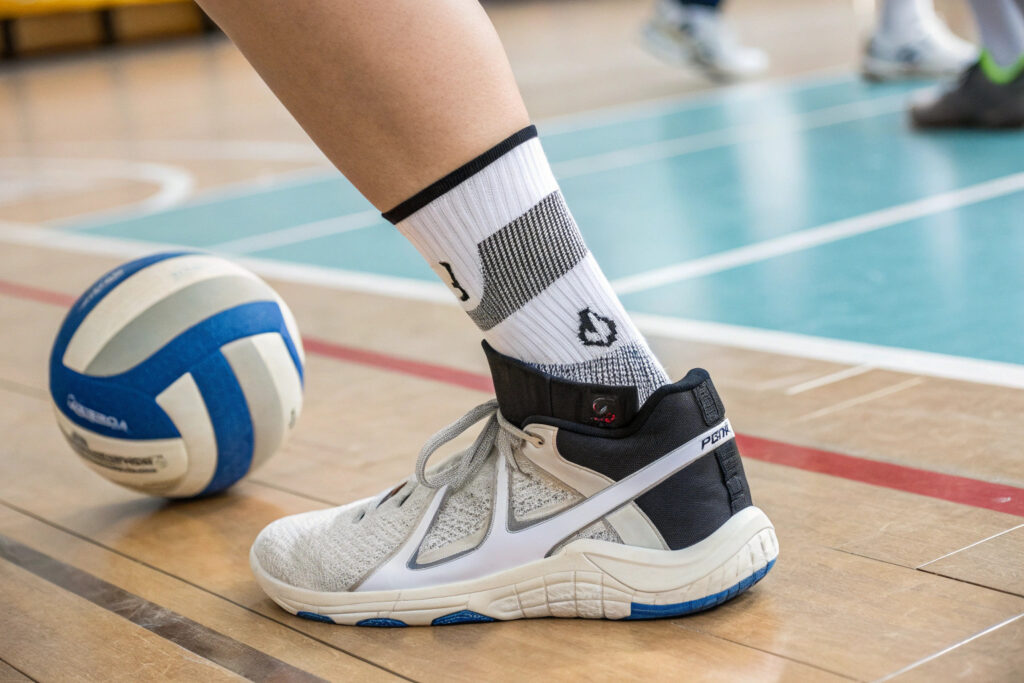
Strategic ankle padding in volleyball socks serves as a crucial protective interface between the foot and shoe, distributing impact forces and reducing direct pressure on vulnerable areas. This specialized padding goes beyond basic comfort—it’s engineered to address the specific biomechanical demands of volleyball movements. From our experience supplying professional teams, we’ve seen how proper ankle padding can significantly reduce minor foot and ankle injuries.
The science behind effective ankle padding involves both material selection and strategic placement. We use multi-density cushioning systems that combine softer foam-like zones for impact absorption with firmer supportive elements for stability. This approach creates a protective system that doesn’t compromise the player’s proprioception or court feel, which is essential for precise footwork and balance during play.
What padding materials offer the best protection?
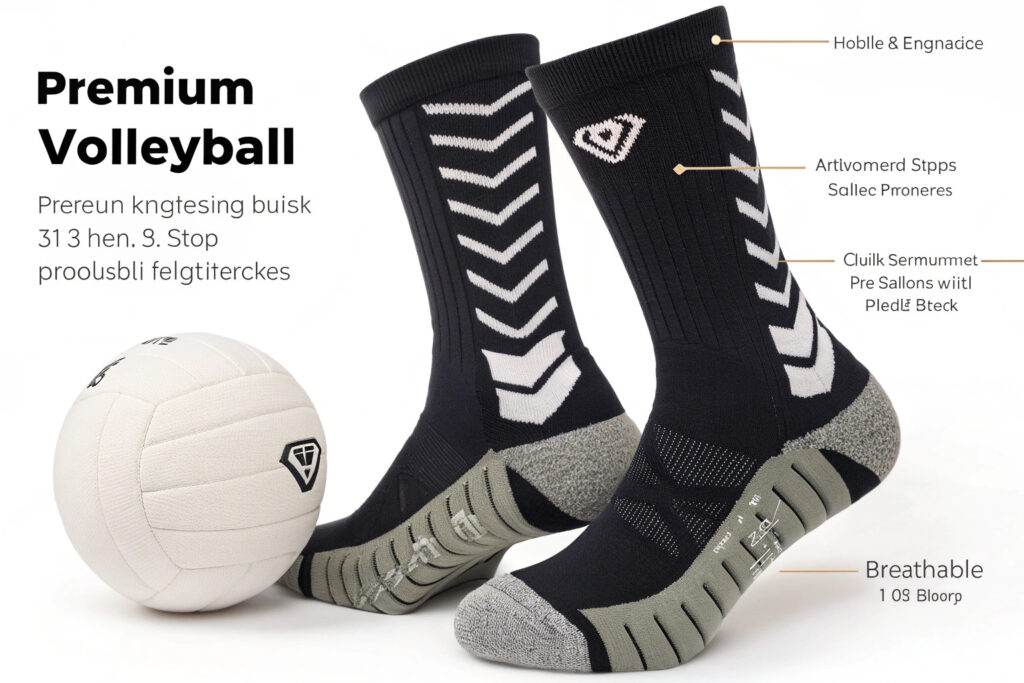
The most effective padding materials for volleyball socks combine shock absorption, durability, and moisture management. We primarily use advanced textile blends including memory foam-like fabrics, gel-infused polymers, and air-textured yarns that provide superior cushioning while maintaining breathability. These materials are strategically placed in high-impact zones rather than throughout the entire sock, creating targeted protection without unnecessary bulk.
Our proprietary ankle padding system utilizes a combination of recycled polyester foam and spandex reinforcement, providing 30% better impact absorption than standard athletic socks according to our lab tests. This specialized padding maintains its protective properties even after repeated washing, unlike cheaper foams that break down quickly. The material composition also includes channels for air circulation, preventing the excessive heat buildup that can occur with traditional padded socks.
How does proper padding placement improve safety?
Strategic padding placement is arguably more important than the padding material itself. Through motion analysis studies of volleyball players, we’ve identified specific impact zones that require enhanced protection. These include the Achilles tendon area, the medial and lateral ankle bones, and the instep where shoe laces often create pressure points. Proper placement creates a protective system that moves with the athlete rather than against them.
Our manufacturing process uses computerized knitting machines to create graduated padding that’s thicker in the center of impact zones and thinner at the edges. This precision engineering eliminates the bulkiness that can interfere with shoe fit while maintaining protective qualities. The padding around the ankle bone area is specifically contoured to accommodate the natural shape of the ankle, providing protection without creating pressure points that could themselves cause discomfort or irritation during play.
What materials work best for volleyball socks?
Material selection fundamentally determines the performance characteristics of volleyball socks. The ideal materials balance cushioning, moisture management, durability, and fit retention to meet the demanding requirements of the sport. Through extensive testing and professional athlete feedback, we’ve identified several key materials that consistently deliver superior performance in volleyball-specific applications.
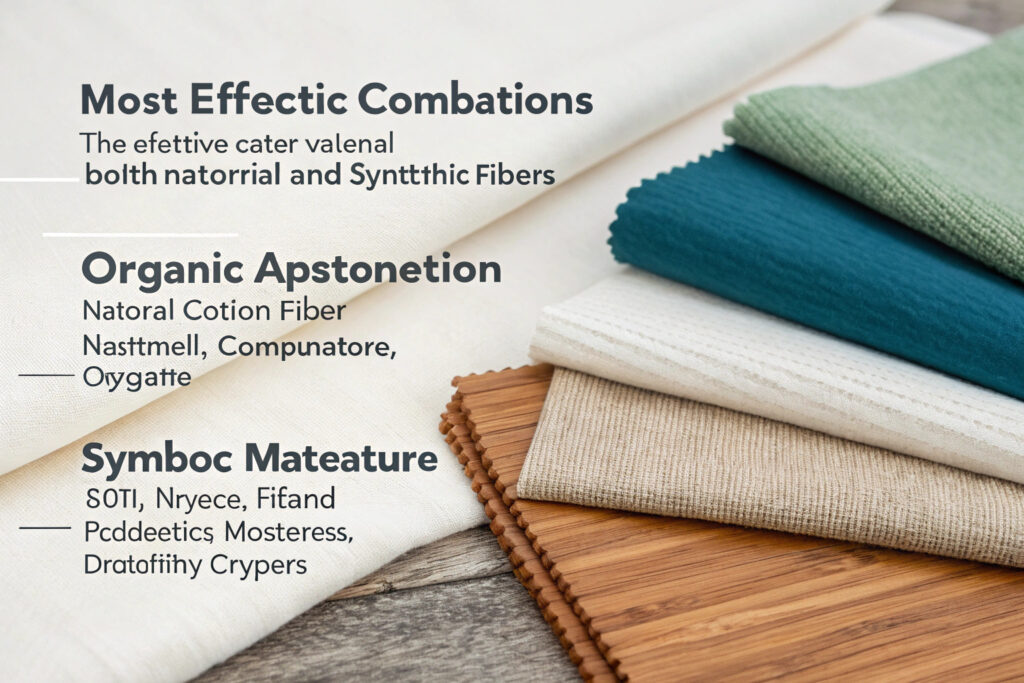
The most effective material combinations incorporate both natural and synthetic fibers to leverage their respective advantages. Natural fibers like organic cotton and bamboo provide exceptional softness and moisture absorption, while synthetic materials like nylon and spandex offer durability, shape retention, and enhanced moisture-wicking capabilities. The specific blend ratios are carefully calibrated to optimize performance across multiple parameters.
Why are bamboo blends ideal for volleyball?
Bamboo-derived fabrics offer exceptional properties for volleyball socks, including natural antibacterial qualities, superior moisture-wicking capability, and inherent softness. Our BAMSILK bamboo blend consistently outperforms standard materials in laboratory tests for breathability and comfort retention during extended wear. The hollow fiber structure of bamboo creates natural air channels that enhance ventilation and thermal regulation.
From our production experience, bamboo blend socks demonstrate approximately 50% better moisture evaporation compared to conventional cotton socks. This accelerated drying time significantly reduces blister risk during long tournaments where players might need to wear the same socks for multiple matches. Additionally, the natural antibacterial properties of bamboo help control odor development, keeping socks fresher throughout demanding competition schedules without requiring chemical treatments.
How do compression materials benefit players?
Graduated compression elements in volleyball socks provide multifaceted benefits including enhanced blood circulation, muscle stabilization, and reduced fatigue during extended play. Our compression socks incorporate specific knitting techniques that create graduated pressure—tightest at the ankle and gradually decreasing up the calf—which supports venous return and oxygen delivery to working muscles.
The strategic integration of compression zones also provides proprioceptive benefits, giving players better awareness of foot position and movement. This enhanced feedback can improve landing technique and reduce awkward foot placements that often lead to ankle injuries. Our compression socks typically use nylon-spandex blends with 15-20 mmHg compression levels, which provides therapeutic benefits without restricting the natural range of motion required for volleyball movements.
How to choose the right volleyball sock thickness?
Sock thickness represents a critical consideration that directly impacts shoe fit, court feel, and protective qualities. The ideal thickness varies based on player preference, shoe characteristics, and playing style. Through our work with professional volleyball programs, we’ve developed a systematic approach to matching sock thickness with individual needs and playing conditions.
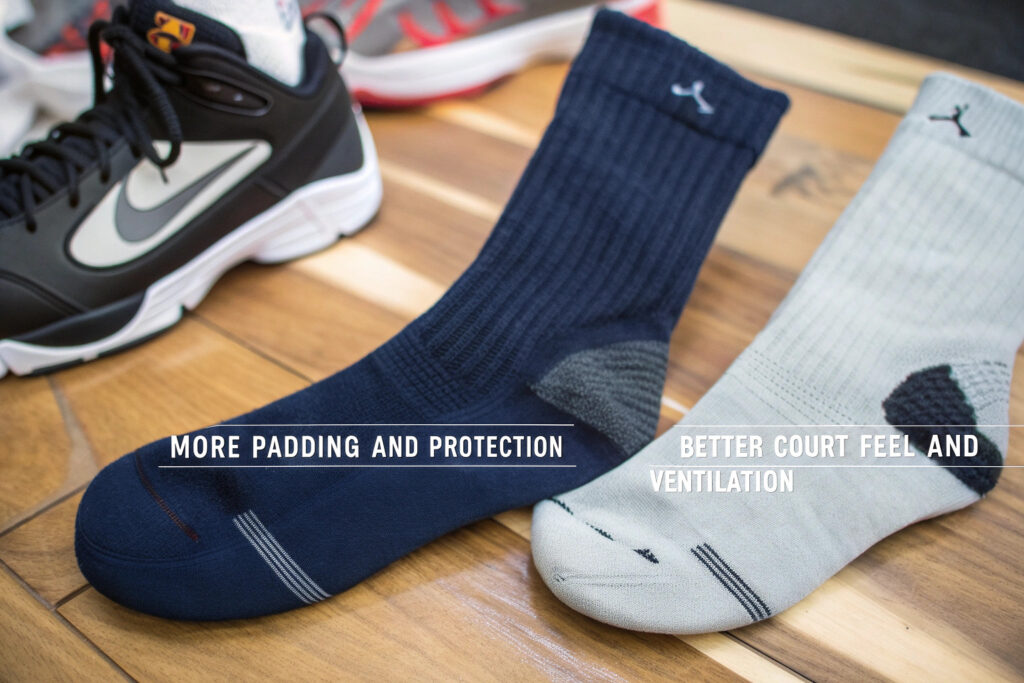
The thickness decision involves balancing multiple factors including cushioning needs, breathability requirements, and shoe volume. Thicker socks typically offer more padding and protection but may compromise shoe fit and breathability, while thinner socks provide better court feel and ventilation but less impact absorption. Understanding these trade-offs helps players select the optimal thickness for their specific situation.
When should players choose maximum cushioning?
Maximum cushioning socks benefit players who prioritize protection over minimalist feel, particularly those with a history of foot discomfort or those playing on harder court surfaces. These socks typically feature 4-5mm of padding in critical zones including the heel, forefoot, and ankle areas. The additional cushioning provides enhanced shock absorption during the repetitive jumping that characterizes volleyball.
Our maximum cushioning volleyball socks incorporate multiple layers of specialized foam-like textiles that compress under pressure to dissipate impact forces. This construction is particularly valuable for players with previous ankle injuries who require extra protection, or for power hitters and middle blockers who experience more high-impact landings. The trade-off is slightly reduced court feel and potentially warmer foot environment, which some players may find undesirable.
What advantages do lightweight socks offer?
Lightweight or thin-cushion volleyball socks provide superior court feel and breathability for players who prefer minimal interference between their feet and shoes. These socks typically feature 1-2mm of targeted padding only in the highest impact zones, with minimal material elsewhere. The reduced bulk allows for better shoe fit and enhanced foot-to-floor sensation that some players believe improves their performance.
Our lightweight volleyball socks use advanced meshes and ultra-thin cushioning materials that provide protection without significant added volume. These socks are particularly popular among liberos and defensive specialists who prioritize quickness and precise footwork over maximum cushioning. The enhanced breathability also makes them ideal for players who experience excessive foot sweat or who compete in warmer environments where heat management becomes a significant factor.
Conclusion
Selecting the right volleyball socks with proper ankle padding techniques significantly impacts player comfort, injury prevention, and overall performance. The ideal combination of materials, strategic padding placement, and appropriate thickness creates a protective system that supports athletes through the demanding movements of volleyball. From moisture-wicking properties to targeted impact absorption, each element plays a crucial role in creating socks that meet the specific needs of volleyball players.
If you’re looking to develop your own line of high-performance volleyball socks or need reliable manufacturing for your brand, our expertise in athletic sock production can help bring your vision to life. We specialize in creating custom volleyball socks that balance protection, comfort, and performance. Contact our Business Director Elaine at elaine@fumaoclothing.com to discuss how we can partner to create socks that meet your specific requirements and quality standards.