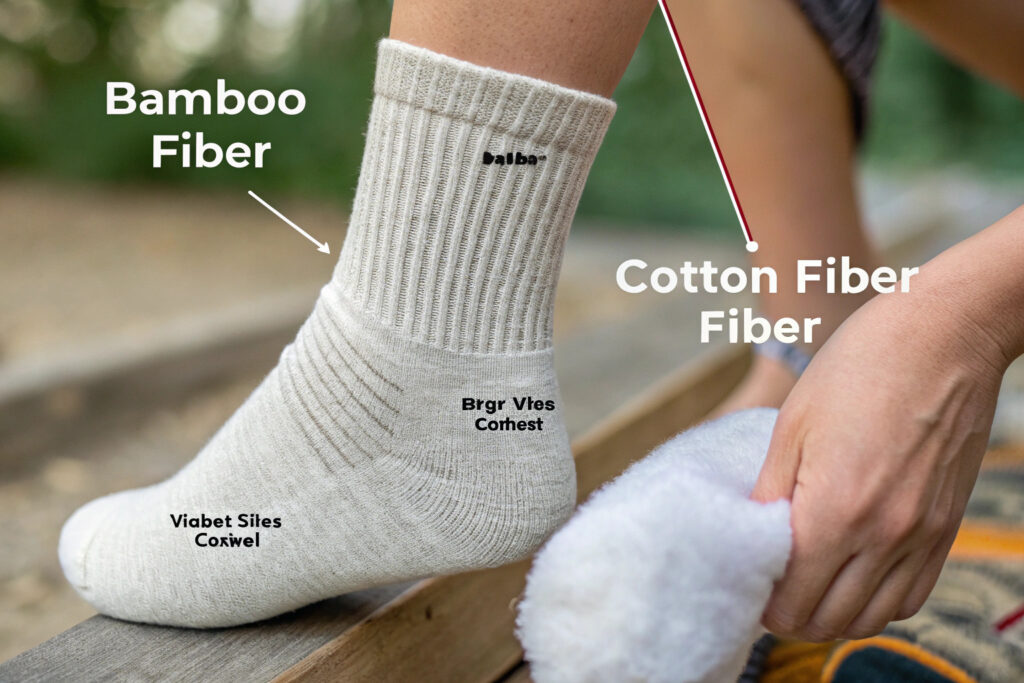
Have you ever slipped on a pair of bamboo socks and instantly noticed how buttery smooth they feel? You’re not alone. Many customers tell us bamboo socks feel cooler, silkier, and more luxurious than anything they’ve tried in traditional cotton.
The softness of bamboo socks comes down to the fiber’s natural structure. Bamboo fibers are rounder, smoother, and have fewer impurities than cotton, giving them a soft, hypoallergenic finish. That’s not marketing—it’s textile science.
As a socks manufacturer deeply rooted in fabric R&D, I’ve worked with hundreds of fiber blends. When we shifted to bamboo over a decade ago, we saw immediate improvements in hand feel, moisture control, and long-term wear comfort. Let’s explore why.
How Do Bamboo and Cotton Fibers Differ in Structure?
Not all fibers are created equal. At the microscopic level, bamboo and cotton are fundamentally different. This affects how they feel against the skin and perform in socks.
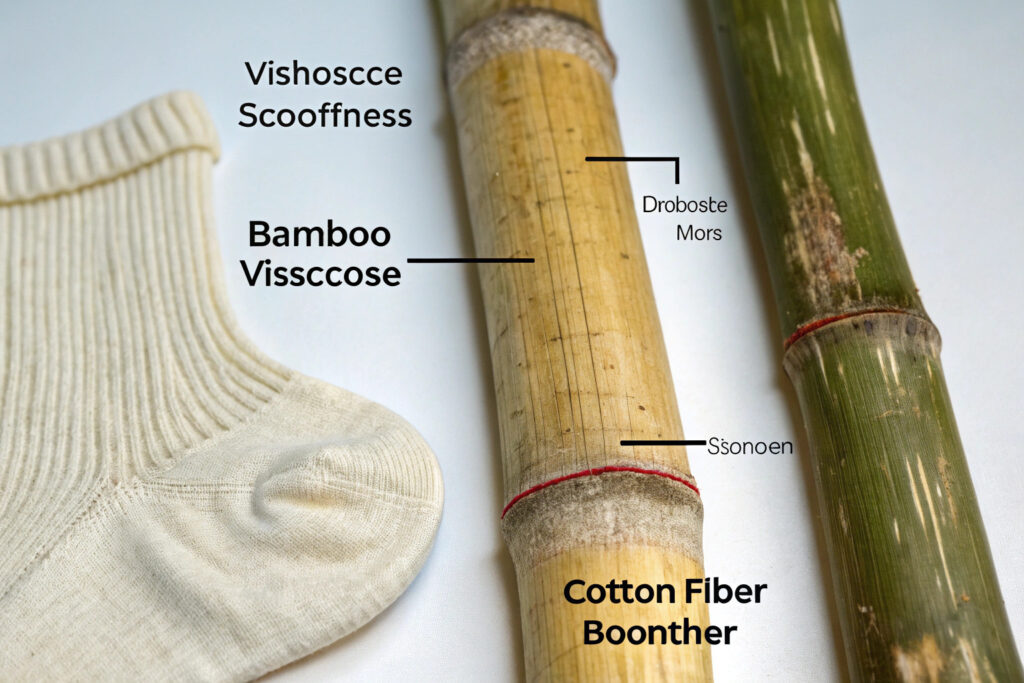
Bamboo fibers are naturally smooth, round, and hollow—creating less friction and more airflow. Cotton fibers are twisted and uneven, which gives them strength but a slightly rougher feel.
Why Does Smoothness Matter for Sock Comfort?
Smooth fibers reduce irritation. Bamboo’s round structure glides over sensitive skin without catching, making it ideal for people with eczema or diabetes. That’s why many hospitals and wellness brands now prefer bamboo socks for recovery and sensitive-use collections.
Check how bamboo viscose is processed and compare it to traditional cotton spinning.
What Role Does Fiber Diameter Play?
Bamboo viscose fibers are typically finer than cotton, measuring around 1.5 dtex versus cotton’s 1.7–2.2. Finer fibers result in a tighter, smoother knit that feels softer on contact. Our in-house yarn technicians adjust the denier of bamboo to create the plush feel that luxury buyers want.
Why Is Bamboo Yarn Smoother to Spin and Knit?
Bamboo viscose isn’t just soft in its raw state. It behaves beautifully in yarn spinning and knitting, which results in an even softer final product.
The uniformity of bamboo fibers allows for tight, pill-resistant yarn with less slub or breakage. This means smoother socks with fewer imperfections.
How Does Spinning Quality Affect Final Sock Feel?
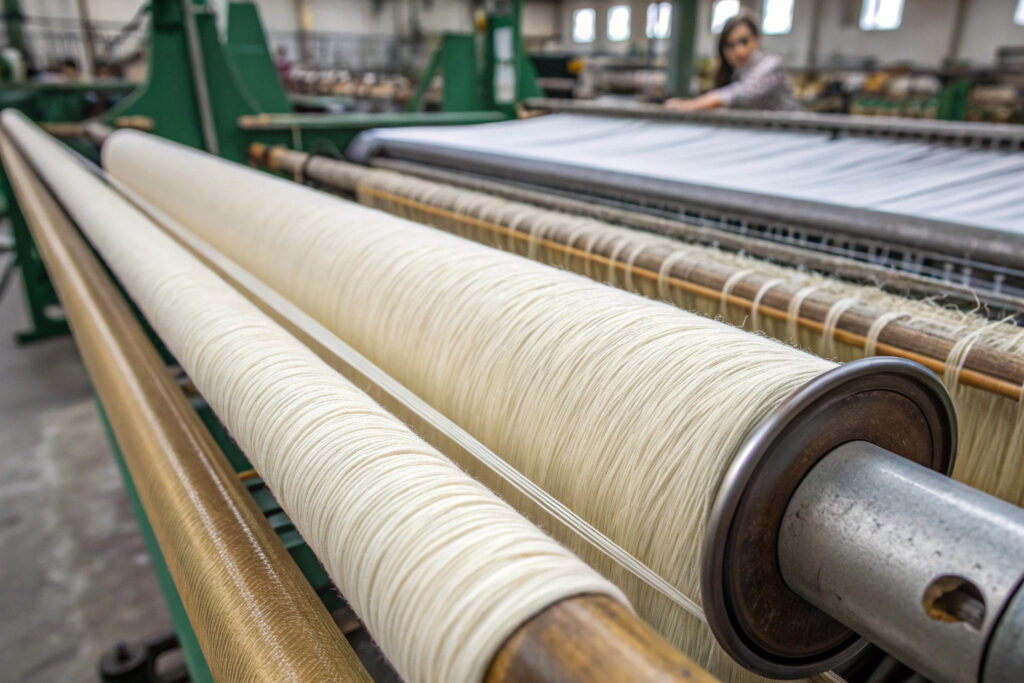
Better spinning equals fewer lumps. When bamboo yarn is spun, it produces consistent tension and low hairiness, which means socks come out more elastic, softer, and less prone to pilling. Learn more about compact spinning technology used for bamboo fibers.
Why Do Bamboo Knits Have Better Drape?
Due to their silky filament properties, bamboo fibers form a knit with excellent drape—meaning the sock hugs the foot rather than bunching. Cotton knits can stiffen after washing, but bamboo maintains that ‘flowy’ feel even after multiple wears. That’s why yoga apparel brands often prefer bamboo.
Is Bamboo Naturally Softer or Is It the Processing?
Softness isn’t just about the plant—it’s about how it’s turned into fabric. Bamboo fiber is regenerated using a viscose or lyocell process, depending on the environmental standards.
Bamboo viscose is chemically softened and purified, removing lignin and other rough cellulose elements. This results in a cleaner, more elastic yarn than raw cotton.
What Is the Viscose Process and Why Does It Matter?
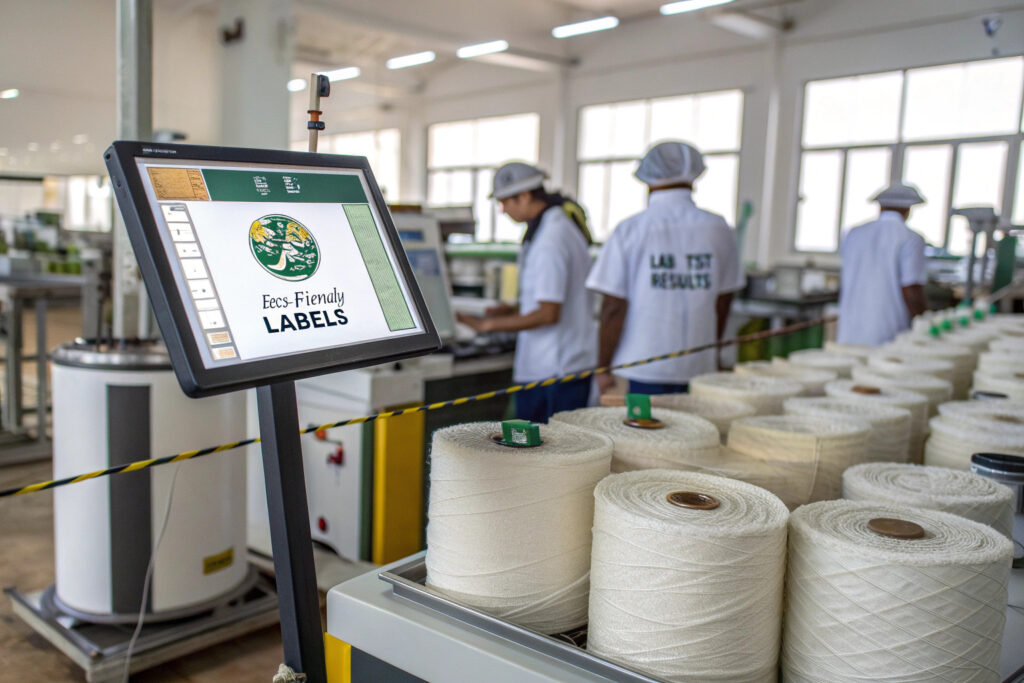
In the viscose method, bamboo is pulped and then regenerated into fibers using a chemical solution. While traditional viscose raises sustainability concerns, our factory uses closed-loop systems to recover solvents, certified under OEKO-TEX and GRS standards. You can read about Lenzing’s closed-loop lyocell process for sustainable bamboo alternatives.
Can Cotton Be Processed to Be Just as Soft?
Combed cotton can get close—but never quite match bamboo’s drape and hypoallergenic finish. Plus, cotton requires more post-treatment (softeners, silicones) to achieve bamboo’s natural silkiness. That’s why bamboo-cotton blends are becoming popular—they combine the structure of cotton with bamboo’s comfort.
Do Bamboo Socks Stay Softer Over Time?
Initial softness is nice—but does it last? One of bamboo’s key benefits is its resilience even after multiple washes.
Bamboo socks maintain their softness longer because the regenerated fibers don’t stiffen or mat like cotton. They resist shrinking and retain moisture-wicking performance.
How Does Washing Affect Bamboo vs Cotton?
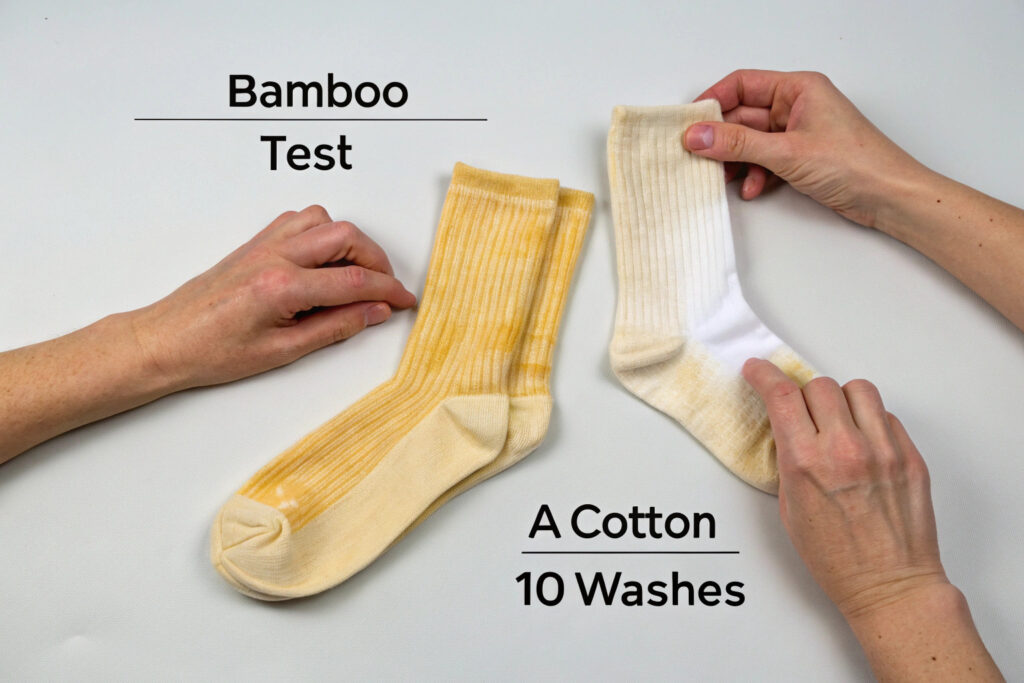
Cotton tends to harden over time due to fiber breakage and detergent buildup. Bamboo’s cellular regeneration process results in less surface cracking, so it feels smoother after each cycle. We test our socks in simulated 20-wash trials using ISO 6330 protocols to verify softness retention.
What About Color and Print Durability?
Because bamboo yarns accept dye evenly, prints stay vibrant longer. Cotton socks may fade unless pre-treated or pigment-set properly. That’s why we use reactive dyeing on bamboo to lock in color without compromising feel.
Conclusion
Bamboo socks are softer than cotton not because of marketing hype, but because of real, measurable differences in fiber shape, processing, and performance. From the silky smooth feel to long-term wearability, bamboo wins in comfort and technical specs.
If you’re looking to develop your own line of ultra-soft socks using bamboo or bamboo blends, contact our Business Director Elaine at elaine@fumaoclothing.com. At GlobalSock, we turn fiber science into real comfort—one stitch at a time.