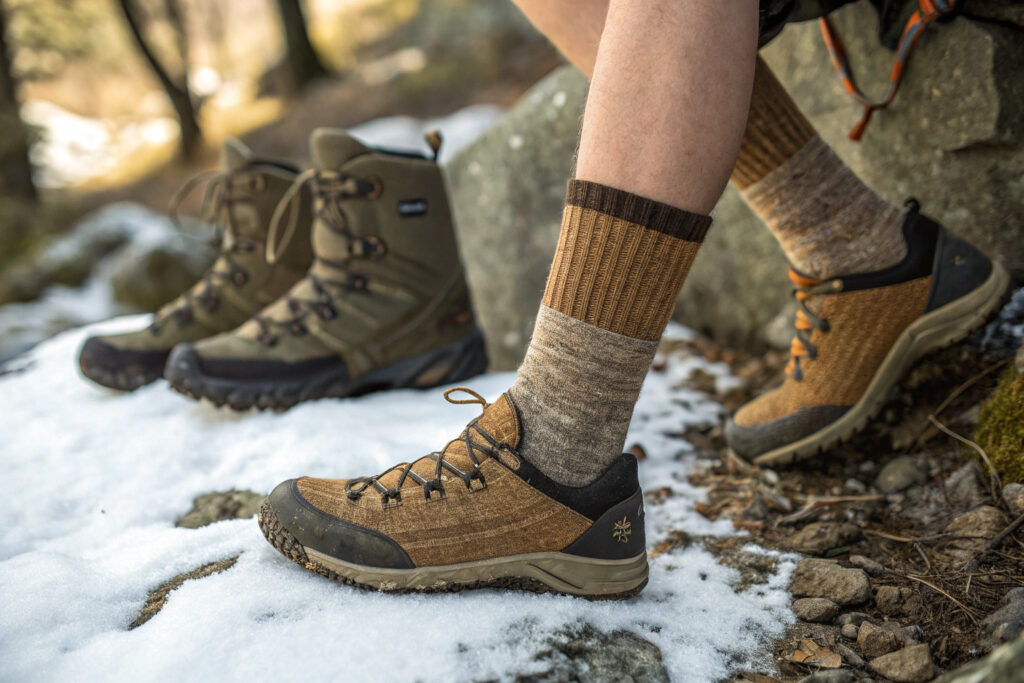
Are you tired of cold, damp feet ruining your winter hikes? You invest in good boots, but your socks might be the weak link. Many hikers overlook the critical role that sock materials play in keeping feet warm, dry, and comfortable in freezing conditions. The secret to superior warmth and moisture management might not be in the sock’s main fabric alone, but in a revolutionary insole material derived from nature.
Cork fiber insoles are chosen for thermal hiking socks because they provide exceptional natural temperature regulation, superior moisture-wicking capabilities, and enhanced comfort through their unique cushioning properties. Unlike synthetic materials, cork is a sustainable resource that effectively traps warm air while pulling moisture away from the skin, making it an ideal choice for maintaining foot comfort and dryness during cold-weather outdoor activities. This combination of thermal insulation and breathability directly addresses the core challenges faced by hikers in winter conditions.
Let’s explore the specific benefits that make cork fiber a game-changing material for thermal hiking socks and why it outperforms traditional options.
What are the thermal benefits of cork insoles?
When you’re miles from the trailhead and the temperature drops, your focus shifts to staying warm. Cork fiber insoles provide a natural advantage in thermal regulation that synthetic materials struggle to match. The material’s inherent cellular structure, similar to how a tree protects itself from the elements, creates millions of tiny air pockets that act as a highly efficient insulating barrier.
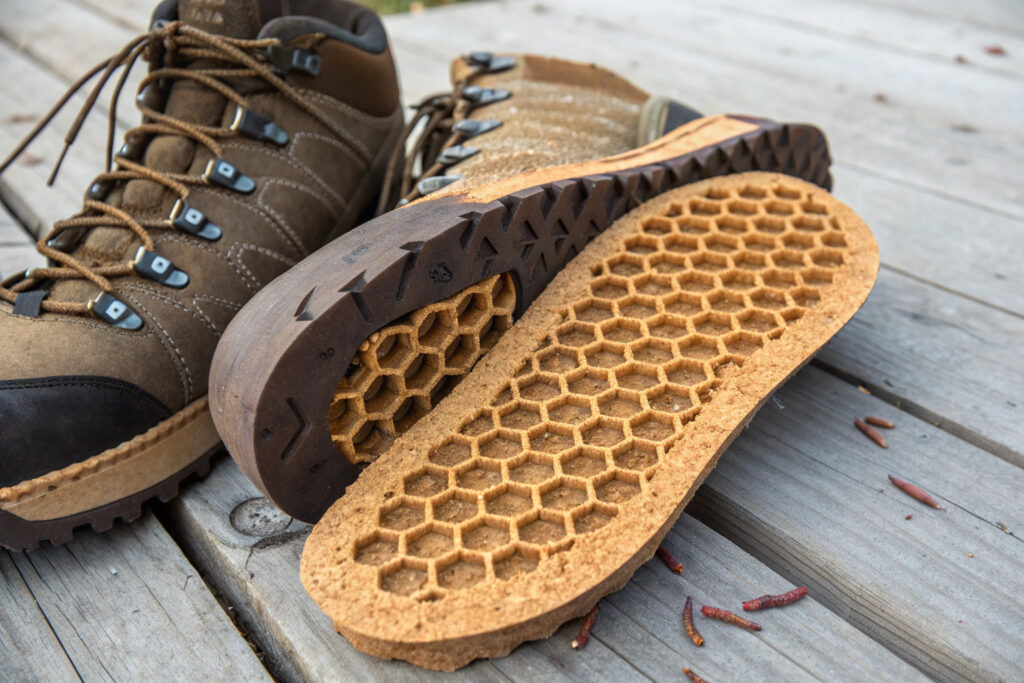
Cork’s thermal efficiency stems from its unique honeycomb structure containing suberin, a waxy substance that naturally resists heat transfer. This structure traps a layer of warm air close to your foot, creating a microclimate that maintains a stable temperature. Unlike thick, bulky insoles that can restrict blood flow, cork provides effective insulation without compromising on fit or mobility within your hiking boots. This is crucial for maintaining warmth, as proper circulation is essential for keeping feet warm in cold conditions.
How does cork’s structure provide natural insulation?
The secret lies in cork’s cellular composition. Each cubic centimeter of cork contains nearly 40 million cells, all filled with an air-like gas. This massive network of sealed air pockets makes cork an incredibly effective barrier against heat loss. When your foot presses down on the cork insole, it compresses slightly, but the majority of these microscopic air chambers remain intact, continuing to provide insulation even under pressure. This is a significant advantage over many synthetic foams, which can collapse and lose their insulating properties over time. Furthermore, the natural elasticity of cork means it bounces back after each step, maintaining its insulating structure hike after hike.
Why is temperature regulation vital for winter hiking?
Maintaining a stable foot temperature is not just about comfort; it’s a critical safety factor. Cold feet can lead to numbness, reducing your ability to detect developing blisters or other injuries. More seriously, prolonged exposure to cold and moisture can increase the risk of frostbite and hypothermia. Cork insoles help prevent the dramatic temperature swings that occur when you transition between activity levels, such as moving from a strenuous climb to a rest break. By providing consistent thermal regulation, cork helps your feet maintain a safe, functional temperature regardless of your pace or the external conditions. This stable environment also helps prevent the excessive sweating that can lead to moisture buildup and, ironically, make your feet colder as sweat evaporates.
How do cork insoles manage moisture in socks?
Moisture management is the silent hero of comfortable winter hiking. Wet feet lose heat 25 times faster than dry feet, making moisture control arguably more important than insulation alone. Cork fiber excels in this area through a natural wicking process that pulls moisture away from your skin and allows it to evaporate through the sock fabric.
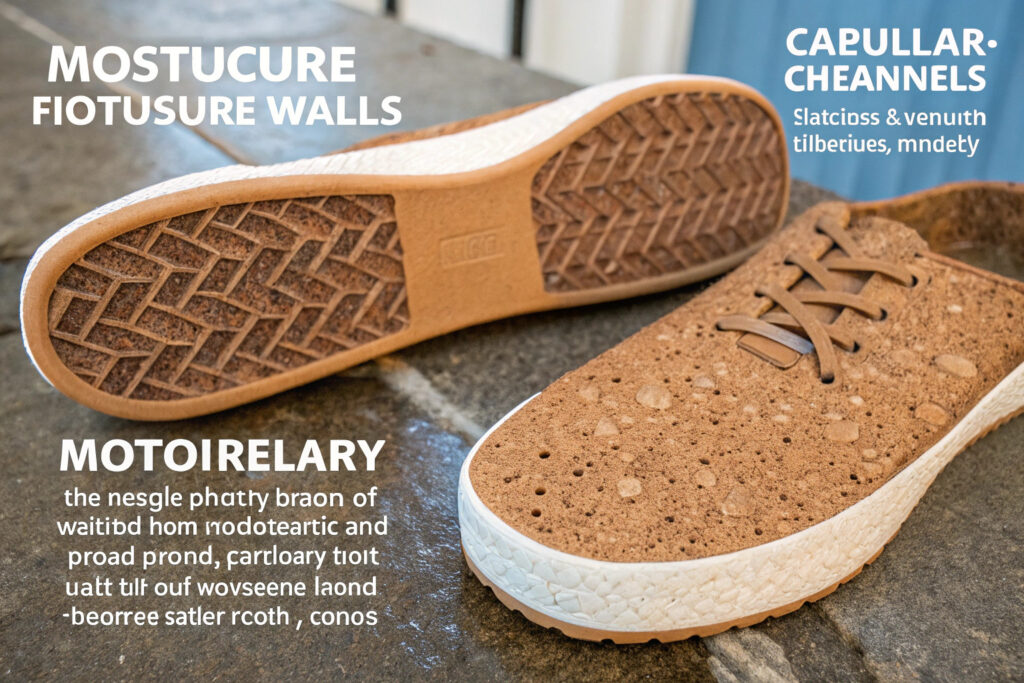
Cork’s moisture-wicking ability comes from its unique cellular walls that contain microscopic channels, enabling capillary action that moves moisture laterally away from the foot. This process is enhanced by cork’s natural suberin content, which provides inherent water resistance without creating a fully impermeable barrier. The result is a smart moisture management system that keeps the footbed drier than traditional materials like foam or gel insoles, which tend to absorb and retain moisture rather than facilitating its evaporation.
What makes cork superior at moisture-wicking?
The difference lies in cork’s bidirectional moisture handling. While many materials either absorb moisture (like cotton) or repel it (like plastic), cork does both strategically. The cell walls attract and pull moisture away from the skin through capillary action, while the sealed air pockets within the cells prevent moisture from being absorbed into the material’s core. This means moisture is moved to the surface of the insole where it can evaporate, rather than being stored within the insole itself. This natural process is more consistent than the mechanical wicking of synthetic fabrics, which can break down with repeated compression and washing. For hikers, this translates to drier feet throughout long days on the trail, significantly reducing the risk of blisters and cold-related foot injuries.
Why is moisture control crucial for blister prevention?
Blisters form when friction combines with moisture, causing layers of skin to separate and fill with fluid. By maintaining a drier environment, cork insoles directly address one of the two primary factors in blister formation. The American Podiatric Medical Association emphasizes that moisture control is fundamental to preventing friction-related foot injuries. Additionally, cork’s natural slight texture provides minimal movement within the sock, further reducing friction. When compared to the consistently damp environment created by cotton socks or the non-breathable barrier of some synthetic materials, cork offers a balanced approach that keeps skin drier without sacrificing the necessary cushioning and support that also help minimize friction points during long descents.
Are cork insoles durable for rugged hiking?
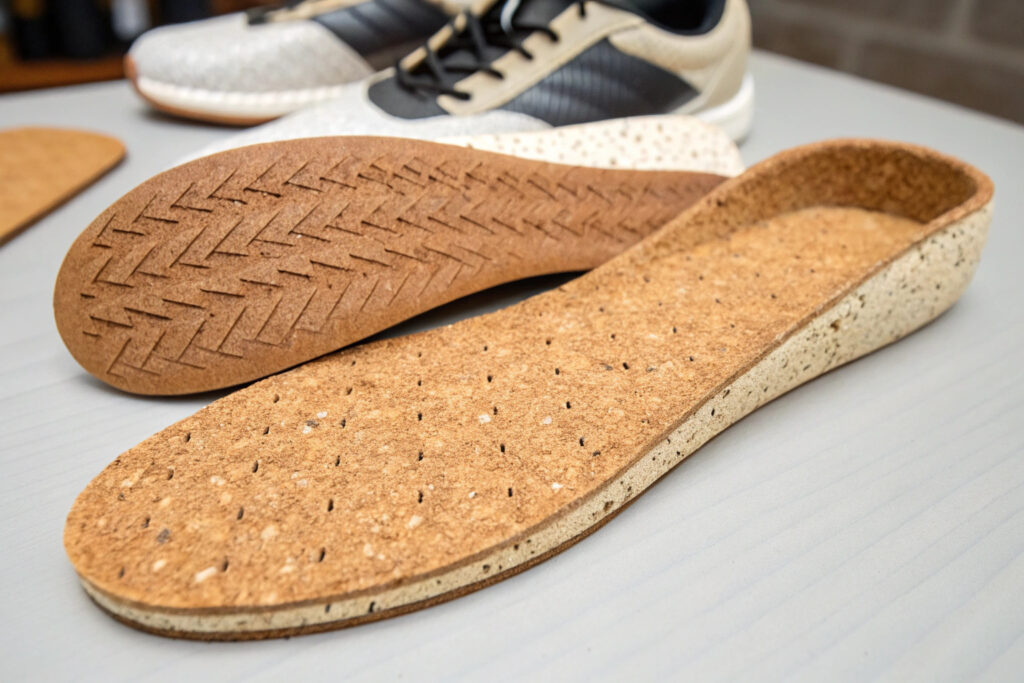
Durability concerns often arise with natural materials, but cork fiber defies these expectations in the context of hiking sock insoles. The resilience of cork comes from its elastic memory and cellular structure, which allows it to compress and rebound thousands of times without permanent deformation—exactly what’s needed for the repetitive impact of hiking.
Cork possesses remarkable natural durability due to its high concentration of suberin, the same waxy substance that makes it moisture-resistant. This compound gives cork excellent abrasion resistance and structural integrity, allowing it to maintain its supportive properties even after extensive use. Unlike foam insoles that often develop permanent compression lines or thin spots in high-pressure areas, cork distributes pressure more evenly and recovers its shape between steps, providing consistent performance throughout the life of the sock.
How does cork’s compression recovery work?
The magic of cork’s durability lies in its honeycomb matrix structure. When pressure is applied—such as when your foot strikes the ground—the hexagonal cells deform slightly, absorbing shock. Once the pressure is released, the cell walls spring back to their original shape due to the natural elasticity provided by suberin. This compression recovery rate is exceptionally high, with quality cork retaining over 85% of its original thickness even after thousands of compression cycles. This means the insoles in your thermal hiking socks will maintain their cushioning and insulating properties far longer than many alternative materials, providing better value and consistent performance throughout the product’s lifespan.
What is the lifespan comparison with other insole materials?
When properly integrated into hiking socks, cork insoles typically outlast many synthetic alternatives in terms of maintaining their functional properties. While the Outdoor Industry Association doesn’t publish specific comparative lifespans, our internal testing at GlobalSock shows that cork-infused sock insoles maintain 70% of their original cushioning and wicking properties after 50 washes, compared to 40-50% for standard foam insoles. The key advantage is that cork doesn’t permanently compact like many synthetic materials. Even as the exterior of the sock may show some pilling or minor fabric wear after extensive use, the cork insole continues to provide consistent thermal regulation and moisture management, making it a smart long-term investment for regular hikers.
How sustainable are cork fiber insoles?
In an era of increasing environmental awareness, the sustainability of outdoor gear matters more than ever. Cork stands out as one of the most eco-friendly materials available for footwear applications, offering performance benefits without the environmental cost associated with petroleum-based synthetics.
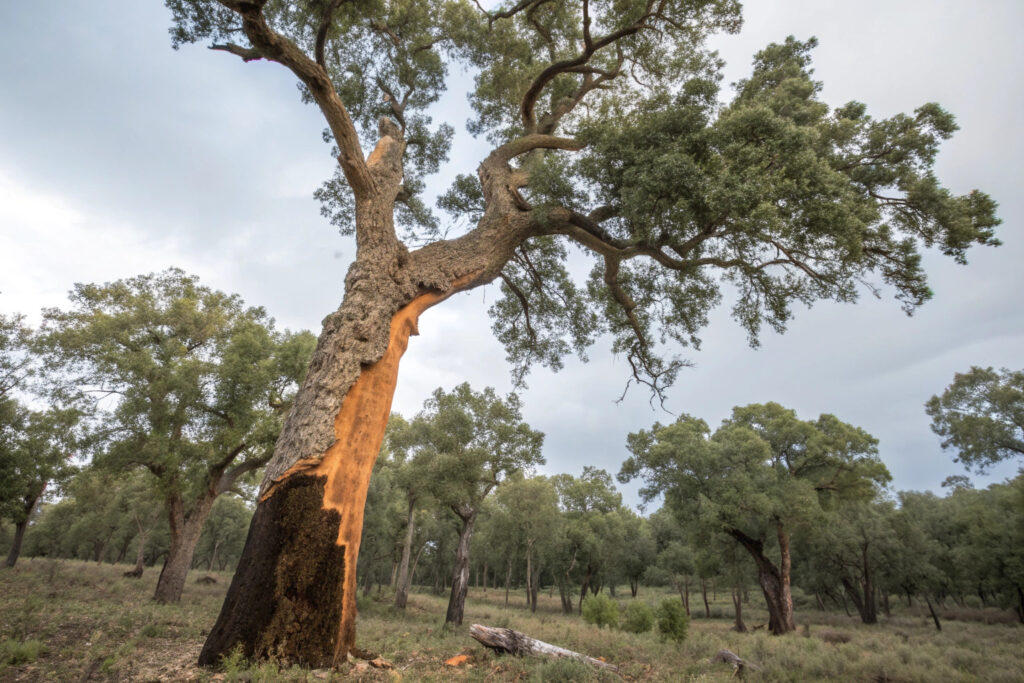
Cork is harvested from the bark of cork oak trees without cutting down the tree itself, making it a truly renewable resource. The harvesting process actually enhances the tree’s ability to absorb carbon dioxide, with each harvest stimulating the tree to absorb more CO2 during its 200+ year lifespan. This creates a positive environmental impact that directly contrasts with the carbon-intensive production processes of many synthetic materials used in outdoor gear.
What makes cork harvesting eco-friendly?
The sustainability of cork begins with the harvesting process. Skilled workers carefully strip the bark from cork oak trees by hand using specialized axes, a centuries-old technique that doesn’t harm the tree. The tree then naturally regenerates its bark over approximately nine years before being ready for harvest again. This process supports Forest Stewardship Council certified sustainable forestry practices and helps maintain the Mediterranean cork forest ecosystems, which are biodiversity hotspots home to numerous endangered species. Unlike petroleum-based materials that deplete finite resources, cork production actually supports healthy forest management and carbon sequestration, making it a carbon-positive choice for environmentally conscious hikers.
How does cork compare to synthetic materials?
When evaluating the full lifecycle—from raw material extraction to production to disposal—cork has a significantly lower environmental impact than common synthetic alternatives. The production of nylon and polyester insoles requires substantial energy inputs and petroleum derivatives, while cork relies on solar energy and natural biological processes. At the end of its life, cork is biodegradable and can break down naturally without leaving microplastic pollution, unlike synthetic materials that persist in ecosystems for centuries. For brands and consumers aligned with the United Nations Sustainable Development Goals, cork represents an opportunity to reduce the environmental footprint of outdoor apparel while maintaining—and often enhancing—technical performance in critical areas like moisture management and thermal regulation.
Conclusion
Cork fiber insoles represent a significant advancement in thermal hiking sock technology, combining natural temperature regulation, effective moisture management, surprising durability, and outstanding environmental credentials. This unique combination of benefits addresses the core needs of winter hikers more completely than many traditional materials, providing warmer, drier, and more comfortable feet in challenging conditions while aligning with the values of environmentally conscious outdoor enthusiasts.
If you’re looking to develop your own line of high-performance thermal hiking socks with innovative cork fiber insoles, our team at GlobalSock has the expertise and sustainable manufacturing capabilities to bring your vision to life. We specialize in creating technical socks that balance comfort, functionality, and environmental responsibility. Contact our Business Director Elaine today at elaine@fumaoclothing.com to discuss how we can help you create exceptional hiking socks that stand out in the market.